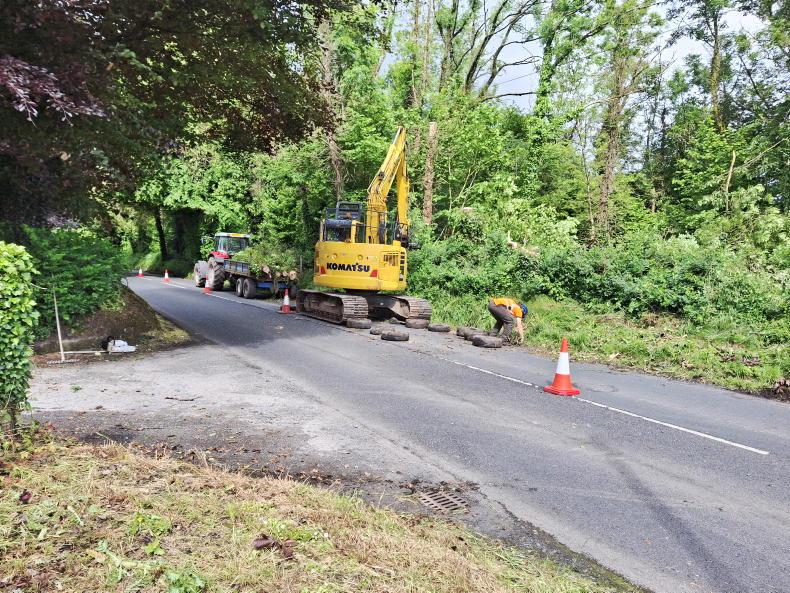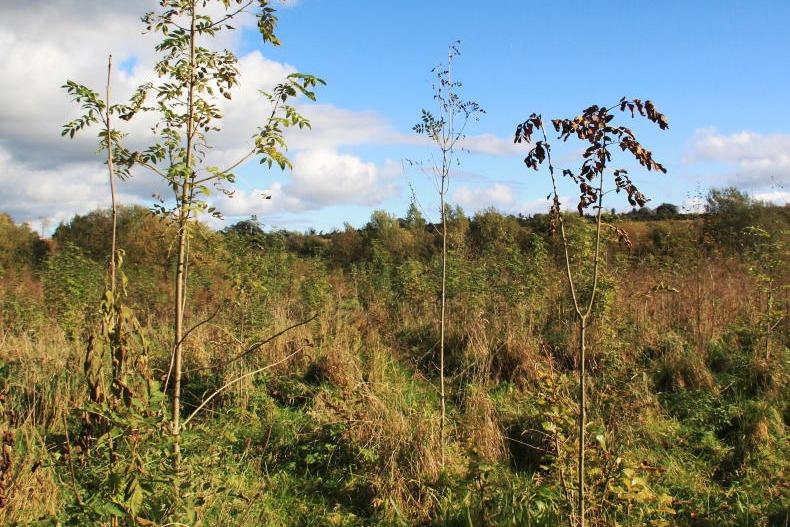
The total area of ash woodlands and plantations in Ireland was estimated at 24,350ha in the 2022 National Forest Inventory. These comprise 8,526ha of woodlands established up to 1989 and 15,824ha of plantations established from 1990 under the State-backed Grow Ash for Profit Scheme.
Approximately 6,500 landowners – mainly farmers – availed of this planting scheme, before it was withdrawn when ash dieback was detected in 2012. By then, grant-aided plantations had amounted to 65% of the total ash area.
Since the Reconstitution of Ash Dieback Scheme (RADS) was introduced in 2023, 1,230 ash owners have availed of the increased €2,000/ha grant aid and phased in payment of €5,000/ha.
The area approved so far is 4,397ha, which amounts to 28% of the grant aided ash area or 18% of the total ash area.
While RADS is a major improvement on previous paltry ash schemes, it has flaws.
The Climate Action Performance Payment (CAPP) of €5,000 could have been paid at least 75% up-front instead of being phased in over four years, while the €2,000/ha clearance payment is clearly inadequate on most infected sites.
It is supposed to cover the cost of the contractor’s and forester’s input, while the income from ash firewood should be recouped by the grower as recommended in the 2023 DAFM Review of Support for Farmers Impacted by Ash Dieback. Because of rapid degrade, firewood sales are now extremely limited, so many foresters I interviewed said they were not inspecting small difficult ash sites, as the full cost of clearance could be as high as €7,000/ha.
Most of the costs in implementing RADS can be recovered on good quality accessible ash sites of at least 3ha, which rules out 5,600 of the 6,500 ash plantation owners.
The small size of ash plantations is a major challenge, as 3,200 sites are less than 1ha, 1,700 between 1ha and 2ha and 700 between 2ha and 3ha. It is no coincidence that the average area approved under RADS is 3.6ha.
An additional challenge is health and safety in harvesting mature ash trees which are brittle and liable to snap. This slows down the operation at a time when reduced numbers of hard-pressed harvesting contractors are working in windblown areas.
Solutions
Owners with ash and other species should incorporate RADS in their overall forest management plan by timing ash clearance with other harvesting operations. For example, clearfelling and replanting a 10ha forest comprising 8ha of spruce and 2ha of ash would be an attractive proposition for the owner and both forestry consultant and contractor, especially when the replanting grant of between €3,858/ha and €8,555/ha is factored in on the ash site.
Options such as converting ash sites to agroforestry may also be considered while on small isolated ash sites, there may be opportunities to introduce a non-licensed approval initiative, such as the Native Tree Area scheme.
It is likely that Minister Healy-Rae will need to revisit the clearance grant, to take account of plantation size, site characteristics and realistic harvesting costs. The DAFM review stated that “additional ‘exceptional costs’ should be considered for particularly challenging sites”.
It is surely time to close this sorry chapter in Irish forestry, 13 years after dieback was first detected.
Details of the Reconstitution Scheme and CAPP scheme can be found under ‘Reconstitution Ash Dieback Scheme 2023-2027’ and ‘Climate Action Performance Payment Scheme’ on the Department’s website.
In short
1,230 ash owners avail of RADS.5,000 plus to apply or receive approval.3.6ha: average size of RADS approval.2.4ha: average ash plantation. €2,000/ha: clearance grant.€5,000/ha: CAPP payment.€3,858/ha: €8,555/ha replanting grant. Minister Healy-Rae encourages ash owners to replant
Minister of State Michael Healy-Rae has urged farmers with ash to apply for support under the Reconstitution Ash Dieback Scheme (RADS).
“The scheme provides a site clearance grant rate of €2,000/ha and between €3,858/ha and €8,555/ha, depending on the forest type replanted,” he explained.
“In addition to these payments, €5,000/ha is available under the Climate Action Performance Payment (CAPP),” he said.
“A total of €4.5m has been paid out this year so far on clearance and replanting grants, and a further €4m has been paid since last September on CAPP to those who have cleared their lands and replanted,” he added. “I welcome the fact that over a third of the total spending on ash dieback has occurred since last September, and that the CAPP has been instrumental in encouraging ash forest owners to take action.
“I want to encourage ash forest owners to engage with the enhanced reconstitution scheme as soon as possible, as the quickest and most effective way to clear and reconstitute affected sites, and to avail of the CAPP.”
Forestry to the fore at Tullamore Show
The forest and energy section will play a central role again at this year’s Tullamore Show on Sunday. The forestry village, organised by Teagasc, Forestry Development Department has been a major attraction at the show since 2005. Liam Kelly of Teagasc is once again co-ordinating the forestry section which provides demonstrations and information sessions from seed to sawdust and all arboreal aspects in between.
“It is great credit to the sector for supporting the show for two decades, with a number of companies involved every year since 2005,” said Kelly. “These, along with Teagasc forestry advisers, will be on hand to discuss all aspects of forestry, especially forest establishment, maintenance and management,” he added.
Teagasc researchers will attend to discuss a range of tree improvement projects, while staff from 25 forestry companies and organisations will be on hand to provide information and demonstrations at the dedicated forest and energy village.
“On the day, there will be plenty of opportunities to engage with Teagasc staff, especially for farmers who either have forests or are thinking about planting,” said Kelly. “One of the new challenges will be for attendees to identify the types of forests or woodlands they wish to establish. We will also have a virtual reality experience, where attendees can walk virtually though a forest as it matures. There will be an opportunity to access the latest forestry information, including fact sheets for those engaged in timber harvesting and sale,” he added.
The forestry village is located on rows W and X (close to the yellow catering village) in the main trade area of the show. For further information contact Liam Kelly by email (liam.kelly@teagasc.ie) or mobile (087-909-0495).
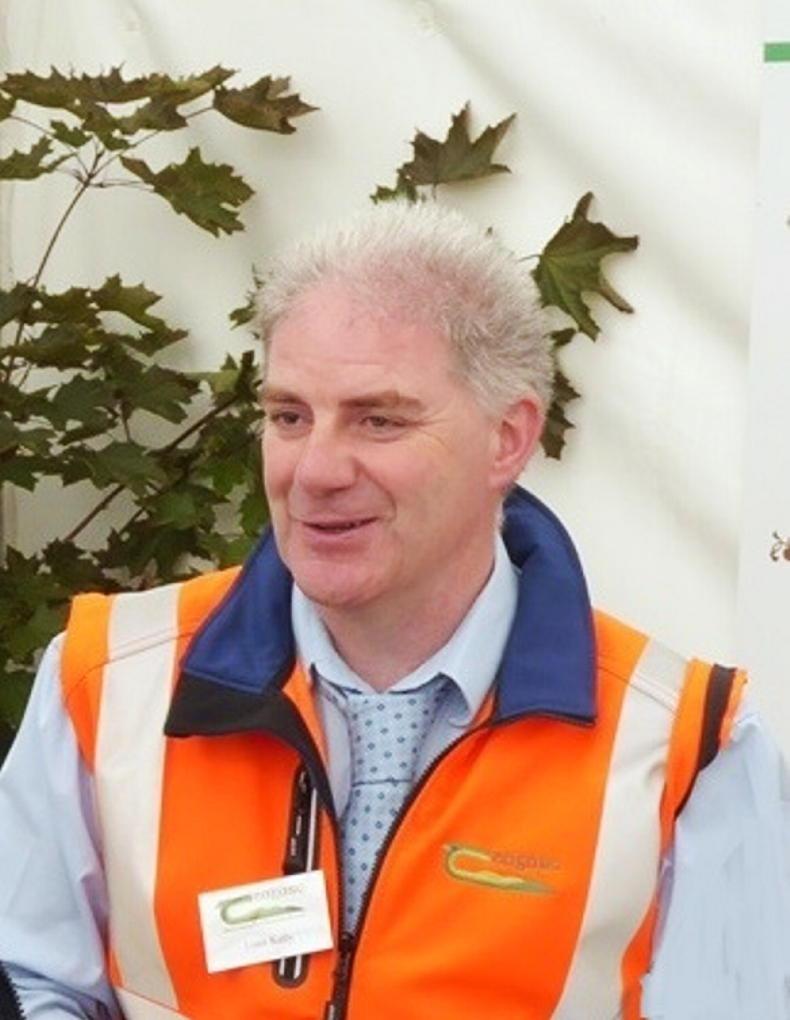
Liam Kelly, Teagasc, coordinator of forestry village, Tullamore show.
The total area of ash woodlands and plantations in Ireland was estimated at 24,350ha in the 2022 National Forest Inventory. These comprise 8,526ha of woodlands established up to 1989 and 15,824ha of plantations established from 1990 under the State-backed Grow Ash for Profit Scheme.
Approximately 6,500 landowners – mainly farmers – availed of this planting scheme, before it was withdrawn when ash dieback was detected in 2012. By then, grant-aided plantations had amounted to 65% of the total ash area.
Since the Reconstitution of Ash Dieback Scheme (RADS) was introduced in 2023, 1,230 ash owners have availed of the increased €2,000/ha grant aid and phased in payment of €5,000/ha.
The area approved so far is 4,397ha, which amounts to 28% of the grant aided ash area or 18% of the total ash area.
While RADS is a major improvement on previous paltry ash schemes, it has flaws.
The Climate Action Performance Payment (CAPP) of €5,000 could have been paid at least 75% up-front instead of being phased in over four years, while the €2,000/ha clearance payment is clearly inadequate on most infected sites.
It is supposed to cover the cost of the contractor’s and forester’s input, while the income from ash firewood should be recouped by the grower as recommended in the 2023 DAFM Review of Support for Farmers Impacted by Ash Dieback. Because of rapid degrade, firewood sales are now extremely limited, so many foresters I interviewed said they were not inspecting small difficult ash sites, as the full cost of clearance could be as high as €7,000/ha.
Most of the costs in implementing RADS can be recovered on good quality accessible ash sites of at least 3ha, which rules out 5,600 of the 6,500 ash plantation owners.
The small size of ash plantations is a major challenge, as 3,200 sites are less than 1ha, 1,700 between 1ha and 2ha and 700 between 2ha and 3ha. It is no coincidence that the average area approved under RADS is 3.6ha.
An additional challenge is health and safety in harvesting mature ash trees which are brittle and liable to snap. This slows down the operation at a time when reduced numbers of hard-pressed harvesting contractors are working in windblown areas.
Solutions
Owners with ash and other species should incorporate RADS in their overall forest management plan by timing ash clearance with other harvesting operations. For example, clearfelling and replanting a 10ha forest comprising 8ha of spruce and 2ha of ash would be an attractive proposition for the owner and both forestry consultant and contractor, especially when the replanting grant of between €3,858/ha and €8,555/ha is factored in on the ash site.
Options such as converting ash sites to agroforestry may also be considered while on small isolated ash sites, there may be opportunities to introduce a non-licensed approval initiative, such as the Native Tree Area scheme.
It is likely that Minister Healy-Rae will need to revisit the clearance grant, to take account of plantation size, site characteristics and realistic harvesting costs. The DAFM review stated that “additional ‘exceptional costs’ should be considered for particularly challenging sites”.
It is surely time to close this sorry chapter in Irish forestry, 13 years after dieback was first detected.
Details of the Reconstitution Scheme and CAPP scheme can be found under ‘Reconstitution Ash Dieback Scheme 2023-2027’ and ‘Climate Action Performance Payment Scheme’ on the Department’s website.
In short
1,230 ash owners avail of RADS.5,000 plus to apply or receive approval.3.6ha: average size of RADS approval.2.4ha: average ash plantation. €2,000/ha: clearance grant.€5,000/ha: CAPP payment.€3,858/ha: €8,555/ha replanting grant. Minister Healy-Rae encourages ash owners to replant
Minister of State Michael Healy-Rae has urged farmers with ash to apply for support under the Reconstitution Ash Dieback Scheme (RADS).
“The scheme provides a site clearance grant rate of €2,000/ha and between €3,858/ha and €8,555/ha, depending on the forest type replanted,” he explained.
“In addition to these payments, €5,000/ha is available under the Climate Action Performance Payment (CAPP),” he said.
“A total of €4.5m has been paid out this year so far on clearance and replanting grants, and a further €4m has been paid since last September on CAPP to those who have cleared their lands and replanted,” he added. “I welcome the fact that over a third of the total spending on ash dieback has occurred since last September, and that the CAPP has been instrumental in encouraging ash forest owners to take action.
“I want to encourage ash forest owners to engage with the enhanced reconstitution scheme as soon as possible, as the quickest and most effective way to clear and reconstitute affected sites, and to avail of the CAPP.”
Forestry to the fore at Tullamore Show
The forest and energy section will play a central role again at this year’s Tullamore Show on Sunday. The forestry village, organised by Teagasc, Forestry Development Department has been a major attraction at the show since 2005. Liam Kelly of Teagasc is once again co-ordinating the forestry section which provides demonstrations and information sessions from seed to sawdust and all arboreal aspects in between.
“It is great credit to the sector for supporting the show for two decades, with a number of companies involved every year since 2005,” said Kelly. “These, along with Teagasc forestry advisers, will be on hand to discuss all aspects of forestry, especially forest establishment, maintenance and management,” he added.
Teagasc researchers will attend to discuss a range of tree improvement projects, while staff from 25 forestry companies and organisations will be on hand to provide information and demonstrations at the dedicated forest and energy village.
“On the day, there will be plenty of opportunities to engage with Teagasc staff, especially for farmers who either have forests or are thinking about planting,” said Kelly. “One of the new challenges will be for attendees to identify the types of forests or woodlands they wish to establish. We will also have a virtual reality experience, where attendees can walk virtually though a forest as it matures. There will be an opportunity to access the latest forestry information, including fact sheets for those engaged in timber harvesting and sale,” he added.
The forestry village is located on rows W and X (close to the yellow catering village) in the main trade area of the show. For further information contact Liam Kelly by email (liam.kelly@teagasc.ie) or mobile (087-909-0495).

Liam Kelly, Teagasc, coordinator of forestry village, Tullamore show.
SHARING OPTIONS