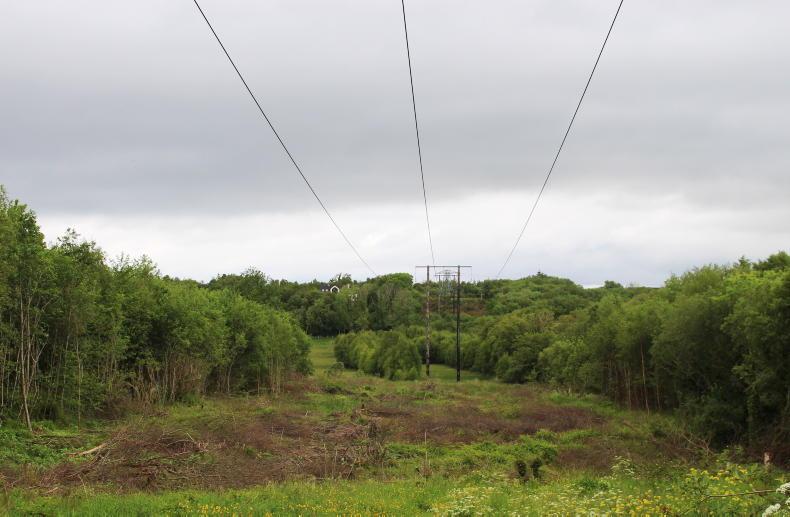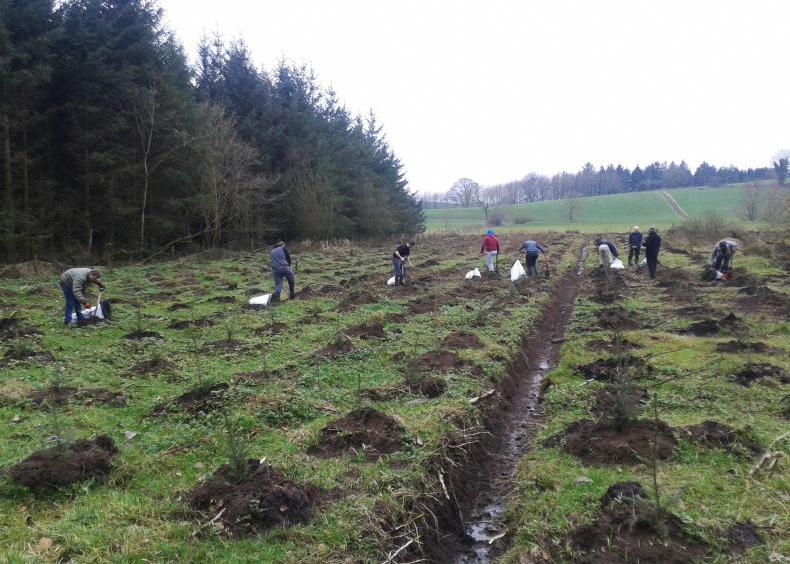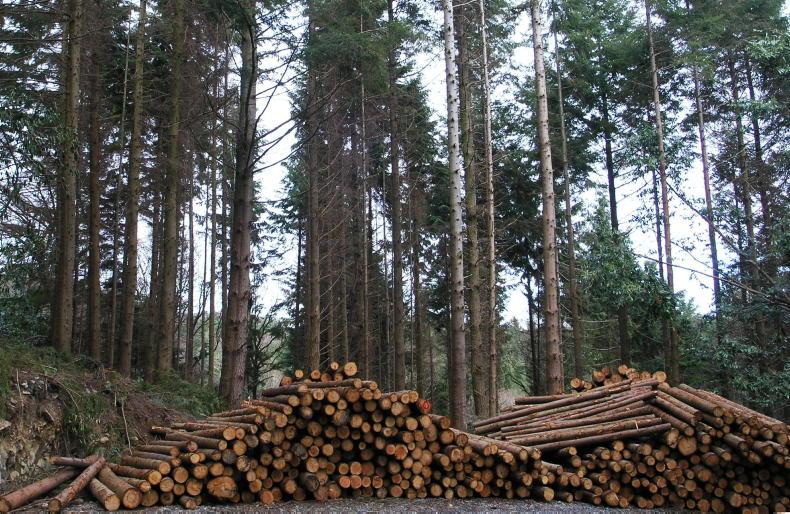
The current afforestation programme encourages broadleaf species diversity by increasing grant aid and premium payments especially for native species. As a result, broadleaf diversity and the broadleaf share of the annual planting programme continues to increase at the expense of coniferous afforestation and naturalised but non-native broadleaves where there is little diversity in a declining afforestation programme.
While there is broad agreement that greater species diversity is required in Irish forestry, afforestation levels of productive viable coniferous forests are now far too low to contribute to a future viable forestry and forest products sector.
The Department of Agriculture, Food and the Marine (DAFM) publication Ireland Forest Statistics 2025, provides data on a wide range of forestry aspects including species diversity and forest size trends.
Comparisons between annual afforestation in 2014 and last year show annual broadleaf planting is now at a record high of 55% of overall planting while conifer planting has gradually decreased over a 10-year period from 77% to 45% (Table 1).
While broadleaf planting as a percentage of total planting may look good statistically especially for “native only” advocates, it too is at a record low.
Broadleaf planting amounted to 872ha last year compared with 1,419ha in 2014, which illustrates that conifer forest establishment should be seen as the enabler to plant broadleaves not as a species competitor as it is in Scotland.
During the same period, the annual planting programme has fallen from 6,156ha to 1,573ha in 2024, although recent figures indicate that a 2,400ha planting programme is achievable this year.
While the drop in annual planting is now a major concern, the average planting size has also fallen from 10ha to 5.5ha over the past 20 years (see panel), which is now well below what constitutes a viable productive forest unit.
The major challenge is to increase annual planting programmes from a likely outturn of 2,400ha this year to 8,000ha at least and realistically assess the 50% native species target.
Species diversity is required but a programme that encourages productive diversity has to be a key to a sustainable afforestation programme as identified by the Government Timber in Construction Steering Group (TCSG).
Conifer diversity
Sitka spruce, which will be required for a viable construction, fencing, board manufacture and biomass energy has shown a dramatic decline both in area planted and percentage of total planting as it has fallen from 3,992ha (65%) to 611ha (39%).
Ireland needs to diversify its conifer planting programme but the opposite is happening. Conifers grow extremely well in Ireland and in addition to Sitka, at least six are ideally suited to Irish soil and climatic conditions.
These comprise Douglas fir, Norway spruce and Scots pine, while there is also potential for western red cedar, western hemlock and European larch should it prove resistant to Phytophthora ramorum.
Douglas fir, which Irish and continental foresters rate highly, represents just 1.5% of total planting. This planting rate will continue as long as the threat of deer damage to young Douglas fir plantations remains.
Deer damage is now a major threat to Douglas fir and other “minor” conifer species just as it is in all broadleaf sites. While grants are available and essential for deer fencing in native broadleaf sites, there are no similar supports for fencing diverse conifer sites.
Apart from Douglas fir, there is potential for Scots pine as a productive conifer, which also needs to be a major species in Ireland’s drive to increase native afforestation.
It is handicapped in this regard by a cap of 35% in Scots pine area in any individual native tree planting programme.
Norway spruce afforestation, which averaged 500ha from 2010 to 2016 fell to 9ha last year. While 2024 was an exceptionally poor year for Norway spruce afforestation, the trend away from this excellent species has been evident over the past few years when it has been averaging 30-60ha.
Broadleaf diversity
As ash is no longer planted, it was thought that alder would be a replacement species which it was for a number of years. Since 2010 when 667ha of alder were planted, it has fallen to 243ha in 2014 and is now at 91ha.
Alder has been supplanted by birch, which didn’t feature in 2014, although it may have been hidden that year under “other broadleaves”.
Now birch (mainly improved species) accounts for 872ha or 55% of the annual programme while native oak (mainly pedunculate) at 203ha has 13% of the species share.
The category “other broadleaves” is likely to include mainly natives.
Concentrating mainly on native broadleaves precludes not only commercial conifers but also naturalised broadleaves which are ideally suited to Irish conditions.
Some of these offer excellent long-term commercial value, including beech, sweet chestnut, sycamore, Norway maple and walnut but currently account for less than 1% of the annual afforestation programme.
In short
Average new forest size 5.5ha. Broadleaves now 55% of afforestation.Area planted with broadleaves falls from 1,419ha (2014) to 872ha (2024).Sitka spruce accounts for 611ha now compared with 3,992ha in 2014.Naturalised broadleaves (beech, sycamore, chestnut, etc) less than 1%.High value minor conifers 5.7%. New forest size continues to fall
The average size of new forests established in recent years is 5.5ha compared with 8.9ha in 2004 (Table 2).
This trend has continued since the 1990s and turn of the century when plantation sizes averaged over 10ha.
DAFM dashboard returns show that average plantation size in recent months is close to 6.5ha. As more than half of all forests now being established are carrying broadleaves only, it is important that the role of commercial forestry is addressed during the mid-term forestry review. Even if a 6.5ha productive forest planting size is maintained this year, only 4.3ha of these forests can be classed as commercial as they must carry 35% broadleaves and unplanted biodiverse areas.
Incentives to increase forest size and area need to be central in the mid-term review as the current sizes are uneconomic as well as carrying a high administrative cost.
Also the expectation of the Government Timber in Construction Steering Group (TCSG) is that commercial timber production will increase exponentially by mid century to ensure a major role for home-grown timber especially in timber frame construction. This is not going to happen if Ireland continues with the current planting levels and forest unit sizes.
The current afforestation programme encourages broadleaf species diversity by increasing grant aid and premium payments especially for native species. As a result, broadleaf diversity and the broadleaf share of the annual planting programme continues to increase at the expense of coniferous afforestation and naturalised but non-native broadleaves where there is little diversity in a declining afforestation programme.
While there is broad agreement that greater species diversity is required in Irish forestry, afforestation levels of productive viable coniferous forests are now far too low to contribute to a future viable forestry and forest products sector.
The Department of Agriculture, Food and the Marine (DAFM) publication Ireland Forest Statistics 2025, provides data on a wide range of forestry aspects including species diversity and forest size trends.
Comparisons between annual afforestation in 2014 and last year show annual broadleaf planting is now at a record high of 55% of overall planting while conifer planting has gradually decreased over a 10-year period from 77% to 45% (Table 1).
While broadleaf planting as a percentage of total planting may look good statistically especially for “native only” advocates, it too is at a record low.
Broadleaf planting amounted to 872ha last year compared with 1,419ha in 2014, which illustrates that conifer forest establishment should be seen as the enabler to plant broadleaves not as a species competitor as it is in Scotland.
During the same period, the annual planting programme has fallen from 6,156ha to 1,573ha in 2024, although recent figures indicate that a 2,400ha planting programme is achievable this year.
While the drop in annual planting is now a major concern, the average planting size has also fallen from 10ha to 5.5ha over the past 20 years (see panel), which is now well below what constitutes a viable productive forest unit.
The major challenge is to increase annual planting programmes from a likely outturn of 2,400ha this year to 8,000ha at least and realistically assess the 50% native species target.
Species diversity is required but a programme that encourages productive diversity has to be a key to a sustainable afforestation programme as identified by the Government Timber in Construction Steering Group (TCSG).
Conifer diversity
Sitka spruce, which will be required for a viable construction, fencing, board manufacture and biomass energy has shown a dramatic decline both in area planted and percentage of total planting as it has fallen from 3,992ha (65%) to 611ha (39%).
Ireland needs to diversify its conifer planting programme but the opposite is happening. Conifers grow extremely well in Ireland and in addition to Sitka, at least six are ideally suited to Irish soil and climatic conditions.
These comprise Douglas fir, Norway spruce and Scots pine, while there is also potential for western red cedar, western hemlock and European larch should it prove resistant to Phytophthora ramorum.
Douglas fir, which Irish and continental foresters rate highly, represents just 1.5% of total planting. This planting rate will continue as long as the threat of deer damage to young Douglas fir plantations remains.
Deer damage is now a major threat to Douglas fir and other “minor” conifer species just as it is in all broadleaf sites. While grants are available and essential for deer fencing in native broadleaf sites, there are no similar supports for fencing diverse conifer sites.
Apart from Douglas fir, there is potential for Scots pine as a productive conifer, which also needs to be a major species in Ireland’s drive to increase native afforestation.
It is handicapped in this regard by a cap of 35% in Scots pine area in any individual native tree planting programme.
Norway spruce afforestation, which averaged 500ha from 2010 to 2016 fell to 9ha last year. While 2024 was an exceptionally poor year for Norway spruce afforestation, the trend away from this excellent species has been evident over the past few years when it has been averaging 30-60ha.
Broadleaf diversity
As ash is no longer planted, it was thought that alder would be a replacement species which it was for a number of years. Since 2010 when 667ha of alder were planted, it has fallen to 243ha in 2014 and is now at 91ha.
Alder has been supplanted by birch, which didn’t feature in 2014, although it may have been hidden that year under “other broadleaves”.
Now birch (mainly improved species) accounts for 872ha or 55% of the annual programme while native oak (mainly pedunculate) at 203ha has 13% of the species share.
The category “other broadleaves” is likely to include mainly natives.
Concentrating mainly on native broadleaves precludes not only commercial conifers but also naturalised broadleaves which are ideally suited to Irish conditions.
Some of these offer excellent long-term commercial value, including beech, sweet chestnut, sycamore, Norway maple and walnut but currently account for less than 1% of the annual afforestation programme.
In short
Average new forest size 5.5ha. Broadleaves now 55% of afforestation.Area planted with broadleaves falls from 1,419ha (2014) to 872ha (2024).Sitka spruce accounts for 611ha now compared with 3,992ha in 2014.Naturalised broadleaves (beech, sycamore, chestnut, etc) less than 1%.High value minor conifers 5.7%. New forest size continues to fall
The average size of new forests established in recent years is 5.5ha compared with 8.9ha in 2004 (Table 2).
This trend has continued since the 1990s and turn of the century when plantation sizes averaged over 10ha.
DAFM dashboard returns show that average plantation size in recent months is close to 6.5ha. As more than half of all forests now being established are carrying broadleaves only, it is important that the role of commercial forestry is addressed during the mid-term forestry review. Even if a 6.5ha productive forest planting size is maintained this year, only 4.3ha of these forests can be classed as commercial as they must carry 35% broadleaves and unplanted biodiverse areas.
Incentives to increase forest size and area need to be central in the mid-term review as the current sizes are uneconomic as well as carrying a high administrative cost.
Also the expectation of the Government Timber in Construction Steering Group (TCSG) is that commercial timber production will increase exponentially by mid century to ensure a major role for home-grown timber especially in timber frame construction. This is not going to happen if Ireland continues with the current planting levels and forest unit sizes.
SHARING OPTIONS