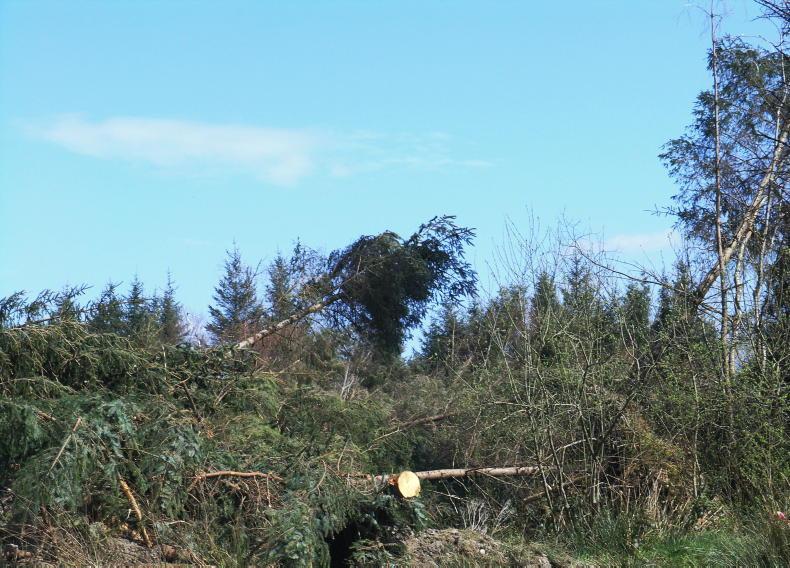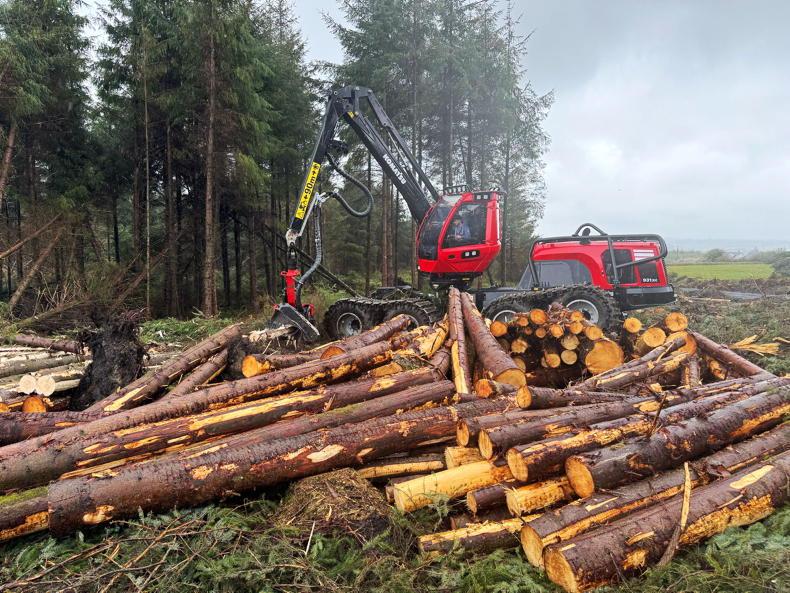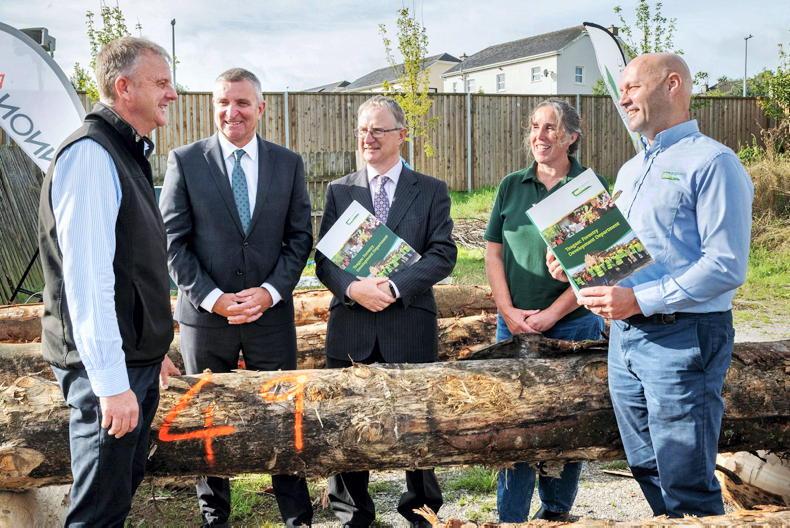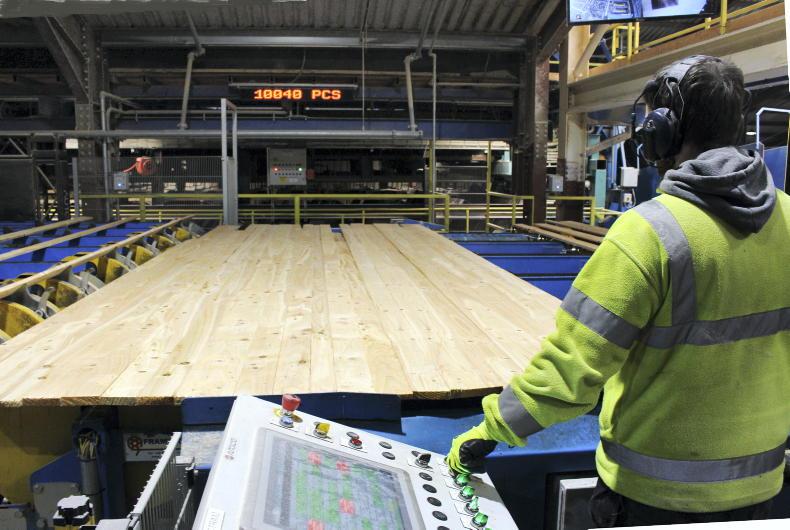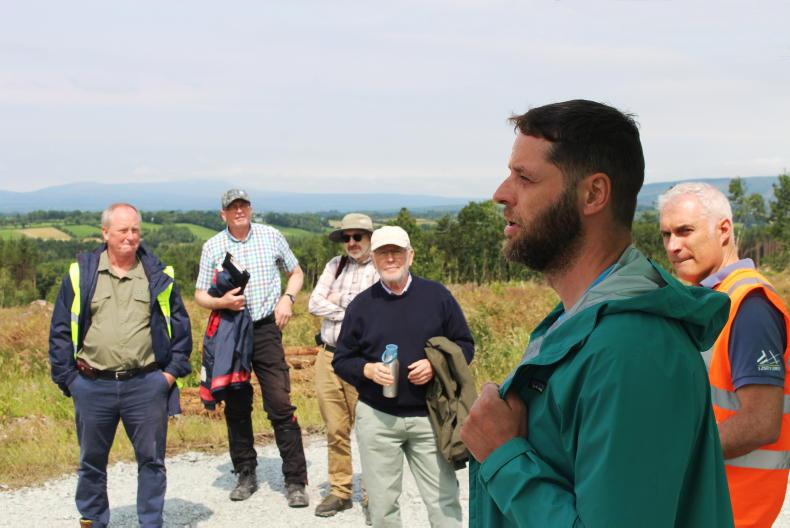
While it is difficult to assess harvesting progress in windblown forests across Ireland after storms Darragh and Éowyn, a picture is emerging. A recent field day in the Irish Forestry Unit Trust (IForUT) owned Kiltynaskellan Forest, Co. Cavan provided a snapshot of how forest owners and forestry companies are meeting the windblow challenge.
Organised by the Irish Timber Growers Association (ITGA) and IForUT, the event discussed harvesting windblow, selling logs and replanting windblown forests.
According to CSO data, timber supply from private forests increased to 2.95 million m3 in 2025 or 48% over the previous year. While this record performance was higher than expected, it was helped by Irish sawmills who purchased high volumes of medium to large logs from private forests at relatively good prices up to the end of the second quarter last year, but after this period, sawmills concentrated on Coillte sales while the private sector almost solely depended on export markets. Darryn McDowell, explained how IForUT met the export challenge.
Kiltynaskellan Forest
Located 17km northwest of Cavan Town, Kiltynaskellan Forest was established in 1997 on what was then rough grazing or unimproved grassland. The ancient woodland that gave the townland its Irish name, Coillte na Sceallán – “wood of the small acorns” – had long disappeared.
The 65.4ha forest had been thinned regularly over five-year cycles and was scheduled for clearfelling in 2028. Storm Éowyn blew down 41.5ha which yielded 16,138m3 or 389m3/ha.
By the time harvesting commenced in June last year, the export market was the only outlet for the timber, with the bulk of logs going to China. Unlike normal market situations, when the forest owners can wait until prices improve, in windblow, there is at most a two-year period before degrade sets in, so the timber has to be removed, regardless of price.
The average price achieved at Kiltynaskellan was €37/m3 roadside, which was below what would normally be expected but more than adequate considering the prevailing market. While the sawmills’ performance in increasing intake was acknowledged, the domestic market could not process what amounted to over two years’ harvest as a result of the windblow. While log prices for exports are lower than domestic sales, overseas buyers provide an essential market for privately owned timber, especially at a time of oversupply.
Export markets provided a greater range of log commercial sizes including 2.5m, 4.1m, 5.9m and 11.8m lengths all sold by volume (m3) rather than tonnes, while stake and pulp were sold by weight. Also, commercial logs sold into the export market can be cut down to 16cm top diameter, which is lower than sawmill specifications.
Selling by volume for higher value commercial lengths has major advantages, especially in windblow as logs dry out significantly over time. The conversion factor for standing sales is usually around 1.116. This means 1.0t of timber equals 1.116m3.
For example, the owner who is paid an average of €60/t for a clearfell receives €53.76/m3 using this conversion. During this prolonged dry period, the conversion rate could increase to 1.6 and higher, which means that €60/t now falls to €37.50/m3. Coillte has a system in place that converts tonnes to m3, which is not currently available to private forest owners.
Export markets are open to a wide range of species, even hardwoods. Although these are minor markets, Paddy Bruton said Euroforest Ireland has trial-exported two containers of hardwoods to China.
Replanting windblown sites
While 60% of Kiltynaskellan Forest was blown down, it was tempting to fell the remaining 40% as it is now vulnerable to future windblow. IForUT decided to retain the standing crop until prices increase.
The replanting species selection is 75% Sitka spruce, 5% Norway spruce and 20% broadleaves and unplanted open diverse areas.
The major challenge in reforestation sites is pine weevil control. Weevil damage can be high and is effectively controlled by treating transplants at the nursery stage, although a further spot insecticide spraying may be necessary.
An interesting approach adopted by IForUT in reforestation is to increase plant density to 2,700/ha rather than the 2,500/ha required. Inevitably there will be losses of 10-15% so increasing plant numbers at the beginning can preempt costly filling-in at a later stage.
A major discussion point at the field day was the €55 million Reconstitution Windblow Scheme (RSW).
Seppi Höna, Forest Service, explained the scheme which provides grants up to €6,744/ha. While he acknowledged that the emphasis was on harvesting, he urged foresters and forest owners to submit RSW applications.
Minister announces funding for forestry promotion
Minister of State with responsibility for forestry Niall Collins (centre) at the recent meeting of organisations awarded funding under the Department’s Forestry Promotion Projects Open Call with Alex Kelly (Irish Wood Producers), Megan Best (Native Events), Sarah Broderick (Hometree), Joe Gowran (Woodlands of Ireland), Maureen Kilgore (Irish Agroforestry Forum) and Donal Whelan (ITGA).
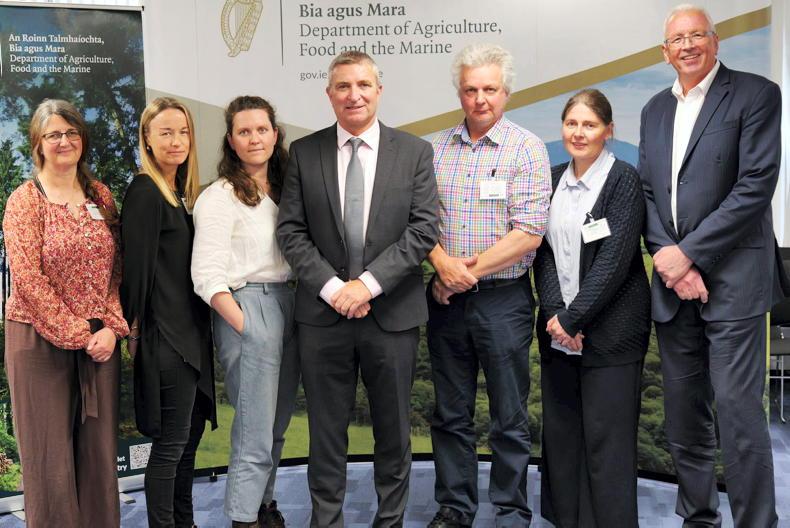
Minister Collins announced funding of €145,632 to 10 forestry organisations with projects that highlight the benefits of forestry, including climate, nature and the rural economy as well as encouraging landowners to plant trees.
Forestry to the fore at Tullamore - 9 August
The hugely popular Tullamore Show will include a special section highlighting the forest and energy sector on Sunday 9 August.
The show is now the largest one-day agricultural show with 60,000 expected to attend the many exhibits including the events and demonstrations at the dedicated Forest & Energy Village.
“The Village will be of interest to all existing woodland owners and those considering tree planting,” said Liam Kelly, forestry show coordinator with Teagasc Forest Development Department.
“Forestry is well established as a conventional enterprise within agriculture, and this is reflected by the diversity of forestry stands booked into this year’s show,” he added. “The stands of energy and forestry truly complement each other, providing a sense of future sustainability and are certainly not to be missed by forestry specialists and the general public.”