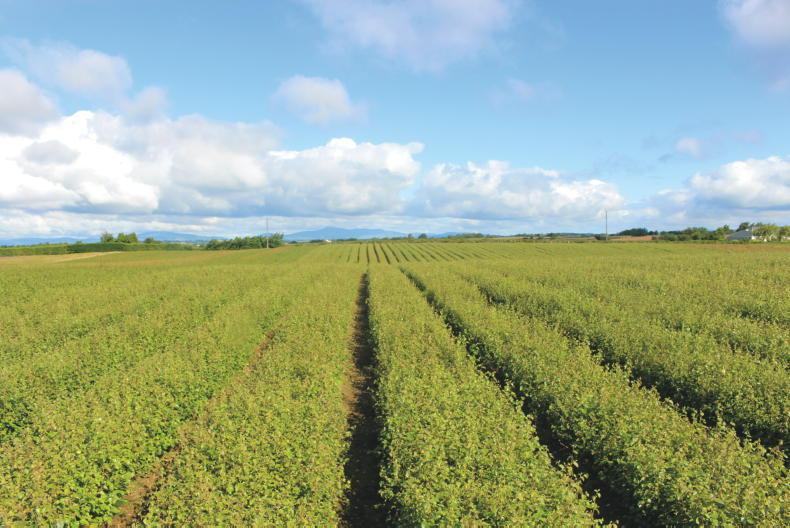
While annual afforestation is predicted to fall below 2,000ha this year and is unlikely to exceed 3,000ha in the short-term, one would think that nursery plant supply shouldn’t be an issue.
However, the increased demand for native tree species and a dramatic increase in reforestation, after storm damage clearance, have created new challenges for the nursery sector.
“Ireland’s ambitious plans for native tree planting over the coming decade risk falling short unless they are firmly aligned with the realities of nursery supply,” says Teige Ryan, director, None so Hardy Nurseries and PRO with the Social, Economic, Environmental Forestry Association of Ireland (SEEFA).
“The next Forestry Programme (2028-2032), the CAP agri-environmental schemes, and the EU Nature Restoration Plan are all set to drive increased demand from nurseries, especially for native species,” he maintains.
“These include ‘minor species’ such as holly, guelder rose, crab apple and spindle, which depend on extremely limited seed sources.”
Ryan maintains that this has resulted in an overreliance on small, inconsistent supplies that cannot reliably meet growing demand. “Even among more established native species, challenges persist in oak, rowan, cherry and hazel, but these benefit from recognised seed collection areas although their production is far from predictable.”
He points to irregular seed or mast years and inconsistent germination rates, which can result in periodic shortages. “In contrast, species such as alder, birch, Scots pine, willow and whitethorn tend to provide more stable seed availability, while Sitka and Norway spruce seed supply is sufficient,” Ryan says.
However, he believes that if Ireland is to meet its native tree goals, “a more practical, supply-led approach” is required. “This means designing schemes that make the best possible use of the planting stock that is actually available, rather than focusing on idealised species mixes that may not be achievable,” he maintains.
“It also requires recognising that not all land is suitable for native woodland, and that enabling appropriate areas to support commercial forestry can help balance overall demand.”
There has also been increased engagement with stakeholders
He cites positive developments in addressing nursery supply including “communication between nurseries and the Department, and the introduction of the forest technology scheme which has provided vital financial support, to scale up production.
“There has also been increased engagement with stakeholders, including the sharing of detailed seed supply data to inform future planning,” he says.
“But ultimately, delivering Ireland’s forestry ambitions – climate, biodiversity and sustainable development – will depend on striking the right balance between aspiration and reality.
“Nurseries are committed to expanding supply and supporting national goals, but success will rely on working with nature’s limits, not against them.”
Time is the critical factor in meeting uncertain plant demand Ryan maintains.
“Nursery tree production operates in three-year cycles,” he explains. “Seeds sown in 2026, for instance, will produce planting stock for the 2028–2029 season. This lag means that aligning policy with production realities must happen well in advance if future targets are to be meaningful.”
Reforestation to dramatically increase after storm damage
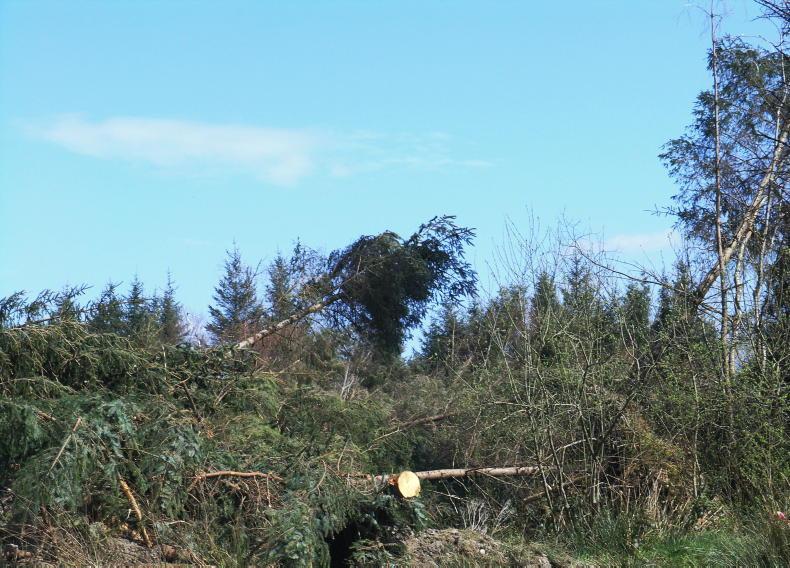
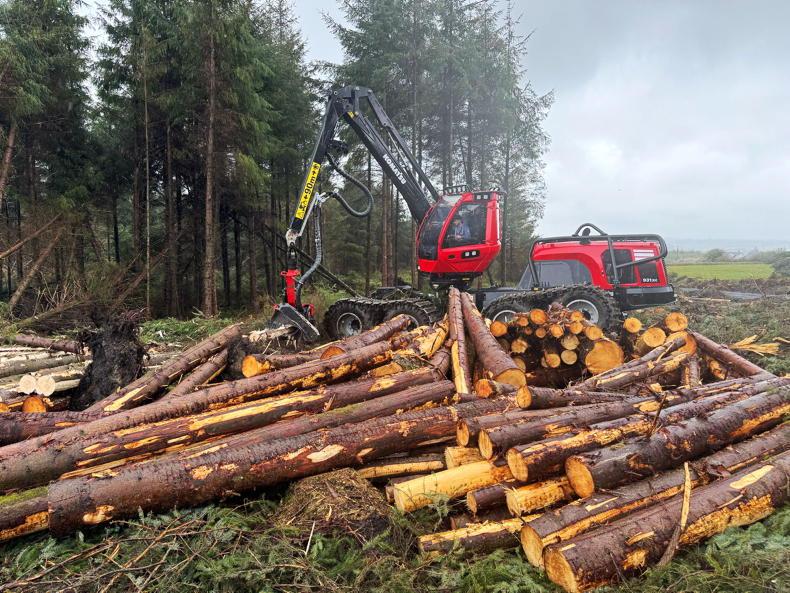
While seed from Sitka and Norway spruce “is sufficient” according to Teige Ryan, there is likely to be a surge in demand for these species when the 26,000ha of blown forests caused storms Darragh and Éowyn in December 2024 and January last year are cleared.
A number of factors will influence private plant supply and nursery production schedules, which are currently uncertain
This presents challenges to Coillte and private nurseries as they begin the process of reforestation.
While Coillte can at least predict their own nursery plant demand when replanting their 13,450ha of blown forests, the position of the private sector is uncertain.
A number of factors will influence private plant supply and nursery production schedules, which are currently uncertain. These include species choice and the timing of reforestation by private growers – mainly farmers – when they eventually clear their 11,550ha of windblown forests.
This will require up to 30 million plants over the next three to four years in addition to the afforestation programme and normal reforestation after clearfelling standing sales.
In 2023, Douglas fir trees in Coillte forests were selected as the main material to build the Irish Pavilion at Expo 25 in Osaka, Japan.

The trees were felled and delivered to GP Wood sawmill in Co Cork where they were precision sawn and dried before being shipped to Osaka in 2024.
The pavilion was erected in 2024 – the first of the 152 international pavilions to receive a certificate of completion.
Circularity was the theme at Expo 25, which was visited by 21 million people between April and October last year. Team Ireland led by the Department of Foreign Affairs continues this theme by recycling the Douglas fir timber.
Since the pavilion was disassembled in late 2025, the cladding has been transported to the GREENxEXPO 2027 exhibition in Yokohama, the major international horticultural show, which will run from March to September next year.
The Douglas fir, which was sequestering carbon dioxide in the forest for a half century “continues to lock carbon in during its afterlife,” said Michael O’Regan, sales manager of GP Wood.
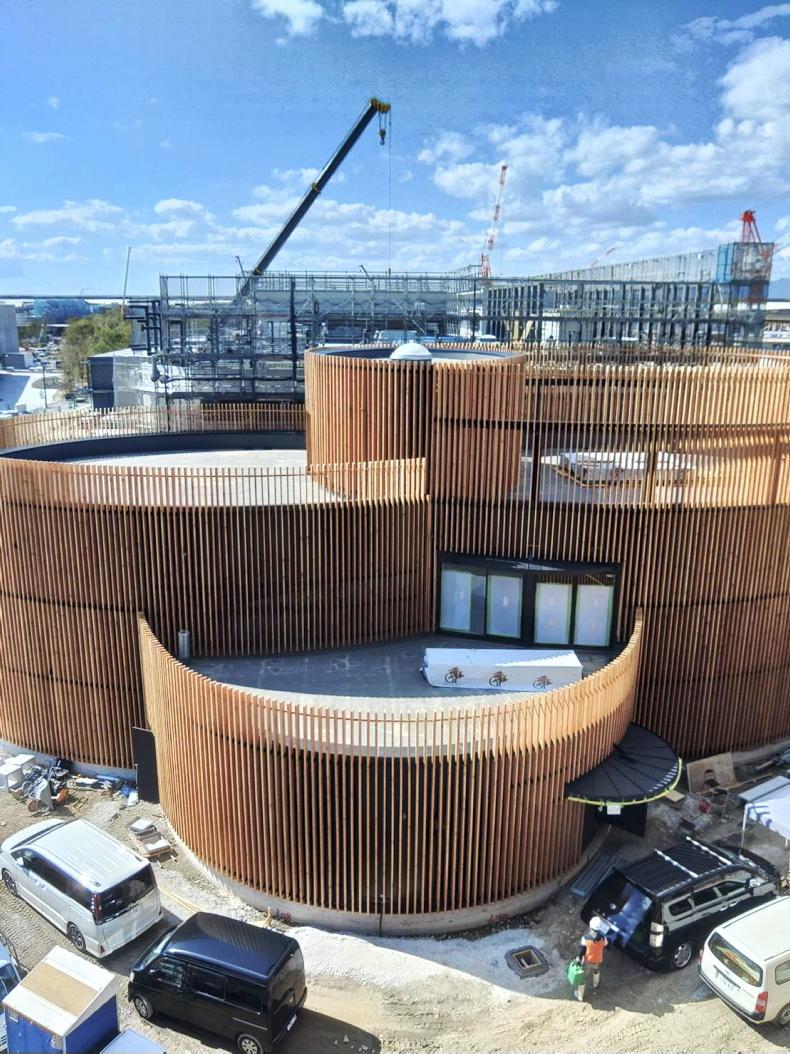
Like Expo 25, the Yokohama show will have a strong wood content, including a 92-metre wooden structure at the entrance gate.
“The gate’s exterior design will reuse 1,000 pieces of the Coillte grown and GP Wood-supplied Douglas fir timber, preserving its original form as much as possible,” said O’Regan.
“By keeping natural materials in productive use for as long as possible, while supporting lower-carbon construction, projects such as this illustrate how a forest-based bioeconomy can contribute to a more sustainable future,” said Mark McAuley, director Forest Industries Ireland, which represents the Irish forestry and forest products sector.