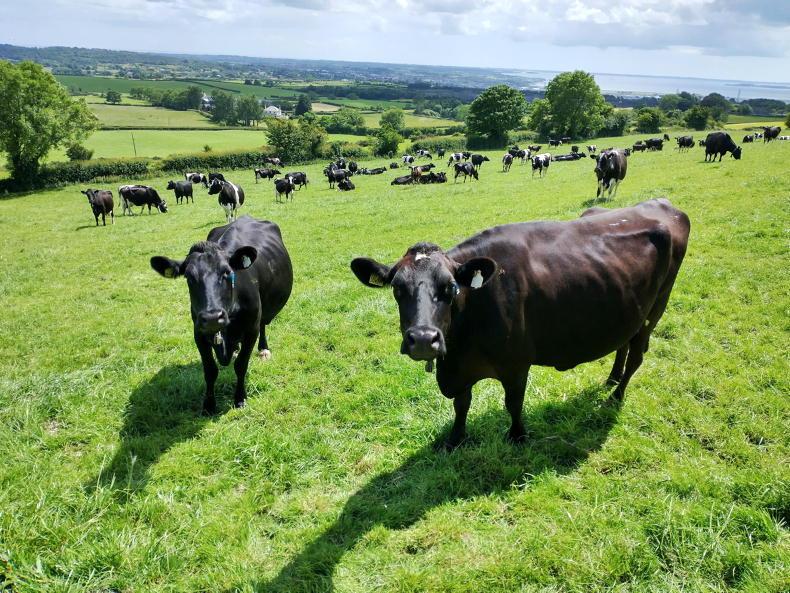
“Milk is the product, but it’s all about the grass,” says Brian McCracken. Brian has 230 spring-calving New Zealand Kiwi-cross cows on an 86ha grazing platform at Cairngaver farm outside Newtownards.
Brian aims for over 500kg milk solids per cow from a small 530kg bodyweight animal, producing milk at 5% butterfat and 4% protein.
In 2024 he achieved 504kg of milk solids at 4.72% butterfat and 3.69% protein, from grass and 1,299kg of meal.
This year he will better the yield figures (with the same amount of meal), as the fine weather has yielded the best grass growing season for many years.
In the year-to-date he is at 3,478 litres per cow at 4.71% butterfat and 3.8% protein on 624kg of meal.
Grass management
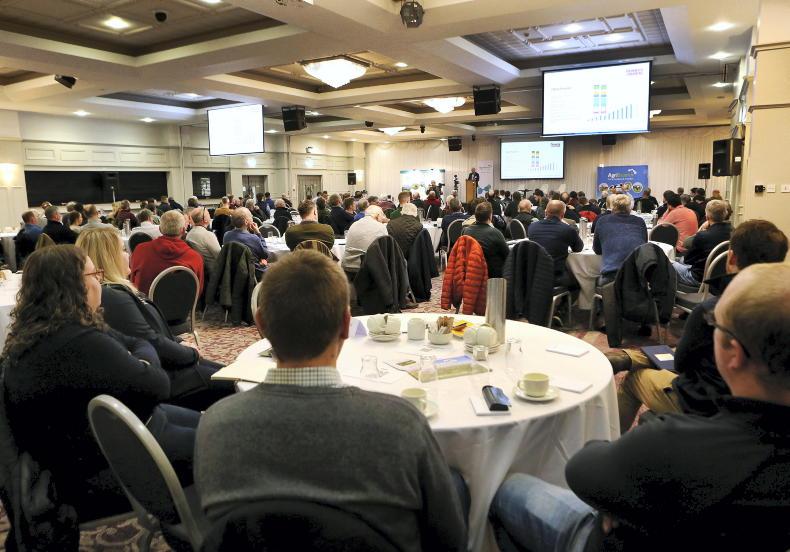
Brian, with son Ewan and wife Lynn has been measuring grass growth since 2017. Results were reported at a recent AgriSearch farm walk.
Cow turnout is mid-February and housing is October to mid-November.
Grass targets are pre-grazing covers of 3,000kg dry matter per ha (DM/ha), which equates to a grass height of 10-11cm, with post-grazing covers of 1,600kg DM/ha (grass height of 5cm).
For most of the grazing season, average farm cover ranges from 2,010kg DM/ha in May, June and July to 2,500kg DM/ha in February and September.
Rotation length over the paddocks ranges from 18 to 24 days mid-season to 30 to 35 days in September and October.
Success
Brian says success is down to getting the first round of grazing started in mid-February with good graze-outs.
This sets the grazing platform up for the entire grazing season. Added to that is using grass and clover varieties suited to the farm, ensuring correct soil pH and adequate levels of nitrogen (N), phosphorus (P) and potassium (K).
Grass varieties recently used are Aston Energy, either on its own or mixed with Aberchoice.
White clovers are Galway, Coolfin, Violin and Buddy stitched in with an Einbock drill after a tight grazing.
The correct pH is essential at 6.5+ with P and K indices at 2+ or 3.
Paddocks are reseeded when records show lower yields.
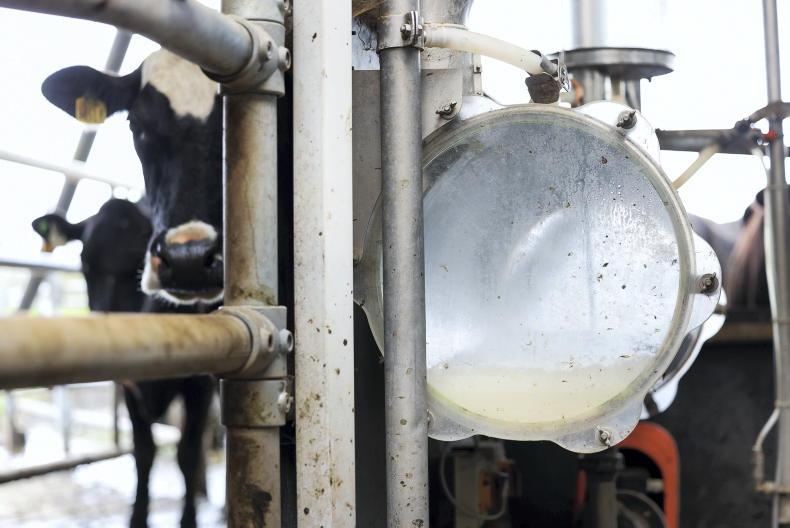
Cows are milked twice a day. Paddocks are well served by a network of pathways, with cows coming to the yard of their own accord when the Batt Latch release system opens the exit to the paddock.
Release times are 5am and 3pm. Cows are put back to the next grazing paddock with an empty belly to ensure they eat as much grass as possible.