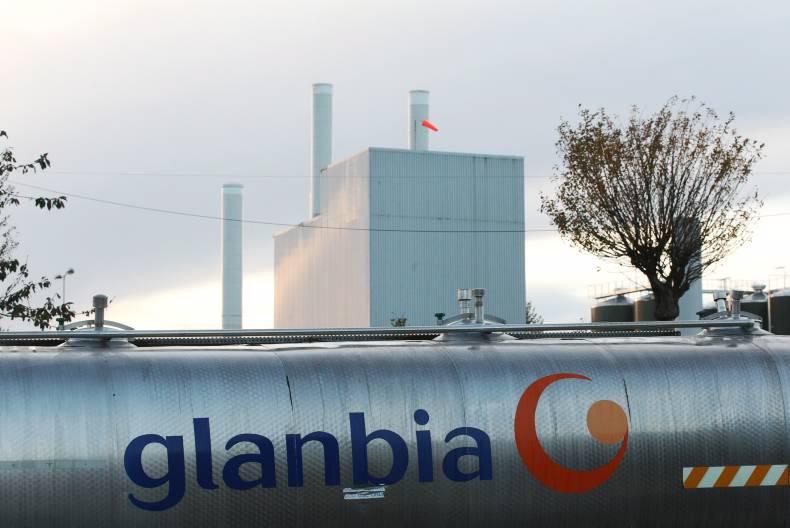
In a repeat of the previous month, the top three places in the price league for April milk in Northern Ireland are occupied by Glanbia companies. The joint first price of 22.83p/litre for milk collected on alternate days was paid by Glanbia Milk and Fivemiletown Co-op (whose milk is bought by Glanbia Ingredients Ireland Limited on terms equal to Glanbia Milk).
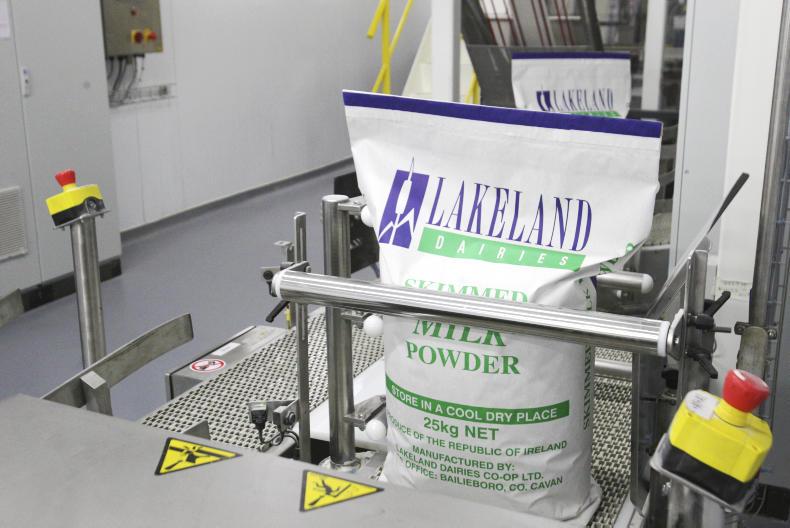
Their price in the April league was just over 1p/l below their March price. The third placed price, paid by Glanbia Cheese at Magheralin, was again exactly 0.5p/l below the top and narrowly ahead of Lakeland Dairies and Town of Monaghan. Suppliers to Glanbia Cheese currently have no charge for milk collection and transport, a concession being implemented for 12 months from November 2014.
In these comparisons, the prices are after deduction of transport charges applicable to a supplier of 650,000 litres per year with average NI seasonality of supply and with average milk quality of 3.97% butterfat, 3.2% protein, 4.74% lactose, TBC of 16 and SCC of 185. These compositional quality and hygienic quality standards reflect the actual averages being attained in supplies in NI during April.
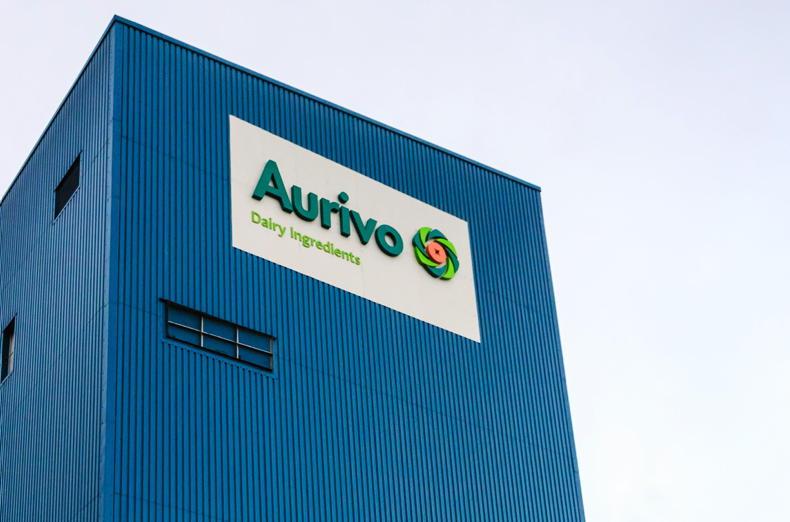
For milk collected on alternate days, the April price paid by Aurivo Co-op was closer to those above it than in March. Aurivo’s price was higher than Monaghan and Lakeland prices for milk collected daily.
The NI-based co-ops occupy the bottom three places in the April league, all more than 1p/l below the top price.
The Ballyrashane Red Tractor prices shown in these tables include a bonus of 0.2p/l on top of the basic price at Ballyrashane Co-op. Around 35% of Ballyrashane milk does not qualify for the bonus and the price for that milk is very close to the prices paid by Fane Valley and the Dale Farm Red Tractor prices.
This monthly league does not feature the prices paid by United Dairy Farmers for milk that isn’t Red Tractor farm-assured as that constitutes less than 15% of the milk bought by United. The price for that milk is 0.4p/l below the Dale Farm Red Tractor price.
With or without the basic United price, the April league has a narrower spread of prices than has been the norm over the past year or so.
The same applies to prices across the range of milk qualities and two differing sizes of supplier compared in Tables 2 and 3. As this is the first month of the 2015-16 milk year, we have updated the quality parameters (Table 1) from which the prices in Tables 2 and 3 are calculated. These tables indicate prices for milk from two significantly different scales of production (350,000 litres per year and one million litres per year) but with some minor adjustments to the volumes of milk collected per month to bring these into line with the small changes in the overall seasonality profile of milk supply in NI. That supply profile has become slightly flatter throughout the year.
Ongoing increases
To reflect the ongoing increases in the average volume of milk produced per dairy farm in NI, the main change introduced for the new milk year is that the monthly league table now refers to a supplier of 650,000 litres per year (previously it was 500,000 litres). This means slightly lower transport charges per litre as the fixed charges are spread across more litres.
The league table also reflects the flatter seasonality profile, which ranges from a supply of just over 64,000 litres in May to a low of 47,000 litres in November. The April league prices are based on a supply of slightly under 60,000 litres in that month by the producer of 650,000 litres per year.
Table 3 is based on an annual milk supply of one million litres, so the calculated milk prices include volume bonuses from the companies that pay bonuses for a million litres annual supply.
In some cases, suppliers of two to three million litres or more per year are paid larger bonuses. The available information on these is listed in Table 6.
This means that a small number of large producers are receiving prices higher than those quoted in Table 3. For example:
Monaghan, whose largest suppliers receive a 0.75p/l bonus. This is 0.5p/l above the bonus paid to the producer of one million litres per year as shown in the prices in Table 3.Aurivo and Lakeland, whose largest suppliers receive a 0.5p/l bonus. This is 0.2p/l above the bonus paid to the producer of one million litres per year.Fane Valley whose largest producers receive a 0.4p/l bonus. This is 0.2p/l more than the bonus taken into account in prices shown in Table 3. United/Dale Farm, whose largest suppliers receive a bonus, described as a cost rebate, of 0.3p. This adds 0.2p to the prices shown in Table 3.I see reports that some French dairy processors have made moves to control the volume of milk that their dairy farmers may supply. So, instead of super levies for exceeding quotas set by the European Union, there will be financial penalties imposed by the processors.
Katrine Lecornu, president of the European Dairy Farmers (EDF) organisation, says that her co-operative has given her business a forecast of +2% per year for the next seven years and if she produces more than the contracted volume of milk, the penalty will be €286 per tonne of milk. That’s around 20p/litre.
Given such a constraint on producing additional litres, Lecornu says that she needs to find other ways for continuous improvement of her business. This could mean breeding for more protein and butterfat in milk rather than greater volumes of milk. Lecornu prefers to speak about ‘‘continuous improvement’’ rather than ‘‘lower cost of production’’.
It’s a very different scenario from the current position in Northern Ireland, where the emphasis remains on paying for litres of milk. This is more than two years after the Going for Growth report recommended that the dairy processors should adjust their payment systems to encourage increases in milk solids that are required to maximise yields for the majority of dairy products manufactured in NI. This would contribute to a more efficient industry here.
While prices paid for ex-farm milk in Northern Ireland have come closer together for the first month of the 2015-16 milk year, there is a wide range of prices in Britain. The dairy scene in Britain is complex, with many different types of supply contract and differing prices that are conditional on hitting close to a pre-determined supply profile or having the producer jumping through hoops related to farm assurance or animal health and welfare or thresholds for saturated fats in the milk, for example.
Having obtained the April statement of a supplier to the Davidstow Creamery through Dairy Crest Direct, I have found that the farmer has received over 25p/l for April milk. This price was made up of no fewer than 12 components, as follows:
Base price (just under 2.3p).Butterfat (just over 9p) relating to the April average butterfat of just under 4% from four tests.Protein (just under 9p) relating to the April average protein of 3.16% from four tests.Somatic cell count (0.1p) relating to geometric mean SCC of 90.Bactoscan (0.1p) relating to geometric mean BAC of 17.Butterfat protein ratio (0.9p): The producer is not sure how this is determined.Volume bonus (1.1p) relating to a supply of over 300,000 litres in the month.Davidstow Creamery bonus (1p).Dairy Crest Direct Bonus (0.3p).Profile payment (1.5p) relating to April deliveries being close to the forecast volume.Supreme bonus (0.1p).White Gold payment (0.25p) relating to farm assured statusThe statement also indicates a charge of £215 plus VAT for the White Gold Service, which is a provider of independent inspection of farms.
There is no apparent charge for milk collection and transport ex-farm. The end price of more than 25p/litre from a factory producing cheese is well above the April prices paid in Northern Ireland, but it is not directly comparable as it is impossible to calculate what elements of the price would not have been paid to a supplier of milk on the terms that milk is supplied in Northern Ireland (smaller volumes, no forecast profile, no adjustment for butterfat protein ratio, no White Gold payment).
Currently, some of the higher prices are on contracts that base the prices on costs of production. The Dairy Crest ‘‘formula contract’’ is currently at a premium of more than 5p/l above its standard liquid milk contract price.
The formula price, which is largely related to costs of production, has fallen by just under 1p/l since January this year, while the liquid contract price has dropped by almost 4p/l.
The formula for April saw no change in the costs of feed or fertiliser and an increase in cost of red diesel. This helped to offset the parts
of the formula relating to
the trade prices of bulk cream.
On this page, we feature the pricing changes that are happening at the producer co-op, First Milk. But First Milk suppliers on so-called ‘‘aligned contracts’’ to Nestlé factories in Ayrshire and Cumbria are understood to be receiving between 27p/l and 29p/l, which had been fixed to the end of 2015. This is a controversial issue within the First Milk co-operative, with some of its members set to receive prices below 20p/l, before deduction of the capital levy.
Obviously, there are different markets to be served but it is a far cry from the relatively uncomplicated pricing systems currently operating in Northern Ireland.
Milk pricing has changed significantly at First Milk in Britain as the producer co-op is taking radical steps to try to survive.
The First Milk prices from 1 April are based on a so-called A volume, which is 80% of a producer’s supply and a B volume referring to the other 20%.
The A volume for April was priced at 20.87p/litre. The price for the B volume was just 16.1p/l. Combining these two elements of the new pricing system gives an average of 19.92p/l for April milk (as shown in Tables 2 and 3).
That First Milk price is before deduction of its capital levy of 2p/l. This levy is being collected in an attempt to restore some strength to the balance sheet of the co-op, which had slipped to a weak financial position that made it difficult for First Milk to negotiate the further extension of its loans from the bank.
Meanwhile, First Milk has announced that 70 staff will be made redundant, including half of the head office staff. And another big change in milk pricing is due to take effect from 1 June, with First Milk having designated seven different milk pools across the wide geographical area in which it collects milk. Four of the milk pools are for manufacturing dairy products and three described as balancing pools.
The ex-farm prices payable will be based on commercial returns obtained. But there will be some revenue held back to get the business through the restructuring that is taking place under the new chief executive, Mike Gallacher.
The board of First Milk co-op has agreed to reduce payments to members by £3.3m, which works out at 0.33p/l over the annual supply of one billion litres.
The seven geographic areas pricing is due to take effect from 1 June. Price cuts for the A volume have been announced, ranging from 0.2p to 1.2p/l.
One region, Haverfordwest Creamery, will obtain a price increase of 0.3p/l. The changes mean that the A volume price there and at Lake District Creamery will be 21.17p/l, while other regional milk pools of First Milk will have A volume prices ranging from 20.67p down to 19.3p/l. The lowest prices apply for the island of Bute, the midlands of England and east Wales, where First Milk does not have any milk processing facilities.
In a repeat of the previous month, the top three places in the price league for April milk in Northern Ireland are occupied by Glanbia companies. The joint first price of 22.83p/litre for milk collected on alternate days was paid by Glanbia Milk and Fivemiletown Co-op (whose milk is bought by Glanbia Ingredients Ireland Limited on terms equal to Glanbia Milk).
Their price in the April league was just over 1p/l below their March price. The third placed price, paid by Glanbia Cheese at Magheralin, was again exactly 0.5p/l below the top and narrowly ahead of Lakeland Dairies and Town of Monaghan. Suppliers to Glanbia Cheese currently have no charge for milk collection and transport, a concession being implemented for 12 months from November 2014.
In these comparisons, the prices are after deduction of transport charges applicable to a supplier of 650,000 litres per year with average NI seasonality of supply and with average milk quality of 3.97% butterfat, 3.2% protein, 4.74% lactose, TBC of 16 and SCC of 185. These compositional quality and hygienic quality standards reflect the actual averages being attained in supplies in NI during April.
For milk collected on alternate days, the April price paid by Aurivo Co-op was closer to those above it than in March. Aurivo’s price was higher than Monaghan and Lakeland prices for milk collected daily.
The NI-based co-ops occupy the bottom three places in the April league, all more than 1p/l below the top price.
The Ballyrashane Red Tractor prices shown in these tables include a bonus of 0.2p/l on top of the basic price at Ballyrashane Co-op. Around 35% of Ballyrashane milk does not qualify for the bonus and the price for that milk is very close to the prices paid by Fane Valley and the Dale Farm Red Tractor prices.
This monthly league does not feature the prices paid by United Dairy Farmers for milk that isn’t Red Tractor farm-assured as that constitutes less than 15% of the milk bought by United. The price for that milk is 0.4p/l below the Dale Farm Red Tractor price.
With or without the basic United price, the April league has a narrower spread of prices than has been the norm over the past year or so.
The same applies to prices across the range of milk qualities and two differing sizes of supplier compared in Tables 2 and 3. As this is the first month of the 2015-16 milk year, we have updated the quality parameters (Table 1) from which the prices in Tables 2 and 3 are calculated. These tables indicate prices for milk from two significantly different scales of production (350,000 litres per year and one million litres per year) but with some minor adjustments to the volumes of milk collected per month to bring these into line with the small changes in the overall seasonality profile of milk supply in NI. That supply profile has become slightly flatter throughout the year.
Ongoing increases
To reflect the ongoing increases in the average volume of milk produced per dairy farm in NI, the main change introduced for the new milk year is that the monthly league table now refers to a supplier of 650,000 litres per year (previously it was 500,000 litres). This means slightly lower transport charges per litre as the fixed charges are spread across more litres.
The league table also reflects the flatter seasonality profile, which ranges from a supply of just over 64,000 litres in May to a low of 47,000 litres in November. The April league prices are based on a supply of slightly under 60,000 litres in that month by the producer of 650,000 litres per year.
Table 3 is based on an annual milk supply of one million litres, so the calculated milk prices include volume bonuses from the companies that pay bonuses for a million litres annual supply.
In some cases, suppliers of two to three million litres or more per year are paid larger bonuses. The available information on these is listed in Table 6.
This means that a small number of large producers are receiving prices higher than those quoted in Table 3. For example:
Monaghan, whose largest suppliers receive a 0.75p/l bonus. This is 0.5p/l above the bonus paid to the producer of one million litres per year as shown in the prices in Table 3.Aurivo and Lakeland, whose largest suppliers receive a 0.5p/l bonus. This is 0.2p/l above the bonus paid to the producer of one million litres per year.Fane Valley whose largest producers receive a 0.4p/l bonus. This is 0.2p/l more than the bonus taken into account in prices shown in Table 3. United/Dale Farm, whose largest suppliers receive a bonus, described as a cost rebate, of 0.3p. This adds 0.2p to the prices shown in Table 3.I see reports that some French dairy processors have made moves to control the volume of milk that their dairy farmers may supply. So, instead of super levies for exceeding quotas set by the European Union, there will be financial penalties imposed by the processors.
Katrine Lecornu, president of the European Dairy Farmers (EDF) organisation, says that her co-operative has given her business a forecast of +2% per year for the next seven years and if she produces more than the contracted volume of milk, the penalty will be €286 per tonne of milk. That’s around 20p/litre.
Given such a constraint on producing additional litres, Lecornu says that she needs to find other ways for continuous improvement of her business. This could mean breeding for more protein and butterfat in milk rather than greater volumes of milk. Lecornu prefers to speak about ‘‘continuous improvement’’ rather than ‘‘lower cost of production’’.
It’s a very different scenario from the current position in Northern Ireland, where the emphasis remains on paying for litres of milk. This is more than two years after the Going for Growth report recommended that the dairy processors should adjust their payment systems to encourage increases in milk solids that are required to maximise yields for the majority of dairy products manufactured in NI. This would contribute to a more efficient industry here.
While prices paid for ex-farm milk in Northern Ireland have come closer together for the first month of the 2015-16 milk year, there is a wide range of prices in Britain. The dairy scene in Britain is complex, with many different types of supply contract and differing prices that are conditional on hitting close to a pre-determined supply profile or having the producer jumping through hoops related to farm assurance or animal health and welfare or thresholds for saturated fats in the milk, for example.
Having obtained the April statement of a supplier to the Davidstow Creamery through Dairy Crest Direct, I have found that the farmer has received over 25p/l for April milk. This price was made up of no fewer than 12 components, as follows:
Base price (just under 2.3p).Butterfat (just over 9p) relating to the April average butterfat of just under 4% from four tests.Protein (just under 9p) relating to the April average protein of 3.16% from four tests.Somatic cell count (0.1p) relating to geometric mean SCC of 90.Bactoscan (0.1p) relating to geometric mean BAC of 17.Butterfat protein ratio (0.9p): The producer is not sure how this is determined.Volume bonus (1.1p) relating to a supply of over 300,000 litres in the month.Davidstow Creamery bonus (1p).Dairy Crest Direct Bonus (0.3p).Profile payment (1.5p) relating to April deliveries being close to the forecast volume.Supreme bonus (0.1p).White Gold payment (0.25p) relating to farm assured statusThe statement also indicates a charge of £215 plus VAT for the White Gold Service, which is a provider of independent inspection of farms.
There is no apparent charge for milk collection and transport ex-farm. The end price of more than 25p/litre from a factory producing cheese is well above the April prices paid in Northern Ireland, but it is not directly comparable as it is impossible to calculate what elements of the price would not have been paid to a supplier of milk on the terms that milk is supplied in Northern Ireland (smaller volumes, no forecast profile, no adjustment for butterfat protein ratio, no White Gold payment).
Currently, some of the higher prices are on contracts that base the prices on costs of production. The Dairy Crest ‘‘formula contract’’ is currently at a premium of more than 5p/l above its standard liquid milk contract price.
The formula price, which is largely related to costs of production, has fallen by just under 1p/l since January this year, while the liquid contract price has dropped by almost 4p/l.
The formula for April saw no change in the costs of feed or fertiliser and an increase in cost of red diesel. This helped to offset the parts
of the formula relating to
the trade prices of bulk cream.
On this page, we feature the pricing changes that are happening at the producer co-op, First Milk. But First Milk suppliers on so-called ‘‘aligned contracts’’ to Nestlé factories in Ayrshire and Cumbria are understood to be receiving between 27p/l and 29p/l, which had been fixed to the end of 2015. This is a controversial issue within the First Milk co-operative, with some of its members set to receive prices below 20p/l, before deduction of the capital levy.
Obviously, there are different markets to be served but it is a far cry from the relatively uncomplicated pricing systems currently operating in Northern Ireland.
Milk pricing has changed significantly at First Milk in Britain as the producer co-op is taking radical steps to try to survive.
The First Milk prices from 1 April are based on a so-called A volume, which is 80% of a producer’s supply and a B volume referring to the other 20%.
The A volume for April was priced at 20.87p/litre. The price for the B volume was just 16.1p/l. Combining these two elements of the new pricing system gives an average of 19.92p/l for April milk (as shown in Tables 2 and 3).
That First Milk price is before deduction of its capital levy of 2p/l. This levy is being collected in an attempt to restore some strength to the balance sheet of the co-op, which had slipped to a weak financial position that made it difficult for First Milk to negotiate the further extension of its loans from the bank.
Meanwhile, First Milk has announced that 70 staff will be made redundant, including half of the head office staff. And another big change in milk pricing is due to take effect from 1 June, with First Milk having designated seven different milk pools across the wide geographical area in which it collects milk. Four of the milk pools are for manufacturing dairy products and three described as balancing pools.
The ex-farm prices payable will be based on commercial returns obtained. But there will be some revenue held back to get the business through the restructuring that is taking place under the new chief executive, Mike Gallacher.
The board of First Milk co-op has agreed to reduce payments to members by £3.3m, which works out at 0.33p/l over the annual supply of one billion litres.
The seven geographic areas pricing is due to take effect from 1 June. Price cuts for the A volume have been announced, ranging from 0.2p to 1.2p/l.
One region, Haverfordwest Creamery, will obtain a price increase of 0.3p/l. The changes mean that the A volume price there and at Lake District Creamery will be 21.17p/l, while other regional milk pools of First Milk will have A volume prices ranging from 20.67p down to 19.3p/l. The lowest prices apply for the island of Bute, the midlands of England and east Wales, where First Milk does not have any milk processing facilities.







SHARING OPTIONS