



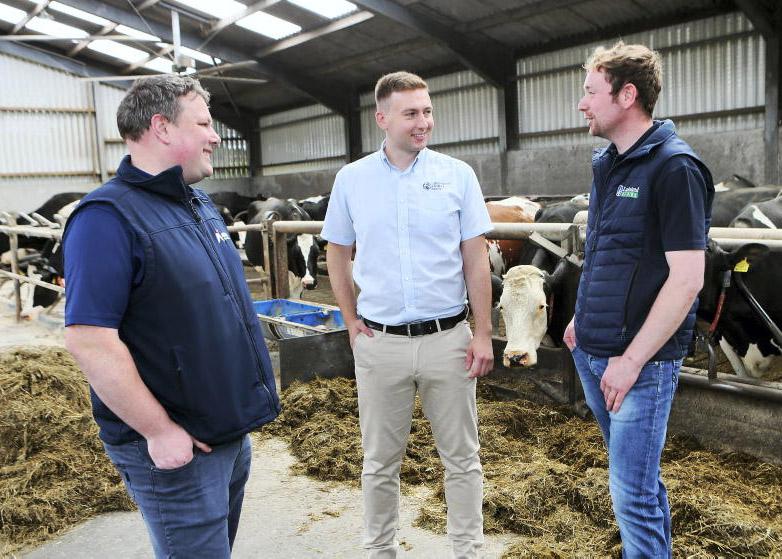
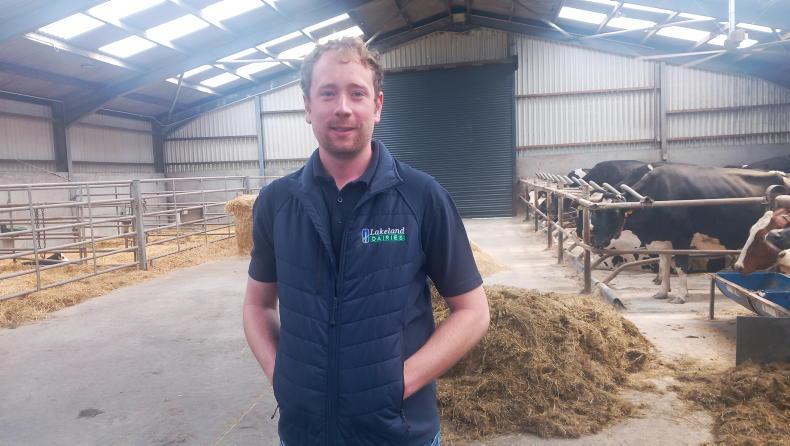
Ciaran McNaughton has a keen eye for detail across all aspects of his dairy farm located near Corkey, Co Antrim.
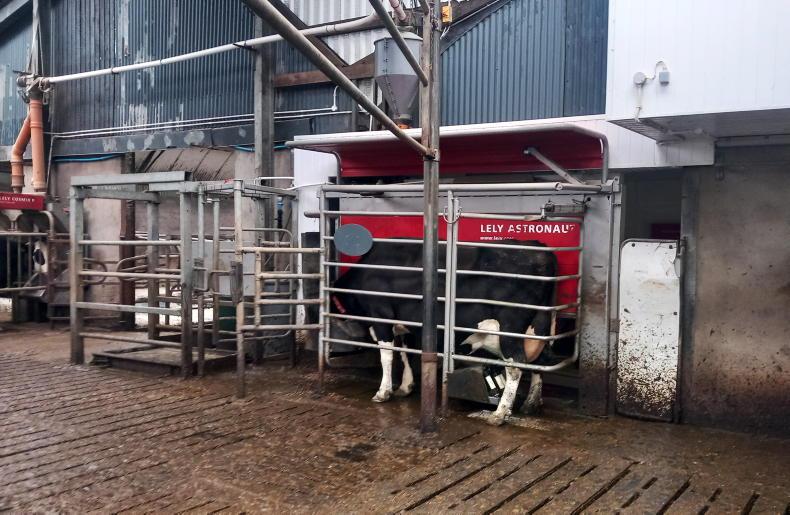
Cows are managed in a fully housed system and are milked through a 15-year-old Lely robot.
Production data for 2026 to date shows 63 cows have been averaging 41.6 litres at 4.25% butterfat and 3.3% protein.
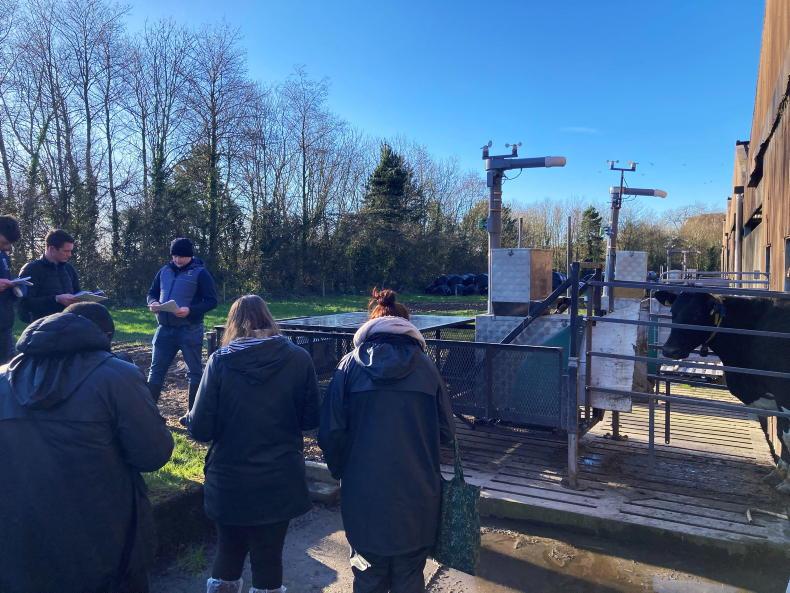
At a recent UK Dairy Carbon Network event, visitors were told that cow numbers, milk yield and milk components have all been on the rise over the past three years.
For comparison, back in 2023 there were 52 cows averaging 32 litres at 3.98% butterfat and 3.10% protein.
The amount of milk going through the robot each day has therefore rose sharply since then and currently sits at 2,602 litres, making it one of the highest yielding robots in NI.
Concentrate use on the farm is high, but cows are responding well in terms of milk yield, which indicates a high level of feed efficiency.
The herd is averaging 12,350 litres from 4.2t of concentrates. This equates to a feed rate of 0.34kg/litre, milk from forage is 2,594 litres and margin over concentrate is £2,868.
Feeding
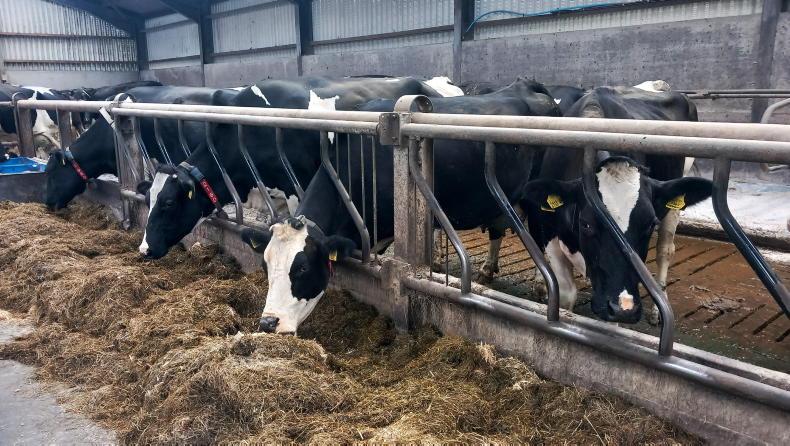
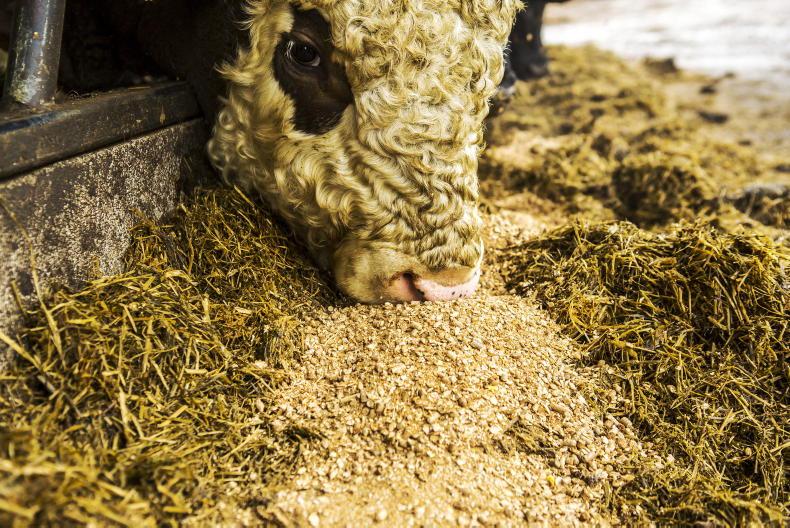
There is no diet feeder on the farm. Instead, a mixture of block and baled silage is offered at the feed rail.
Up to 3kg of high-fibre blend is top dressed on the silage and chopped straw is sometimes offered as a further fibre source. Fodder beet is also fed during the winter.
Up to 11kg of dairy nuts can be fed through the milking robot and 9kg is available through out of parlour feeders.
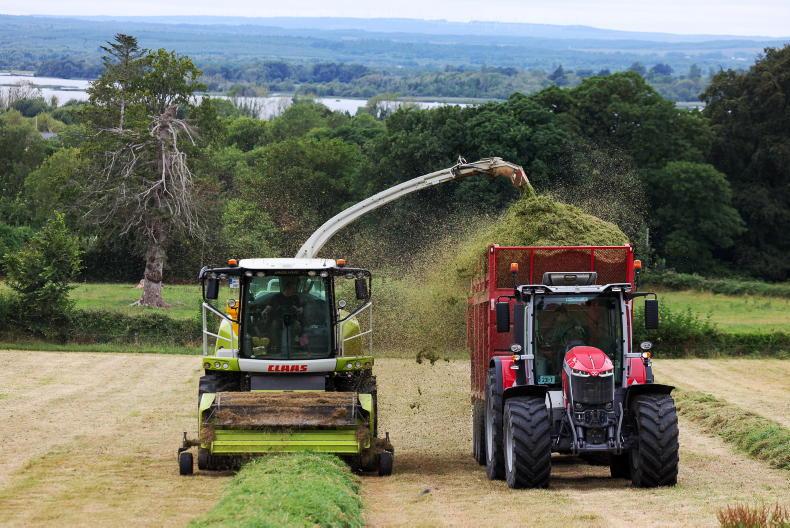
Making good-quality fodder is a key focus for Ciaran to help drive dry matter intakes of forage and achieve a high level of feed efficiency.
For example, silage analysis results from last year show his first cut had metabolisable energy (ME) of 11.6MJ and a digestibility (D) value of 72.3%.
Breeding
In terms of genetics, there had been a cross-breeding policy in the herd, with Holstein, Fleckvieh and Norwegian Red sires used on cows.
However, Ciaran has recently started to move away from this and has used Holstein bulls only in recent years.
He said milk recording results showed that some of his Holstein cows had the best components in the herd, so he decided to focus on high solids Holstein sires.
Other key traits for bull selection include fertility, milk speed, milk yield and the composite index EnviroCow.
Genomic testing for crossbred herds has become available recently and Ciaran started using it with the aim of better matching each sire to the genetic potential of individual cows.
Fertility is another key focus area, with artificial insemination carried out in house.
Ciaran said a vet calls monthly for pre-breeding checks and he closely monitors cow behaviour through heat detection collars for early signs of health problems.
Again, the effort is paying off. Calving interval is an impressive 365 days, services to conception is 1.7, first service conception is 56%, and average parity is 2.87.
Milking liners, robot settings and reseeding
Aside from feeding and breeding, Ciaran McNaughton has taken other steps which he maintains has helped boost milk yields in recent years.
He gave the example of changing from silicone milking liners to rubber liners and suggested this has boosted milk output by 200 litres.
In some herds, changing from silicon to rubber can lead to better teat stimulation, faster milk flow and more complete milkings.
However, it can have the opposite effect in other herds, especially if it leads to discomfort and fewer visits to the robot.
Rubber liners usually need changed more often, usually every 2,500 milkings, whereas silicon liners can last for 9,000 milkings.
Robot settings
Another area where Ciaran has been paying close attention to detail is the settings in his robotic parlour.
In particular, he has tweaked take-off settings, which govern when clusters are removed, and milk access tables, which controls when cows can enter the robot based on expected yield.
He told visitors that carefully adjusting these settings to better suit his cows has had “massive benefits” for robot efficiency. In 2025, his cows were averaging 2.7 milkings per day at a milking speed of 2.8kg per minute and a box time of seven minutes 24 seconds.
For 2026 to date, milkings per day is up to 2.9 and milking speed is 3.7kg per minute with average box time down to six minutes 18 seconds.
Reseeding
Away from the farmyard, Ciaran has a proactive reseeding policy which sees most fields reseeded every five or six years.
He estimates that 75% of the farm has been reseeded within the past four years.
Fine-tuning dairy rations for protein
As part of his involvement in the UK Dairy Carbon Network, Ciaran McNaughton has lowered the overall crude protein level of his dairy cow diet.
Rather than relying on crude protein alone, Ciaran has been balancing the diet based on requirements for specific amino acids, which are the building blocks of protein.
Michael Woodrow from Abireo Animal Nutrition explained that in grass silage systems, methionine is the main limiting amino acid, as these diets only provide 75% of requirements.
Lysine is usually the second most limiting amino acid, with grass silage meeting 85% of demand.
On the McNaughton farm, the first step was to increase the level of rapeseed meal in the ration as it can be a good source of the limiting amino acids.
After that, cows were initially supplemented with 40g of methionine. Another tweak was made two months later when the next most limiting amino acid was addressed by changing the supplement to 20g methionine and 20g of lysine.
Michael said that amino acids are usually added to blends, but because there is no diet feeder on the McNaughton farm, a mineral dispenser was installed in the milking robot.
With 97% of requirements now met for the two amino acids, the final stage has been to gradually drop overall crude protein levels from 17.5% to the current level of 16.2%.
Lowering dietary crude protein has environmental benefits as it reduces nitrogen excretion in cows which lowers ammonia emissions and the risk of nitrogen run-off.
Yield response
Ciaran said there has also been a positive milk yield response since he started balancing amino acid levels in his dairy cow diet.
However, Dr Aidan Cushnahan from AFBI suggested that crude protein levels on the McNaughton are nearly as low they can be expected to go.
He said research has shown that 16% crude protein can be “a tipping point” where the likes of milk yield and fertility can be impacted if dietary protein moves below it.
Aaron Jones from Chestnutt Animal Feeds said dairy farmers need to have all the basics right if they want to get an effective response to amino acid supplementation.
He presented a diagram of a pyramid with amino acids at the very top. Below that was everything from feed space, to forage quality, to animal health. “Start from the ground up,” he said.


SHARING OPTIONS