



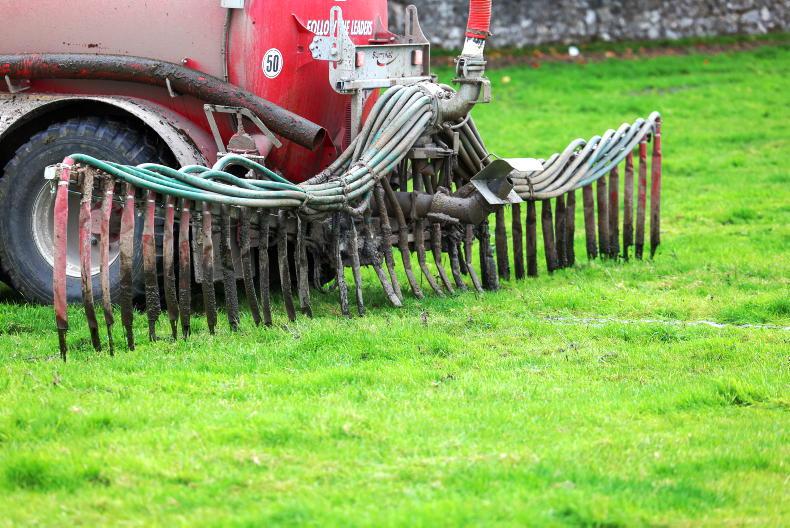
A new Sustainable Farming Investment Scheme (SFIS) will soon be launched by DAERA and will include support for equipment and technology to help improve soils and minimise the risk of nutrients getting into waterways.
The scheme will have a grant rate of 40%, with a maximum grant of £25,000 available per farm business.
Speaking at the press event on Monday to coincide with the release of a public consultation on fresh proposals to update the NI Nutrients Action Programme (NAP), Ulster Farmers’ Union President John McLenaghan said funding is required to help meet new targets.
“We are awaiting the launch of the SFIS, which is imminent we understand, and hopefully will facilitate some of the measures within this [NAP plan],” said McLenaghan.
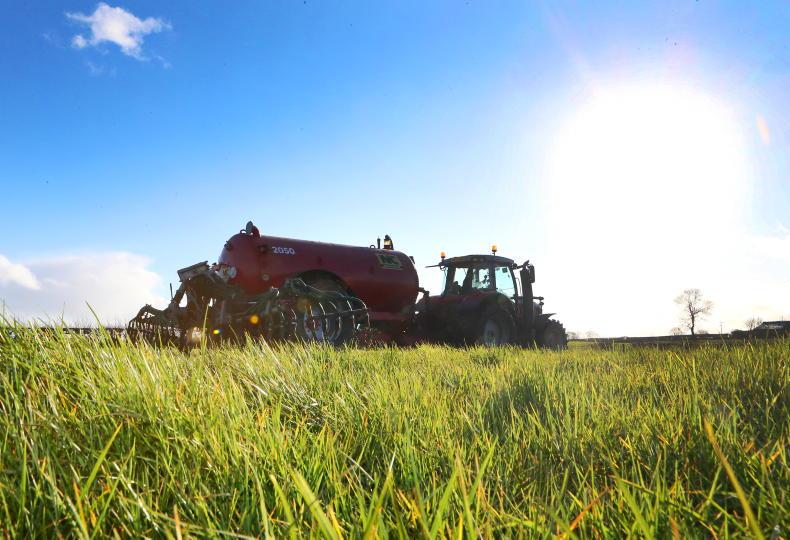
One of the main costs associated with the revised NAP proposals is a phased rollout of the mandatory use of Low Emission Slurry Spreading Equipment (LESSE) across more farms.
At present, farms with more than 200 Livestock Units (LU), as well as slurry contractors and large pig units are required to use LESSE.
The revised NAP proposals published on Monday require all farm businesses with more than 100 LU to use LESSE from February 2028, extending to those with more than 75 LU from February 2029 and those with more than 50 LU from February 2030.
Those proposals are not as wide-ranging as the original NAP published in 2025, which included a requirement that LESSE is used on all farms by 2030.
DAERA estimates that the revised rule changes will mean an additional 6,034 farm businesses will have to use LESSE by 2030, although a previous survey suggested most will rely on contractors, rather than invest. The total amount spent on LESSE across the three tiers is estimated by the department at £9.2m.
“Funding support for the purchase of LESSE will be available through the SFIS,” states a DAERA document. It is expected that farms already required to use LESSE or those who have got previous grant support to buy equipment, will not be eligible for support from the scheme.
An exemption in the current NAP, which allows farmers to use traditional splash plates on steeply sloping land, is included in the latest proposals.
Definition
Other related changes around the management of slurry in the revised NAP include an update to the definition of LESSE, which limits it to any method that reduces ammonia emissions by 30% when compared to splash plate spreading That effectively constrains it to trailing hose (dribble bar), trailing shoe and slurry injection systems.
There are no changes proposed to the current closed period for spreading slurry, although applications in October and February will be reduced from the current limit of 30m3/ha to 25m3/ha (approximately 2,250 gallons per acre).
Farmers will also have to notify DAERA 28 days before beginning construction of new slurry and silage storage.



SHARING OPTIONS