



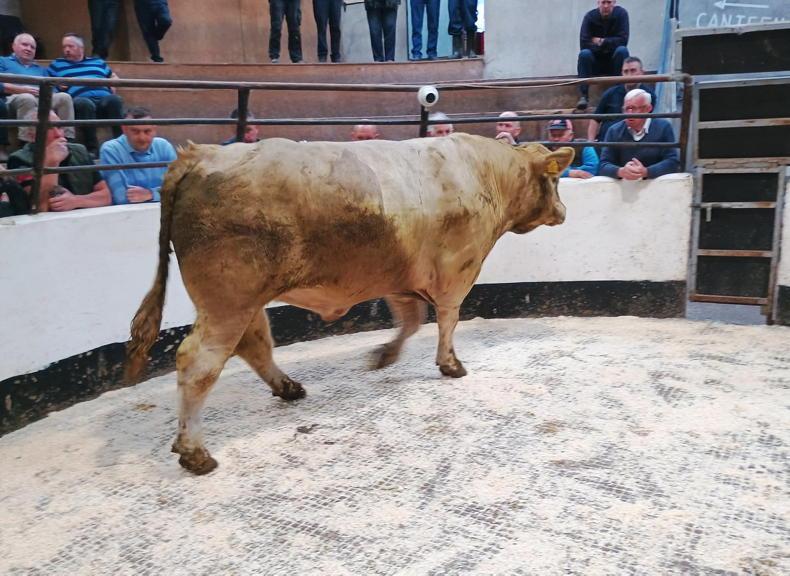
Quotes for clean cattle are steady this week, giving a best for U-3 grading steers and heifers of 596p/kg.
Actual prices paid remain well ahead of these quotes, with deals in the mid-610s freely available and slightly more going for butcher-type heifers.
Farmers with numbers to sell remain in a strong position to negotiate on price, with finished cattle remaining in tight supply across NI.
That is reflected in recent slaughter data published by DAERA. In the seven-week period since the start of June, the total kill of 54,292 head is down 11.6% when compared with the same period in 2025. Within that, the prime kill has dropped to just 41,357.
Last week, the average price paid for U3 steers and heifers was up for the fifth week in a row, with steers rising 3.9p to an average of 614.3p/kg, with heifers up 1.6p at 615.6p/kg. Those prices have risen nearly 25p/kg over the period.
Across all steers and heifers, the average price paid was 605.1p/kg, up 0.5p on the previous week.
With factories keen to secure numbers and open to waiving penalties, especially on over-16-month young bulls, the difference between average steer and average young bull price has narrowed in recent weeks.
At the start of June, steers were 15p ahead, but last week, that gap dropped to under 8p/kg.
Britain
Prices paid in NI are similar to those on offer in Britain. Last week, U-3 steers across England and Scotland averaged 613.5p/kg, up 4p on the previous week. R3s were also up 4p to average 611.4p/kg.
In the Republic of Ireland, reports suggest there are slightly more cattle coming forward for slaughter this week, which has allowed factories to cut quotes by 10c/kg in some instances. The price gap to NI remains around 30p/kg.
Last week, 270 cattle were imported from the south for direct slaughter in NI, up 95 head on the previous week. A total of 68 cattle (mostly cows) went in the opposite direction.
Cows
Quotes for fat cows are steady at 510p for an R grade and to 500p for an O+ animal.
However, much more is available for good-quality suckler types, with deals generally starting around the 550p/kg mark. Last week, the average R3 cow increased by over 10p to 549.6p/kg.
NI sheep : lamb trade slips
The mart trade for spring lambs has slipped back this week and, in the factories, quotes have fallen to a best of 740p/kg.
There was a steady trade in Gortin. Heavy lambs at 32kg made 687p/kg or £220, with 33kg at 606p or £200. Middle weights at 23.9kg made 644p or £154, with 23.6kg at 641p or £151.50. Lighter lambs at 20.5kg made 670p or £138 per head.
In Kilrea, an easier trade saw 21kg making 708p/kg or £148 and 676p or £142 per head. The best lambs at 23kg made 661p/kg or £152.
In Markethill, good-quality heavy lots sold to 655p/kg for 25.1kg at £164.50, with 654p/kg for 26kg at £170. Quality mid-weights sold to 654p/kg for 23.1kg at £151, with 644p/kg for 21.9kg at £141.
Store lambs sold to 776p for 15.2kg at £118, followed by 750p/kg for 12kg at £90.
The opening sale of breeding hoggets saw the top pen at £375 and others at £330, £325 and £320.
In Saintfield, the best lambs at 24kg made £175, while others at 23.5kg made £140.
In Ballymena, the trade was back. Lambs at 24kg made up to £151 or 629p/kg, with 23kg making to £149.50 or 650p/kg. And lambs at 21kg sold for £131 or 624p/kg.
Fat ewes
In Gortin, the top fat ewe made £285, with a run from £170 to £276. In Kilrea, the top was £238, while ewes in Markethill sold to £262, with a run from £160 to £230. Second-quality made from £110 to £150 per head.


SHARING OPTIONS