



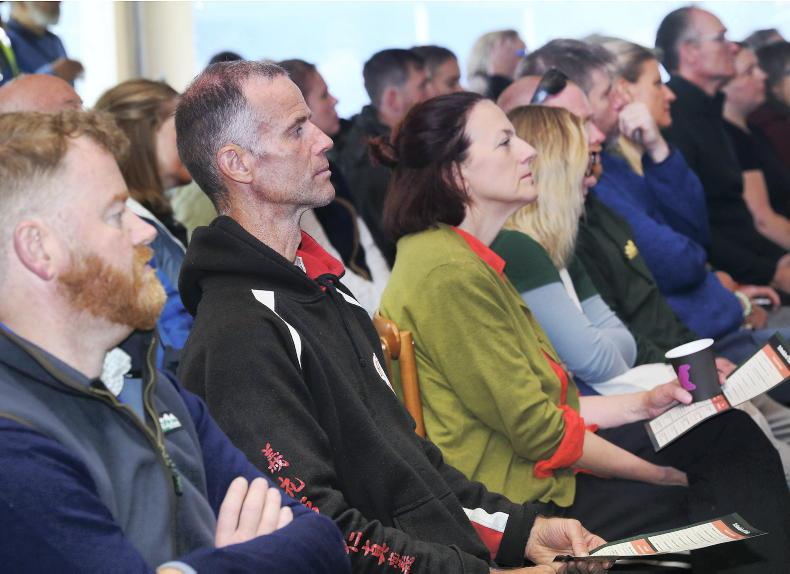
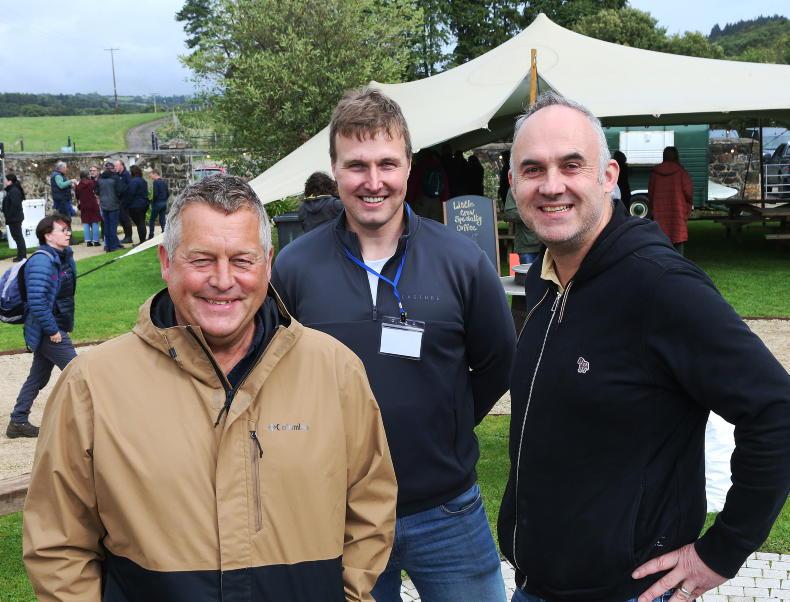
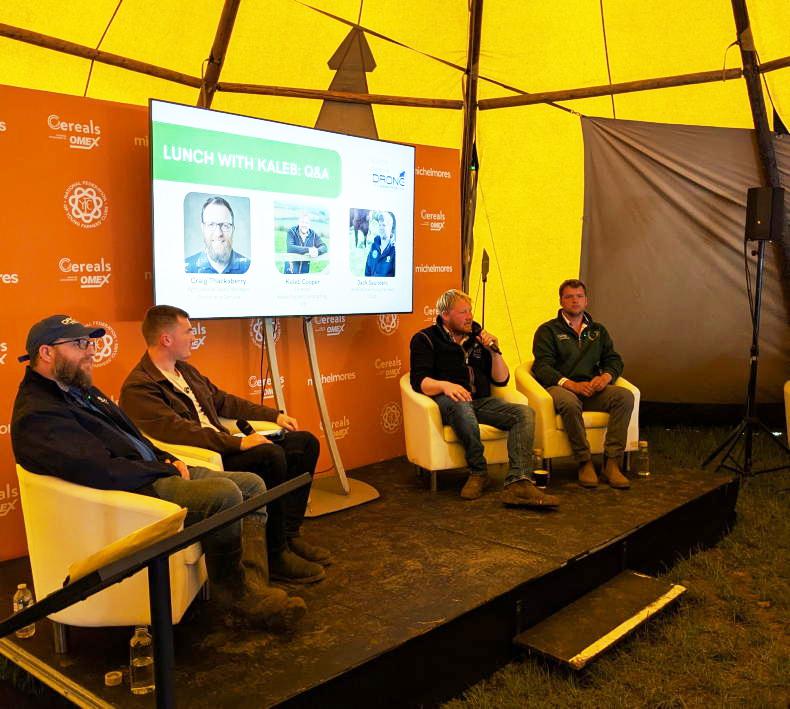
The term “regenerative agriculture” came under scrutiny at the Fields Good festival held in Glenarm, Co Antrim, on Saturday.
The keynote speaker at the event, Lake District farmer James Rebanks, suggested the term is not helpful for encouraging farmers to make more space for nature on their farms.
“I think regenerative is becoming an absolutely nonsensical term. I do not call myself a regenerative farmer.
“I live in a very real farming community where I talk to other farmers who do different things to me, and I do not find that a useful phrase,” he said.
The definition of regenerative agriculture is open to interpretation but is often used to describe farming systems where there is a strong focus on nature and soil health.
However, James suggested that advice to farmers should be stripped back to simply being about “how to do stuff better”, with key areas for improvement being grazing and soils.
“I am yet to meet a farmer who doesn’t want to do things better when presented with good information that makes sense,” he said.
Upland farm
In his keynote speech, James outlined how his upland farm in Cumbria has changed over the years to a low-input system with no bought in feed or fertiliser.
He has planted 60,000 trees across his 500 acre farm, mainly as shelter belts on the least productive land.
He also aims for a long-grazing rotation so stock go into heavy covers and only partially graze it off, which means a significant residual cover is left behind.
James said this allows him to grow more grass compared to when he ran a short rotation, although he acknowledged that the nutritional value of the sward is not as good.
Sheep to cattle
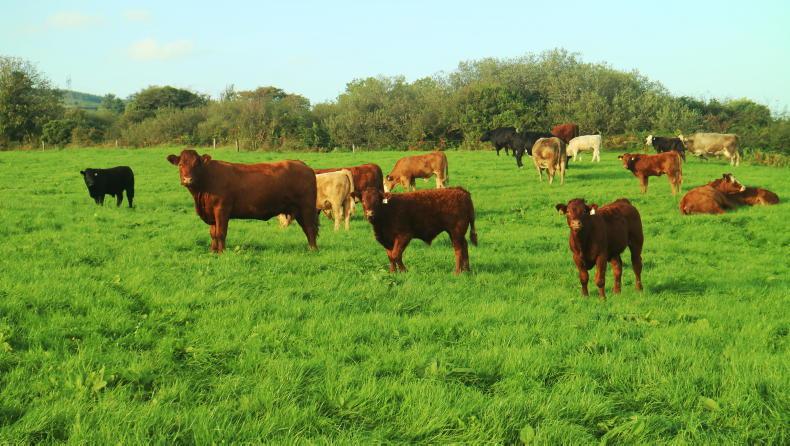
Despite being well known through his books and social media for being a shepherd, James has cut down on his Herdwick sheep and has started keeping Belted Galloway cattle.
He said this stems from cattle being better suited to grazing heavy covers, plus they require fewer inputs and interventions than sheep.
“Cows’ ancestors evolved in warm, wet places with green grass. Sheep evolved in dry, arid places and that’s why they always have foot and parasite problems,
“Sheep like short grass that’s full of sugar and protein, just like dairy cows. You cannot do this [type of grazing] with any old animal,” he said.
Running a grazing business over
2,500 hectares of hill in Scotland
In her address at Fields Good, Nikki Yoxall outlined how she has moved from farming seven hectares in 2018 to 2,500 hectares of hill land now.
Nikki runs a grazier business with her husband James where they enter into agreements with landowners to improve the environmental condition of land through grazing.
They currently run 120 suckler cows in Aberdeenshire in a mainly birth-to-store system. Around 30% of calves are kept through to finish with the beef sold direct to consumers.
Like James Rebanks, the Yoxalls do not feed any meal, spread fertiliser, or house cattle, and they operate at a very low stocking rate in a long-grazing rotation.
Nikki explained that a given square metre of land will be grazed no more than four times a year, with a key part of their system being the long rest period between grazings.
The aim is to let the grass plant grow tall and develop deep roots. Building a thick mat of grass also helps reduce poaching over the winter period.
However, Nikki maintained that not all farmers need a very large area of land like her to make rotational grazing work.
She highlighted the differences between a set stocking system, where livestock are seldom moved, to a simple rotational system where there are a few weeks’ rest between grazings.
“The excuse of ‘I don’t have enough land’ is not true. You just need to change the way you are splitting the land up and the electric fence is a great way to do that,” she said.



SHARING OPTIONS