



A representative from Dunbia has urged local sheep producers to vaccinate lambs in the neck area and not the shoulder.
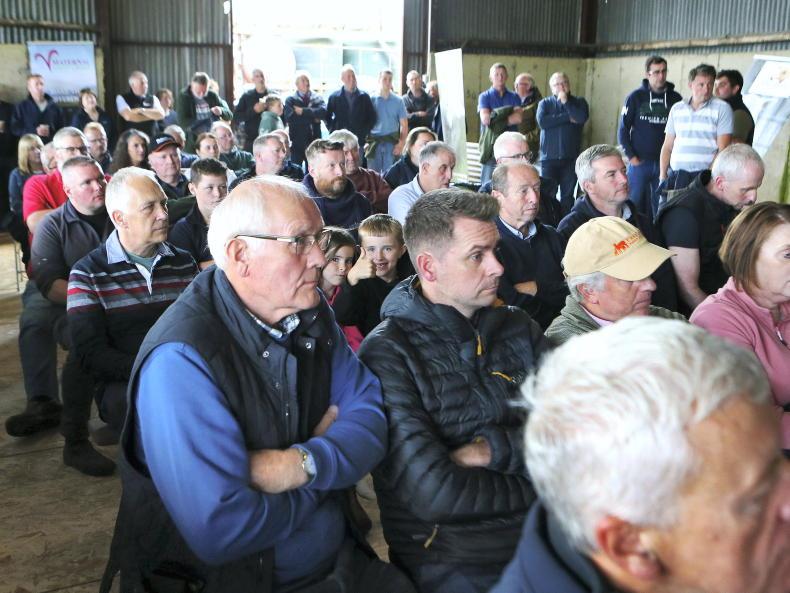
Speaking at an EasyCare sheep event on the Ballycoose farm of Campbell and Isobel Tweed in Co Antrim, Kenny Linton, who grades lambs at the Dungannon factory said any resultant scar tissue or abscesses will be removed by DAERA meat inspectors.
Just a small cut out of the shoulder by a meat inspector leaves the entire carcase ineligible for export markets and with around 60% of lambs going through Dunbia Dungannon exported in carcase form, it is a recurring problem for the company.
Linton recalled how earlier in the day, lamb from two different farms had all been injected at the shoulder and none could be sent overseas. “Once a meat inspector finds an injection site, they will look closer at the rest of the lambs in the batch – even just a bit of scar tissue, they will take it out,” he said.

“I know it is handier to inject at the shoulder, but it needs to be immediately shifted to the neck,” Linton added.
As well as injection sites, Linton said Dunbia are seeing more lambs at slaughter that are infected with sheep scab and Cysticercus ovis (C ovis). In the worst cases, where C ovis is found at three sites in the animal, it is condemned.
C ovis is the larvae of the canine tapeworm Taenia ovis (T ovis), with the larvae forming cysts in muscles such as the heart. The tapeworm lives in the gut of dogs and foxes, with eggs shed in faeces.
It doesn’t cause serious illness in sheep and there is no treatment available. Instead, any action is preventative and involves ensuring dead sheep carcases are promptly removed and limiting access by dogs and foxes to feed stores. Dog faeces should be picked up and disposed, while dogs on the farm should also be regularly wormed.
The 60% of lambs going out of Dunbia Dungannnon in carcase form are mainly heading to countries with large and growing Muslim populations such as Germany and France, with some also going to the Netherlands, confirmed Harry Stevenson from Dunbia.
The remaining 40% of lambs from the Dungannon factory go to UK retail customers such as the Co-op and Sainsbury’s.
Dunbia is currently slaughtering about 3,000 lambs per week in Dungannon and across Britain and Ireland, the company processes 3.5m sheep annually, making it Europe’s largest lamb processor.
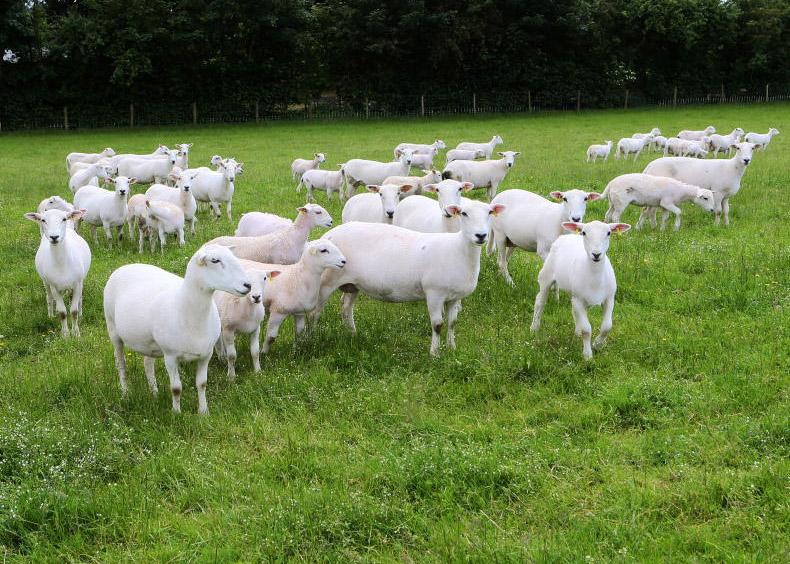
Lambs from the 3,000 EasyCare ewes on the 1,600-acre Tweed farm are all performance recorded from birth and those not suitable for breeding are taken to slaughter.
EasyCare sheep are selected for their maternal traits, so the aim isn’t to produce E and U grading lambs. Ahead of last Thursday’s event, Kenny Linton had checked through recent kill sheets for lambs sent to Dunbia from the Tweed flock.
Across 1,800 lambs, they averaged 21.28kg, with nearly all the lambs grading R and at fat class 2 and 3. With only a £2 per head difference between a U and an R grade, it makes more sense to have an extra lamb to sell (by concentrating on maternal genetics), than a sheet full of U’s, said Linton.
Management changes which lead to improvement in production efficiency, are also likely to deliver for the environment, Teagasc sheep researcher, Dr Philip Creighton told farmers at the Tweed open evening last Thursday.
“We have shown, a lot of the time, what is good for production, or good for reducing costs is also good for the environment. But we are just not very good at packaging it up or explaining that,” said the Teagasc researcher.
One issue which can negatively impact production efficiency is ever-increasing resistance on farms to worming treatments - Creighton listed it as among the “big priorities” for Teagasc sheep research at present.
New research published in 2026 highlights the extent of the problem across Irish farms.
The work involved the taking of 77 faecal egg count reduction tests (FECRT) on 24 farms between 2018 and 2023.
Results showed 100% of the farms had worms resistant to white (benzimidazole) drenches, with 42% having resistance to yellow (levamisole) wormers and 71% with resistance to clear (ivermectin) products.
Quantify
The research was the first study to quantify the extent of ivermectin resistance on Irish sheep farms.
“It is a huge area and a lot of people don’t realise the problem they have. We need to test and get a [resistance] status on individual farms,” said Creighton.
He suggested that farmers often blame grass for poor weight gains, but in practice, once feed is introduced, lambs eat less grass and fewer worms, so performance improves.
He also maintained that the “huge overuse” of injectable products to control sheep scab has contributed to the high resistance to ivermectin wormers. “There is not a lot of dipping going on. We have to get back to dipping and doing it at the right time,” he said.
Haemonchus
Other work is looking to identify the different species of worms on farms, while there is also the growing threat posed by Haemonchus contortus (barber’s pole worm), with this roundworm increasingly seen in sheep post mortems in veterinary labs.
In addition, a survey of sheep producers in 2012-2014 showed it was present on 4% of farms, but a repeat survey in 2025 came back with 42% prevalence. “That is an alarming statistic,” said the Teagasc researcher.
There remains a lack of performance recorded sheep on pedigree farms, despite research showing that the indexes do work, maintained Philip Creighton.
Back in 2015 the Ireland New Zealand Animal Comparison (INZAC) flock was established at Teagasc Athenry, utilising high and low genetic merit Texel and Suffolk sheep from both countries. There are currently 240 ewes in the flock.
According to the Teagasc researcher, by focusing on sheep with good maternal genetics it has resulted in more lambs being born and reared, less lambing difficultly and higher growth rates. “They are more efficient ewes. It tells us the indexes are working,” said Creighton.
He emphasised that the message from the work is not that genetics need to be imported from elsewhere to drive genetic gain.
“It takes time, but you can select to create this result within our own population. That is the beauty of performance recording,” he added.
Terminal
The next stage is to look at terminal traits and whether sheep breeders can effectively manipulate performance recording results by feeding extra supplement, thereby getting higher weight gains.
In the study, high (5-star) and low (1-star) rams are being compared across grass or concentrate- based diets.
Creighton said initial results from the first year suggest the high index sheep are still out-performing low index sheep, irrespective of the feeding regime.


SHARING OPTIONS