



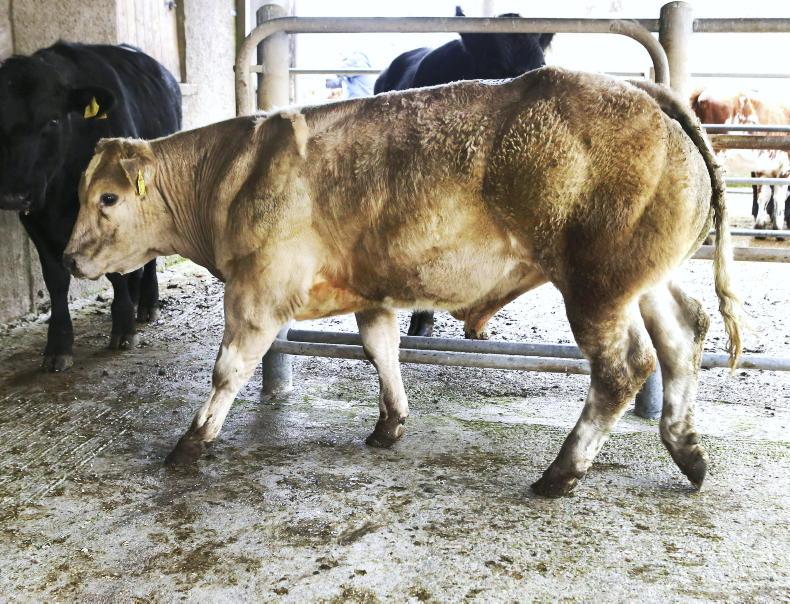
Marts are buzzing with the prices paid per kg for livestock, but what margins can buyers expect to achieve when taking these animals through to finish?
Previous analysis by the Irish Farmers Journal showed that, at prices being paid for short-term keep store cattle in marts, beef finishers will need prices around the 700p/kg mark in spring 2026 to achieve positive margins.
Our analysis was based on a 550kg continental steer purchased at a conservative price of 400p/kg, equating to £2,200 per head. We calculated the variable costs associated with rearing this animal to be approximately £405, with fixed costs of £161.50.
Based on this analysis, if the beef price remains at the current level of around 650p/kg, buyers can pay a maximum of £2,040 in order to cover costs and break even.
However, we also investigated the impact of a potential drop in beef prices. If the trade falls to 600p/kg, the maximum that can be paid for this animal is £1,840.
Those prices also make no allowance for any margin, although there is also the £75/head beef carbon reduction (BCR) scheme payment to be factored in.
Purchasing weanlings
For those purchasing weanlings for long-term keep until finishing in Spring 2027, calculating future beef price scenarios should also be considered.
A typical 300kg continental weanling purchased in mid-September at a conservative average price of 550p/kg costs £1,650/head.
This weanling will consume approximately 15kg of silage and 1kg of concentrates per day to maintain a 0.7kg daily liveweight gain, resulting in £121.70 in feed costs until grazing begins in mid-March 2026.
These 420kg animals will remain at grass for a minimum of 185 days until mid-September, incurring grazing costs of approximately £60/head.
The animal will then follow the same feeding regime as the 550kg store described above. The total variable costs to rear this weanling until finishing in spring 2027 amount to £586.
However, fixed costs should also be factored in and in this scenario, we have assumed they amount to £300 per head to cover machinery running costs, shed maintenance etc. Therefore, to cover all fixed and variable costs, the farmer will require a minimum beef price of 633p/kg at finish.
However, there is the £75 BCR scheme payment to consider, which effectively takes this breakeven price down to 614p/kg. But farmers also have to make money to pay household bills, cover finance costs, conacre etc, and it is not unreasonable to expect a £300 per head margin is achieved on each weanling taken through to finish. Factoring that in, this final beef price would need to be 689p/kg.
If the actual beef price achieved is 650p/kg, the most that should be paid for this 300kg weanling is £1,491. At a beef price of 600p/kg, this drops to £1,291 per head.
At current prices, it would suggest buyers are either hoping for a further lift in beef prices or are willing to produce cattle while simply covering feed costs. For those who rely on finishing cattle as their sole income, it is not an easy market at present.



SHARING OPTIONS