


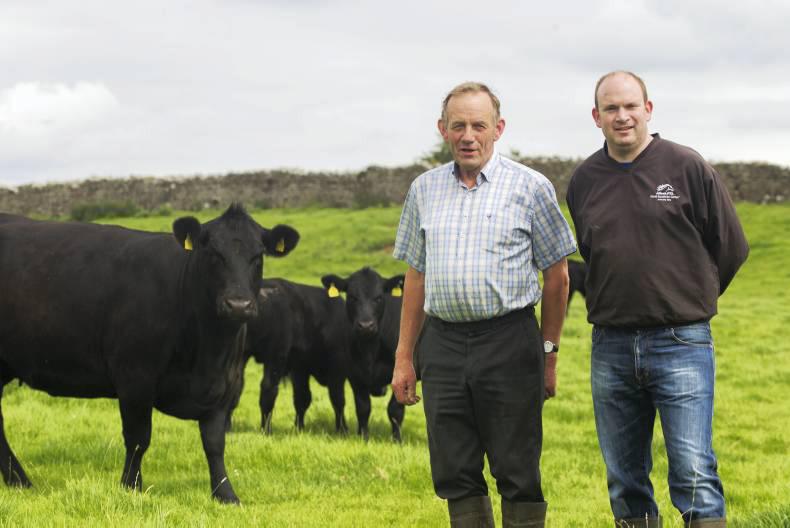
The Steil herd was originally set up by Michael McCormack back in the mid-1950s from the purchase of one cow at a fair, “Eveline of Charlestown”. Michael who was known throughout the country as a very keen stockman, passed away in 1996 but not before instilling his passion for cattle breeding in his son Joe and grandson Cathal.
Sixty years since its establishment, the herd today comprises 30 breeding females, 20 of which calve in the autumn and the remainder in the spring. With Cathal working and living away from home, Joe explains from a management and workload point of view that this system works well for them.
We find it is easier to calve our cows outside in the autumn
“We find it is easier to calve our cows outside in the autumn and it cuts down on the amount of housing required for calving. We also have stronger bulls for selling come sale time with the autumn-born calves. This year, we weaned the autumn-born calves at the end of April as we were short of grass during the bad weather in spring. We found this worked well as we could prioritise the better grass for the calves and could put the cows to poorer ground away from the farm. With the autumn-born calves, we can also halter train them very easily when they are young calves in the shed during the winter, cutting down on a lot of time and effort.”
Breeding to type
From a breeding point of view, the McCormacks generally use about 50:50 AI to natural service, but if a stock bull is breeding well he may be used more heavily. In recent times, the stock bull Moss Kriss L128 has proved to be successful with a number of his progeny winning numerous championships and top prices for Steil.
Cathal explains that for a long time they have been mindful of using bulls with good indices in their herd. Because of this, 21 of the 30-cow herd have five stars within breed and across breed on the maternal index. When it comes to breeding, the McCormacks believe that the most important thing is to take a balanced approach.
I feel that the more modern-type Angus probably achieves more performance and lacks some of the traditional traits
“The traditional type Angus is moderate-framed, easily calved, easily fleshed and has superior meat eating quality, but I feel that the more modern-type Angus probably achieves more performance and lacks some of the traditional traits. Our goal is to produce cattle that have a nice balance of both, the traditional characteristics of the Angus breed while at the same time adding some performance,” Cathal adds.
Cathal and Joe both feel that their animals have to be very functional. “If an animal does not work for us, how do we expect it to work for our customers?” Joe adds.
With this in mind, the aim is to have moderate-framed cows in the herd, according to Cathal. “A moderate-framed cow has a lower intake requirement for maintenance and therefore is more fertile and will look after her calf better.”
Aldi Angus bull competition
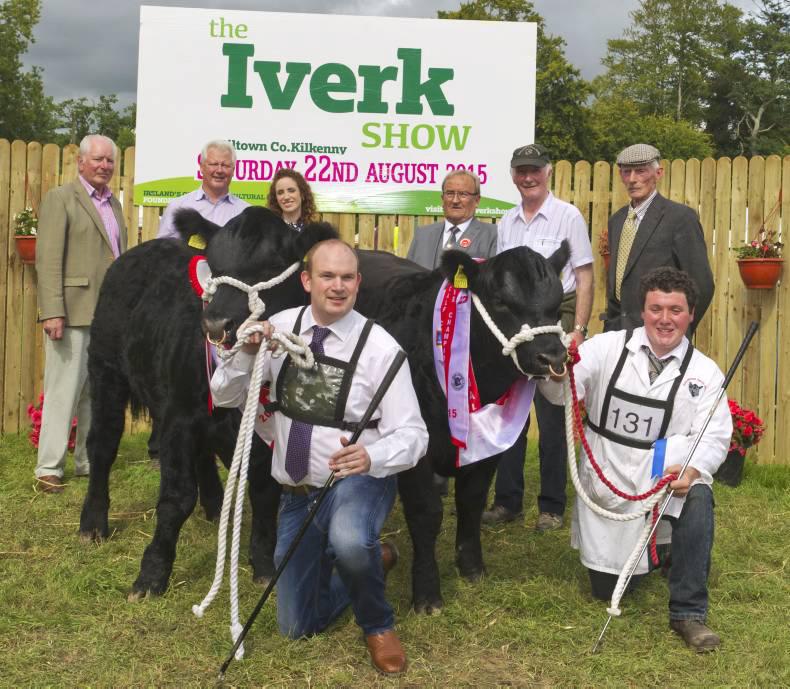
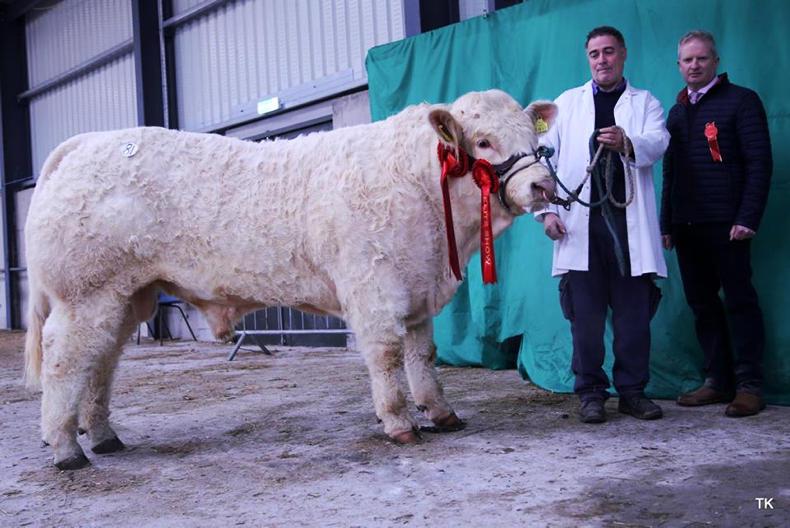
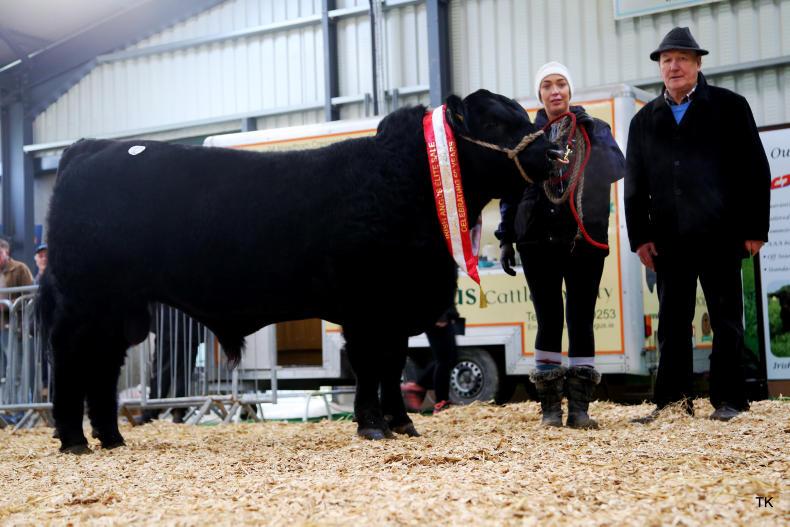
Over the years, the Steil herd has tasted success on the show scene and just last year they won champion and reserve in the Aldi Angus bull calf competition at the Iverk show (photo below). These championships boast a prize fund of €24,000, one of the largest in Europe.

Now in its fourth year, the final again takes place at the Iverk show on 27 August and exhibits all pre-qualified bulls from a number of qualifiers. The remaining two qualifying shows are Roscommon and Iverk, one of which Cathal explains marks the first outing of the season for the family.
“Our first show of the summer will be Roscommon on 20 August, where we will try to qualify calves for the Aldi bull calf championships, which takes place the following weekend. After that, we will bring a few to the Irish Angus All-Ireland in Strokestown in early September and to the Aberdeen Angus calf show in October.
If we wanted to show early in the season, we would have to push our cattle earlier and we feel that it is too much of a compromise
“While we like showing, it is very much secondary to having a productive herd. We haven’t shown any cattle yet this summer and usually do not show until late in the show season. This is because we like to give our cattle time to develop first. If we wanted to show early in the season, we would have to push our cattle earlier and we feel that it is too much of a compromise.
“We take more pride in seeing our cattle work well for the people who buy them than winning rosettes. Saying that, showing is a great interest for anyone and you could not have a better pastime for a youngster. One thing that it teaches you is that there are no shortcuts – you only get out what you put in.”
In terms of breeding, the herd is lucky enough to have some of the best old bloodlines in its lineages, but a new line is also added every few years. One such addition was Keelties Helene who went on to win the Irish Angus All-Ireland overall champion in 2012, shortly after being purchased. More importantly, according to Cathal, Helene is due her fourth calf shortly before her fifth birthday and her daughter who is not yet a three-year-old is in calf carrying her second calf.
Sales
Their close proximity to Carrick-on-Shannon means that the McCormacks sell a lot of bulls there. But they also like to sell on the open market as that way they are happy that both themselves and the person buying the bull are getting a fair price.
Both Joe and Cathal see a bright future for the breed, but say breeders need to think about the customer who they are breeding for more and put themselves in the shoes of the commercial producers and breed for their requirements. “We certainly believe that there is a very bright future for the Angus breed in Ireland. On the dairy side there will be more and more beef animals bred from the dairy herd, which brings a massive opportunity for the Angus breed. On the suckler side, we believe that the Angus cow is the perfect cow for the future of Ireland’s suckler herd. In terms of sustainability, if you are looking to produce more from less, then the Angus is the only option,” Cathal says.


SHARING OPTIONS