



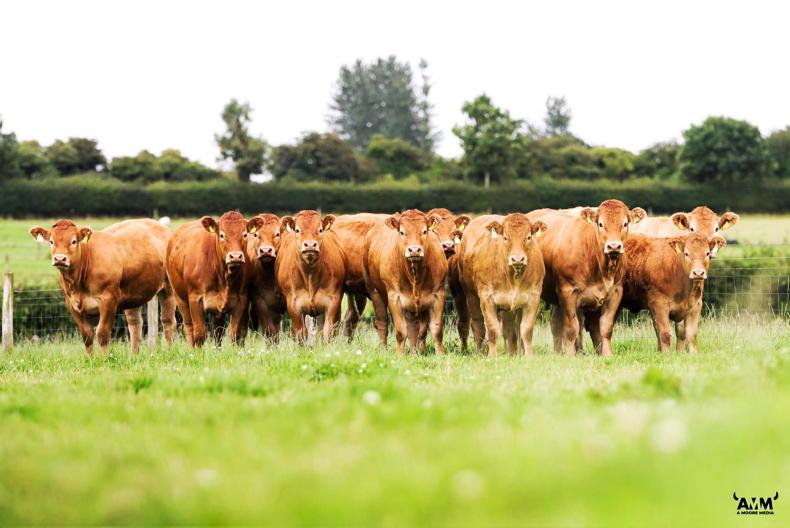
One of Ireland's leading pedigree cattle breed societies has announced a major change to its pedigree classes at its 2026 national show by introducing separate calf classes for embryo transfer (ET) and non-embryo transfer (non-ET) bred animals.
The Irish Limousin Cattle Society confirmed the changes to its national show, which will take place at Tullamore Show and FBD National Livestock Show on Sunday 9 August, with the Irish Farmers Journal recently.
For the first time, pedigree Limousin calves born in 2026 will be divided into ET-bred classes and non-ET bred classes.
One male class and one female class will be divided into two distinct categories: animals bred by ET and those bred through conventional means. The pioneering move reflects the society’s commitment to fairness, transparency and the ongoing development of the Limousin breed.
Change
A spokesperson for the society explained the reason for the change: "Embryo transfer has become an increasingly common and valuable approach to cattle breeding; however, the society recognises that the majority of breeders continue to favour traditional breeding methods.
"By creating dedicated ET and non-ET classes, the society is ensuring that animals are judged on a genuinely level playing field. This approach gives breeders using both methods the opportunity to compete and succeed on equal terms.
"We believe the change demonstrates the breed's commitment to modern breeding technology while equally respecting and showcasing the excellent cattle produced through conventional breeding programmes. We want every breeder to feel they have a fair chance to showcase their best animals."
Embryo transfer has become an integral part of pedigree cattle breeding in recent years, with an increasing number of ET-bred cattle appearing at pedigree cattle shows and sales year on year.
However, some breeders have expressed concerns that ET-bred calves have an advantage over natural-bred calves in the show and sale rings.
This decision by the Limousin society will be welcomed by breeders who breed cattle through natural means and will certainly get other breed societies thinking.



SHARING OPTIONS