



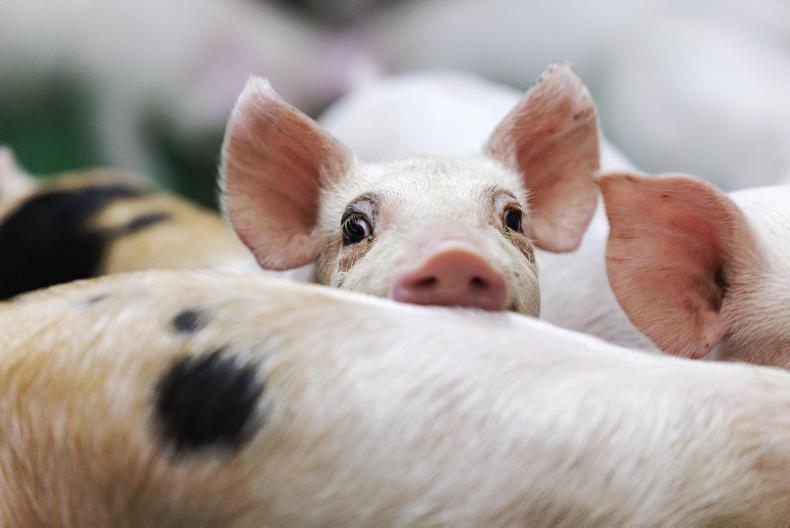
Commercial pig farmers’ attempts to rear pigs with intact tails have highlighted the challenges of the system switch and potential for it to add well over €7 in costs per pig sold, Teagasc's Louise Clarke told farmers last week.
Speaking at Teagasc’s national pig conference last week, the pig sector specialist discussed one farm’s carcase condemnation spike witnessed after it tried rearing groups of pigs with intact tails.
“If we look at the results, we can see a clear pattern there - the weeks where intact-tailed pigs were sold generally have more condemnations, while the condemnations were much lower during the periods when docked tail pigs were sold,” Clarke said.
“When we combined entire and partial condemnations, the overall level was three times higher during the intact tail period and looking at the figures in more detail, entire carcass condemnation increased sevenfold, while partial condemnation doubled.”
Effort
Clarke stated that the farm in the trial did not accept that higher levels of condemnation (levels which reverted to normal on rearing batches with docked tails) and that its managers tried with “considerable effort” to reduce condemnations by providing pigs with enrichment materials.
A wide range of materials, including wood, blocks, toys, straw, paper bags, leaves and tree branches were provided over the trial.
“But bringing it back to the brass tacks, what does this mean economically if we were to base it off a 700-sow herd," Clarke said.
“It would result in 784 entire carcass condemnations and approximately 71,000kg of pigmeat."
If we multiply that by the average pig price at the time, the estimated lost income was around €142,000 euro per year in entire carcase condemnations.
The researcher said that this cost would equate to €7.55/pig sold and flagged that actual costs arising from lost sales - which would include partial condemnation – would drive this figure even higher.
Putting a cost on an intact tail system’s additional labour requirements, enrichment materials, higher health costs and the potential for higher mortality would add further.





SHARING OPTIONS