Solar, wind, biomethane, biomass, batteries and heat pumps are some of the most commonly discussed renewable technologies, mentioned almost daily. But do they cover all the angles?
A new industry strategy from Liquid Gas Ireland (LGI), launched at the Irish Farmers Journal stand at Ploughing 2025, suggests that another renewable pathway has been overlooked.
This option could be particularly important for rural Ireland and farmers. It focuses on liquid renewable gas, in the form of Bio-LPG and dimethyl ether (DME), which could be produced domestically with farmers providing the feedstock.
Alan Farrell, former TD and LGI Senior Director for Government Affairs & Policy explained that almost 70% of homes outside Dublin, Cork and Galway rely on fossil fuels for heat, which is considerably higher than urban areas.
Many of these properties are older, larger and costly to retrofit. Electrification alone will not work everywhere, and this policy approach was too narrow. This was according to Barry Cowen, Fianna Fáil MEP for Midlands North-West who criticised the Green Party during the last government, saying they had a “narrow approach” in their push to electrify home heating.
“The uptake hasn’t been where it was envisaged and the SEAI’s own national heat study now shows that electrification alone cannot reach every home and business - even for those who can afford it,” Cowen said.
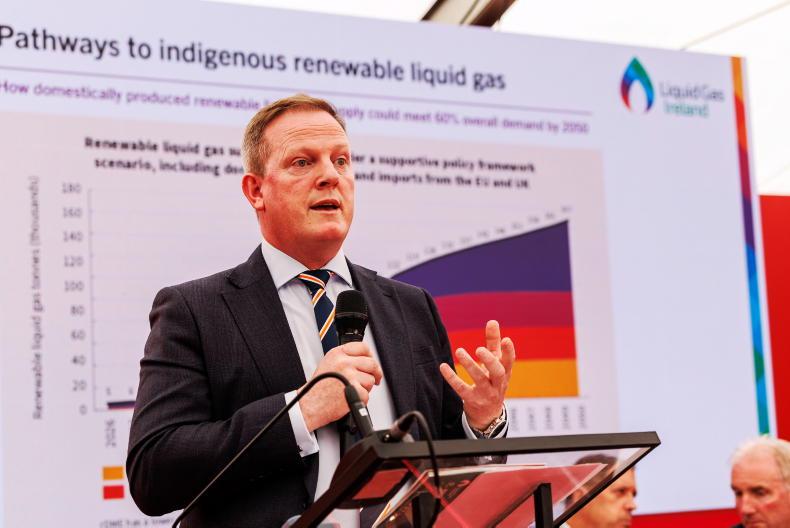
Alan Farrell LGI Senior Director for Government Affairs & Policy at the National Ploughing Championships 2025.
The SEAI National Heat Study acknowledges that up to 22% of homes are not currently suitable for heat pumps without significant upgrades.
“Full electrification is often technically or financially out of reach,” Cowen added.
As full electrification is not possible for many rural homes, what alternatives exist to decarbonise their energy use while keeping energy affordable?
The new report highlights that BioLPG and rDME could act as “drop-in” fuels, meaning they can be used with existing LPG boilers and infrastructure. When produced sustainably, these fuels have the potential to cut emissions by up to 90% compared to fossil
This may allow households, and businesses, to continue using or switch to LPG boilers and heat their premises as they normally would, but with only a fraction of the emissions.
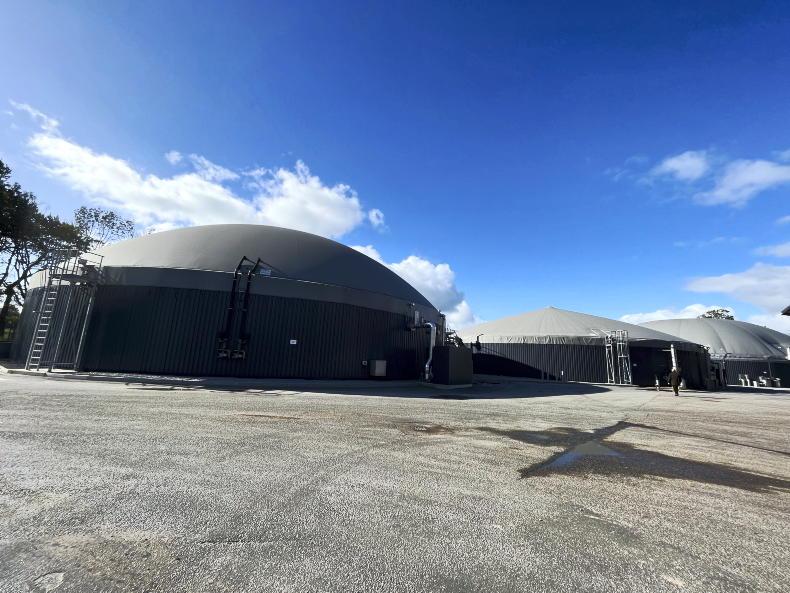
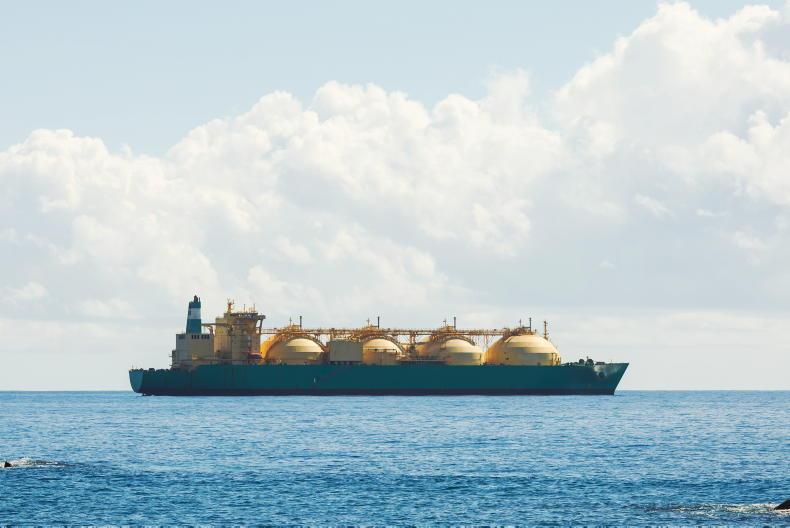
The report proposes upgrading AD plants to co-produce renewable dimethyl ether (rDME), a liquid gas that can be easily transported and stored using Ireland’s existing LPG network.
The challenge of electrification is not limited to homes.
Businesses that require high-temperature heat, such as those involved in milk processing or grain drying, face similar obstacles. For businesses that are not connected to the gas grid, liquid renewable gases could be part of the solution.
What’s in it for farmers?
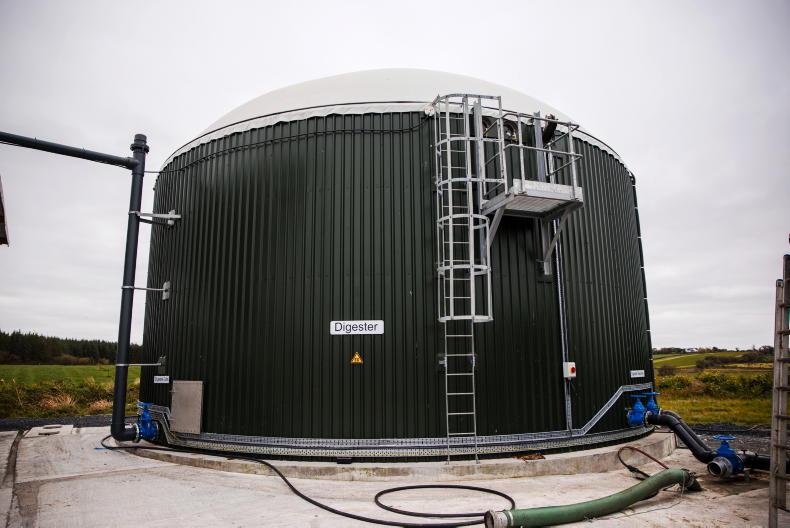
The crux of the panel’s discussion focused on what this means for farmers. Renewable liquid gas can be made from biogas, essentially as an additional step in an anaerobic digestion (AD) plant.
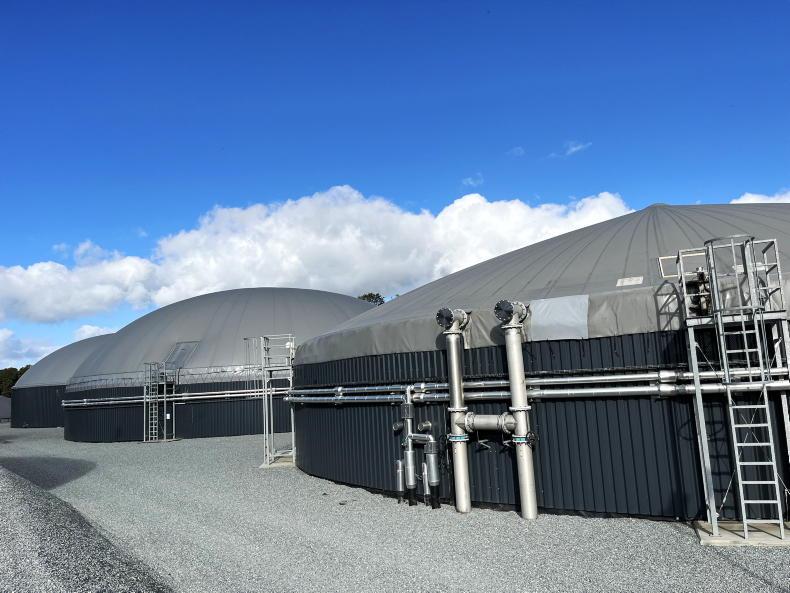
The report proposes upgrading AD plants to co-produce renewable dimethyl ether (rDME), a liquid gas that can be easily transported and stored using Ireland’s existing LPG network.
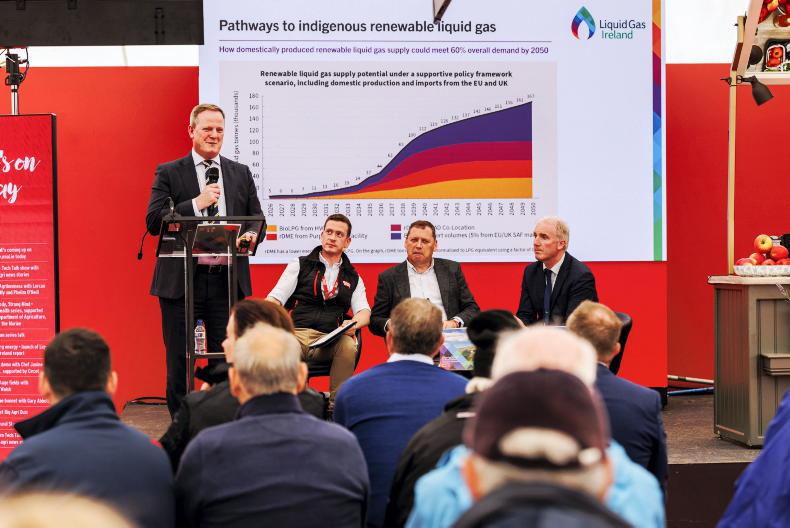
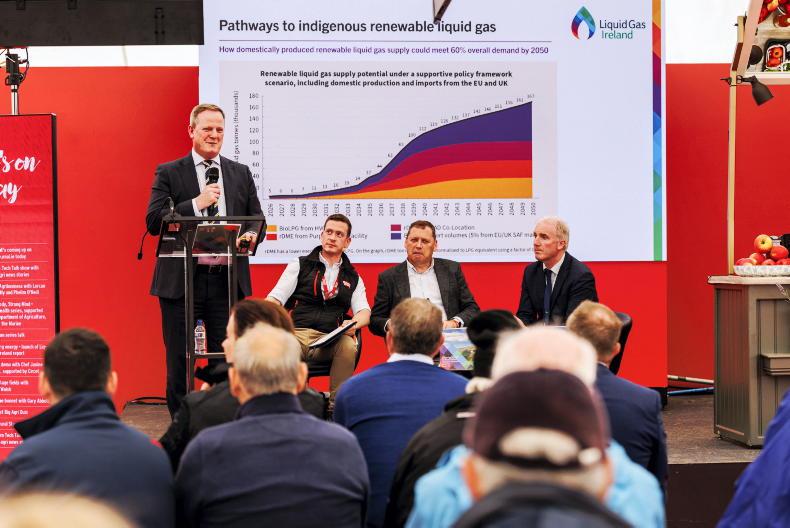
It outlines that Ireland could potentially divert 2.9 TWh of unused energy from biomass and slurries into renewable liquid gas production.
From a farmer’s perspective, this would look very similar to the AD model already in development, where farmers sell feedstocks under long-term supply contracts to AD plants.
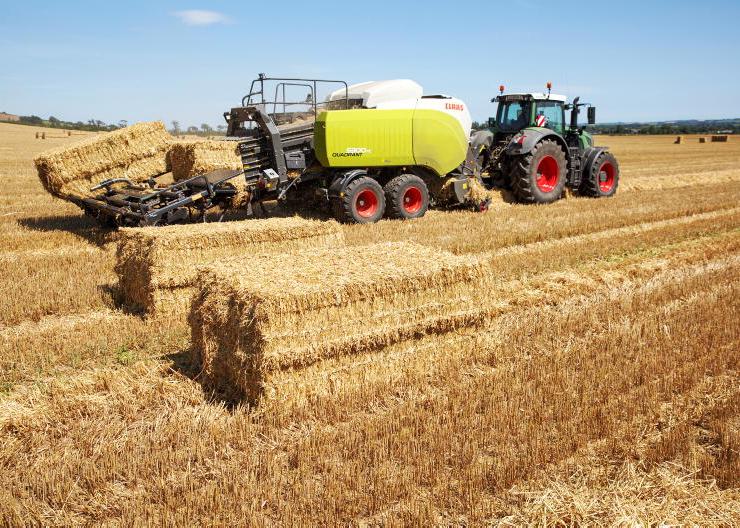
Feedstocks such as cattle slurry, pig slurry, poultry litter, crops and by-products could all be used to produce the fuel. If the industry becomes established, it would create yet another market for farmers to supply these materials.
When asked if farmers would be interested in working with this new industry, Barry Caslin, Energy and Rural Development Specialist with Teagasc suggested they would if it was profitable for them.
Like any renewable energy technology on farm, there has to be an attractive financial return to justify any investment or diversification.
The report outlines that there is potentially enough feedstock in the country to 100,000t of renewable liquid gas.
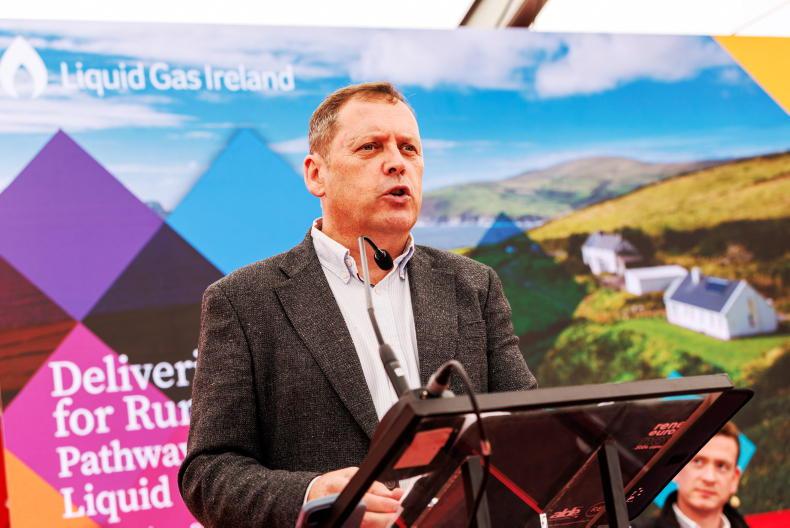
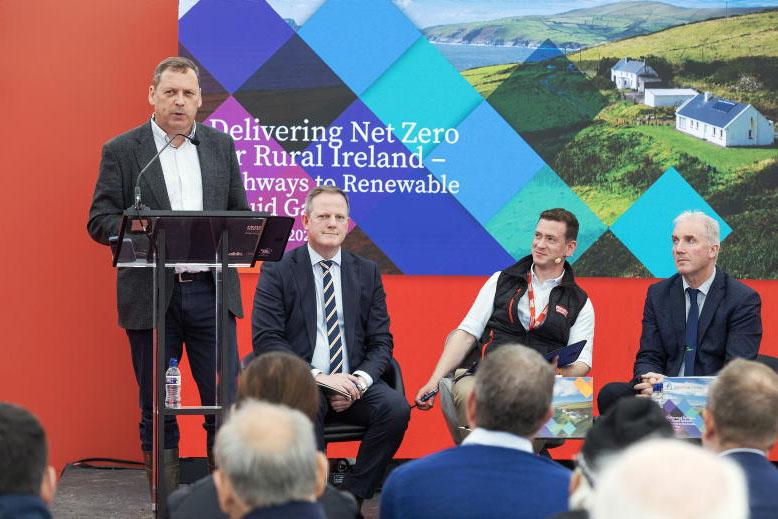
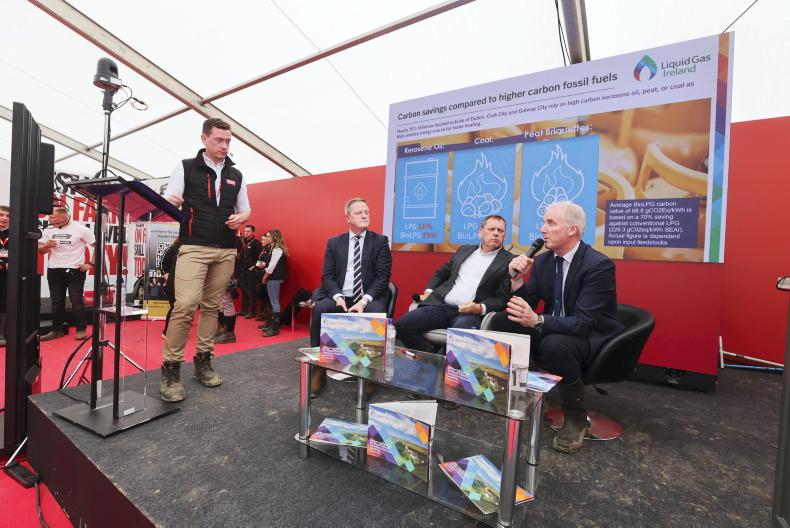
The Launch of the Liquid Gas Report by MEP Barry Cowen on the Irish Farmers Journal stand at the National Ploughing Championships 2025. \ Philip Doyle
The report calls for policy parity so that renewable liquid gases such as BioLPG and rDME receive the same recognition and support as biomethane and hydrogen in Ireland’s Climate Action Plan.
It warns that without targeted measures, rural households and agri-businesses risk facing higher energy costs and being left behind in the transition.
Key asks include capital investment supports to retrofit boilers, clear inclusion of renewable liquid gases in decarbonisation schemes, and a coherent policy roadmap to give investors’ confidence.
The challenge, the report notes, is to decarbonise heat for the nearly 70% of off-grid homes that still rely on kerosene, peat or coal.
Watch the entire session back by clicking here.
Solar, wind, biomethane, biomass, batteries and heat pumps are some of the most commonly discussed renewable technologies, mentioned almost daily. But do they cover all the angles?
A new industry strategy from Liquid Gas Ireland (LGI), launched at the Irish Farmers Journal stand at Ploughing 2025, suggests that another renewable pathway has been overlooked.
This option could be particularly important for rural Ireland and farmers. It focuses on liquid renewable gas, in the form of Bio-LPG and dimethyl ether (DME), which could be produced domestically with farmers providing the feedstock.
Alan Farrell, former TD and LGI Senior Director for Government Affairs & Policy explained that almost 70% of homes outside Dublin, Cork and Galway rely on fossil fuels for heat, which is considerably higher than urban areas.
Many of these properties are older, larger and costly to retrofit. Electrification alone will not work everywhere, and this policy approach was too narrow. This was according to Barry Cowen, Fianna Fáil MEP for Midlands North-West who criticised the Green Party during the last government, saying they had a “narrow approach” in their push to electrify home heating.
“The uptake hasn’t been where it was envisaged and the SEAI’s own national heat study now shows that electrification alone cannot reach every home and business - even for those who can afford it,” Cowen said.

Alan Farrell LGI Senior Director for Government Affairs & Policy at the National Ploughing Championships 2025.
The SEAI National Heat Study acknowledges that up to 22% of homes are not currently suitable for heat pumps without significant upgrades.
“Full electrification is often technically or financially out of reach,” Cowen added.
As full electrification is not possible for many rural homes, what alternatives exist to decarbonise their energy use while keeping energy affordable?
The new report highlights that BioLPG and rDME could act as “drop-in” fuels, meaning they can be used with existing LPG boilers and infrastructure. When produced sustainably, these fuels have the potential to cut emissions by up to 90% compared to fossil
This may allow households, and businesses, to continue using or switch to LPG boilers and heat their premises as they normally would, but with only a fraction of the emissions.

The report proposes upgrading AD plants to co-produce renewable dimethyl ether (rDME), a liquid gas that can be easily transported and stored using Ireland’s existing LPG network.
The challenge of electrification is not limited to homes.
Businesses that require high-temperature heat, such as those involved in milk processing or grain drying, face similar obstacles. For businesses that are not connected to the gas grid, liquid renewable gases could be part of the solution.
What’s in it for farmers?
The crux of the panel’s discussion focused on what this means for farmers. Renewable liquid gas can be made from biogas, essentially as an additional step in an anaerobic digestion (AD) plant.
The report proposes upgrading AD plants to co-produce renewable dimethyl ether (rDME), a liquid gas that can be easily transported and stored using Ireland’s existing LPG network.
It outlines that Ireland could potentially divert 2.9 TWh of unused energy from biomass and slurries into renewable liquid gas production.
From a farmer’s perspective, this would look very similar to the AD model already in development, where farmers sell feedstocks under long-term supply contracts to AD plants.
Feedstocks such as cattle slurry, pig slurry, poultry litter, crops and by-products could all be used to produce the fuel. If the industry becomes established, it would create yet another market for farmers to supply these materials.
When asked if farmers would be interested in working with this new industry, Barry Caslin, Energy and Rural Development Specialist with Teagasc suggested they would if it was profitable for them.
Like any renewable energy technology on farm, there has to be an attractive financial return to justify any investment or diversification.
The report outlines that there is potentially enough feedstock in the country to 100,000t of renewable liquid gas.

The Launch of the Liquid Gas Report by MEP Barry Cowen on the Irish Farmers Journal stand at the National Ploughing Championships 2025. \ Philip Doyle
The report calls for policy parity so that renewable liquid gases such as BioLPG and rDME receive the same recognition and support as biomethane and hydrogen in Ireland’s Climate Action Plan.
It warns that without targeted measures, rural households and agri-businesses risk facing higher energy costs and being left behind in the transition.
Key asks include capital investment supports to retrofit boilers, clear inclusion of renewable liquid gases in decarbonisation schemes, and a coherent policy roadmap to give investors’ confidence.
The challenge, the report notes, is to decarbonise heat for the nearly 70% of off-grid homes that still rely on kerosene, peat or coal.
Watch the entire session back by clicking here.
SHARING OPTIONS