


The Hutton institute have completed their trial on growing hops under polytunnels with great success. Their trial paves the way for specialist growers to grow the plant for Scotland’s burgeoning craft beer sector. An open day at the trial sites in Invergowry showed that hops rhizomes could be grown successfully under plastic, with each plant hoping to yield 2.5kg of hops. The open day attracted scientists, farmers and brewers all interested in growing or buying Scottish hops. The project was financially backed by the Scottish Government. Peter Derby, a hops researcher from England helped a great deal in advising on the growing of the plants.
Hops at Hutton
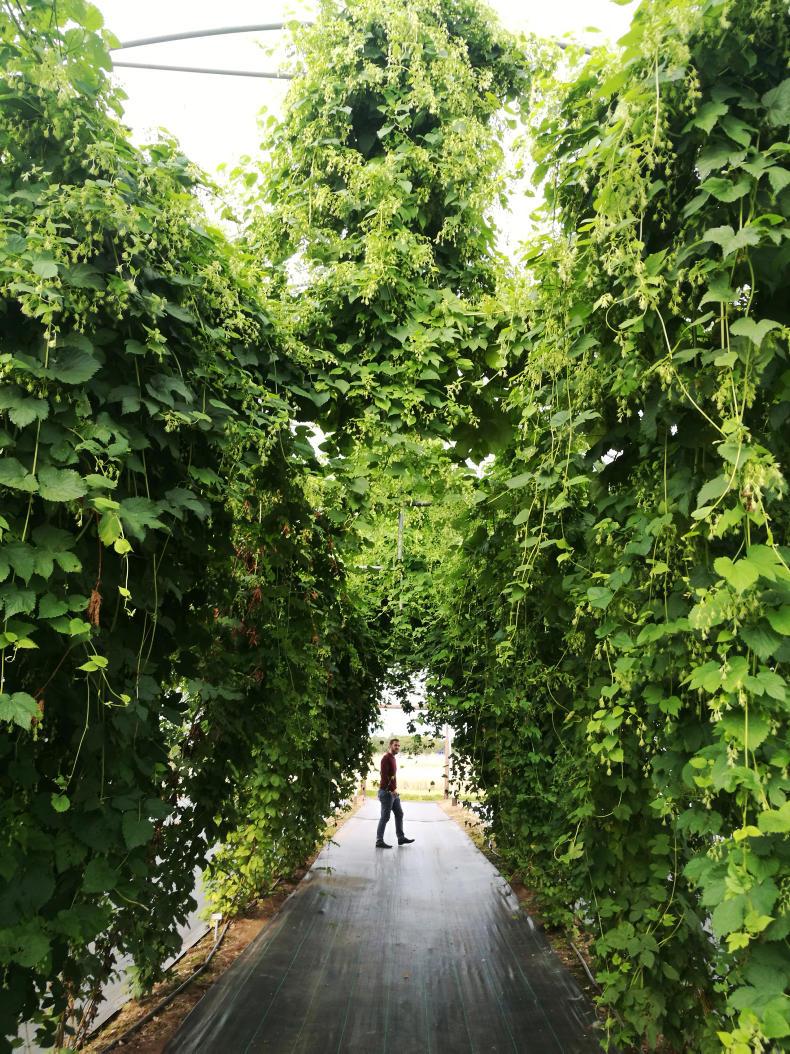
The Hutton Institute successfully finished their two-year trial into growing hops under cover in Scotland
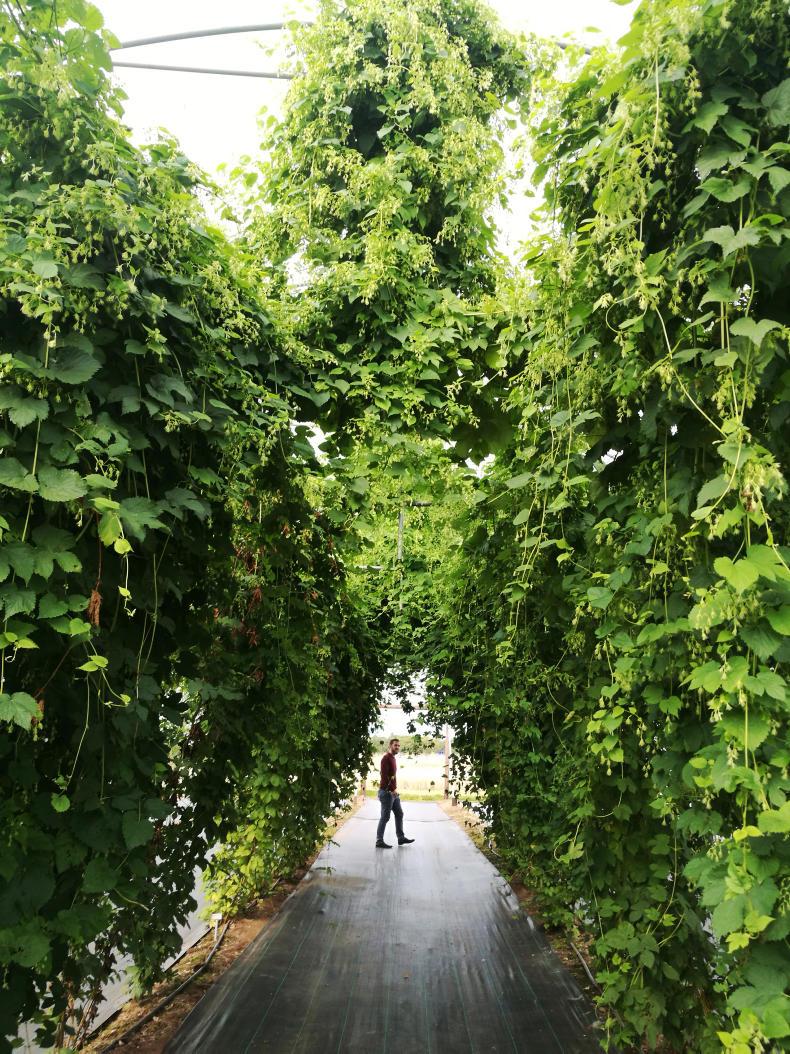
Hops are grown from rhizomes which are planted in spring. You shouldn’t harvest a crop within the first year to help the plan get established. Plants can be productive for over 15 years. The plant grows up strings to heights over 20 feet, although varieties used in the trial were shorter or dwarf for the polytunnel.
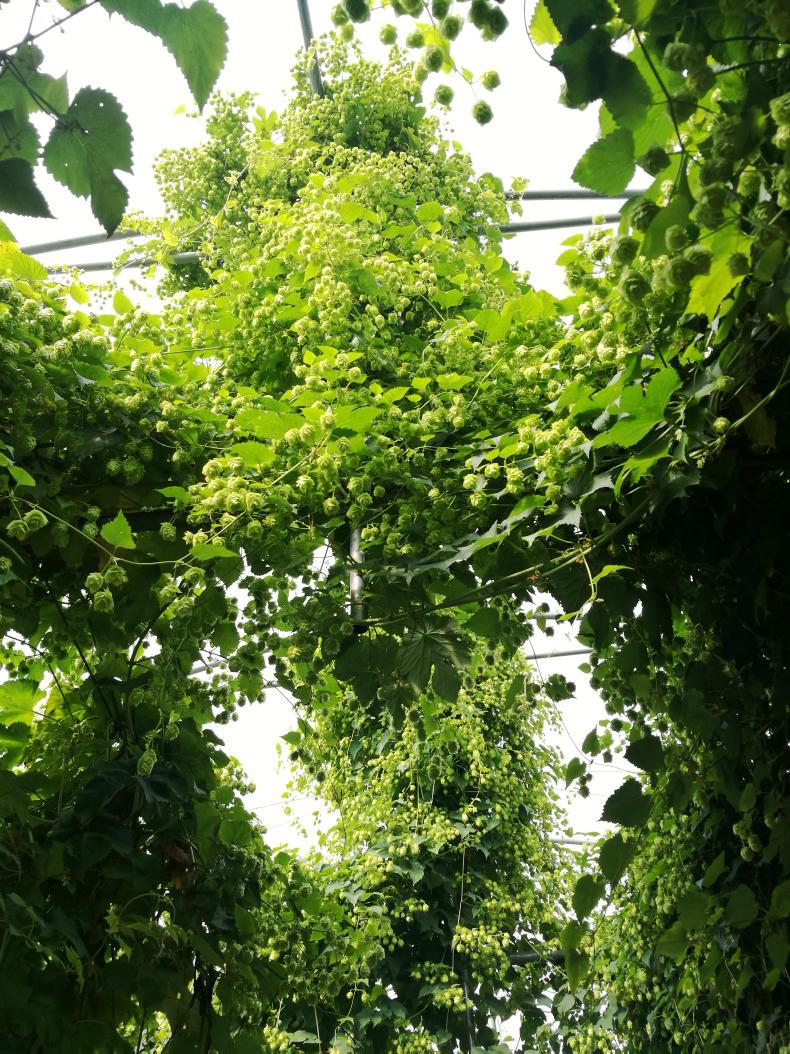
Hop plants were planted 1.5m apart and harvested in late September and October. Brewers are looking for a-acids which confer bitterness into the beer. There is also a comples mix of volatile oils that vary in composition between varieties. Most Brewers will be looking for a specific a-acid level before deciding to buy.

Tim Butler owner of St Andrew Brewery. “There is a big interest in producing a 100% Scottish beer. We did this for a small batch last year which was a real success. There is a lot of beer geeks, last week they were selling beer for £22.50 a pint in London.”
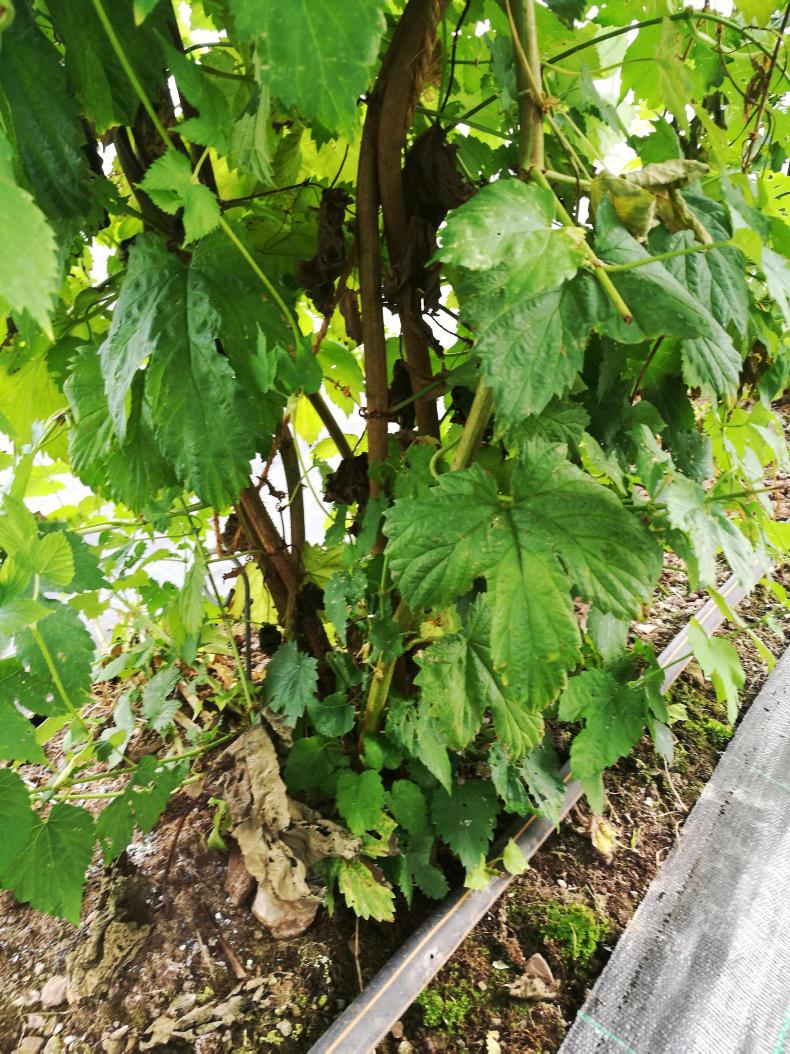
To harvest hops you cut the plant down at the base. Then the hop flowers need to plucked from the plant. This mean ordinary fruit picking machines don’t work as they use a shaking mechanism. Specialist hop harvesting machines start from £10,000 for a second hand one. Harvested hops can sell for between £15/kg to £25/kg with plants in the trail hoping to yield 2.5kg each.
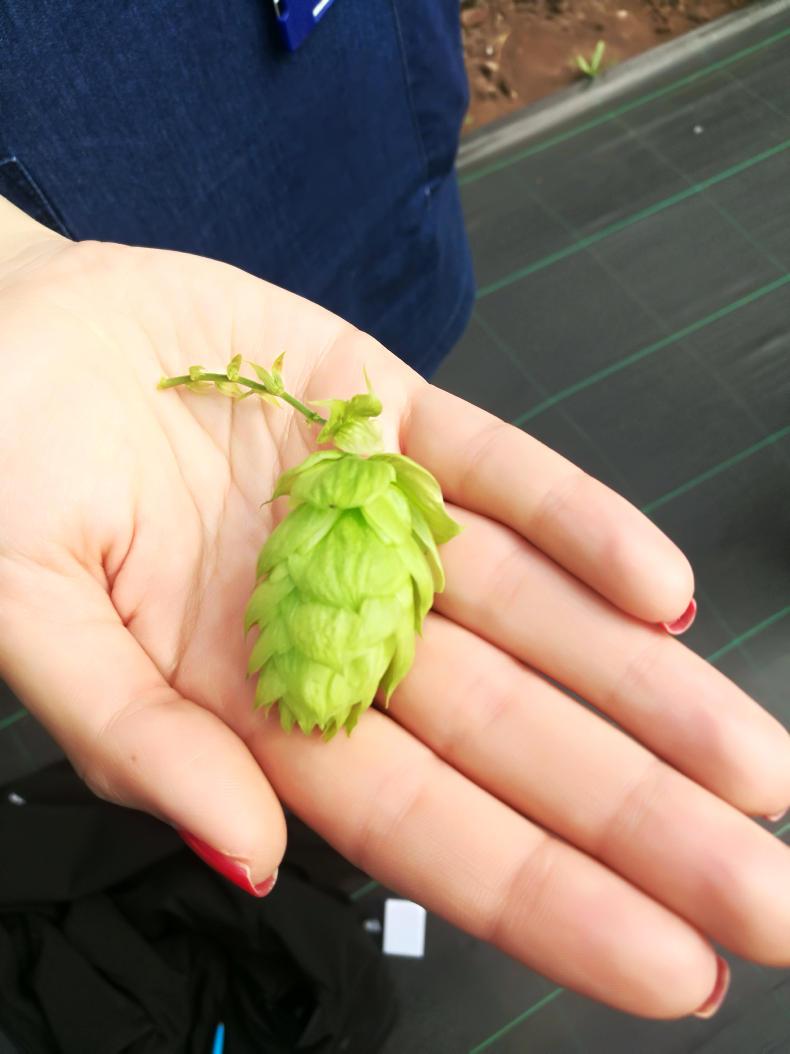
Once harvested the hops can either be used in brewing straight away or carefully dried. The Hutton’s small batch tray drier worked well. Once dried they can be turned into pellets which is the common way Scottish brewers use hops.

Stewart Arbuckle of Arbuckle’s soft fruit, “This is an interesting new thing we are just across the road so thought I’d come have a look. It seems very good on the surface and I am keen to explore more about hops. There looks to be demand for it here with a good many breweries here today.”
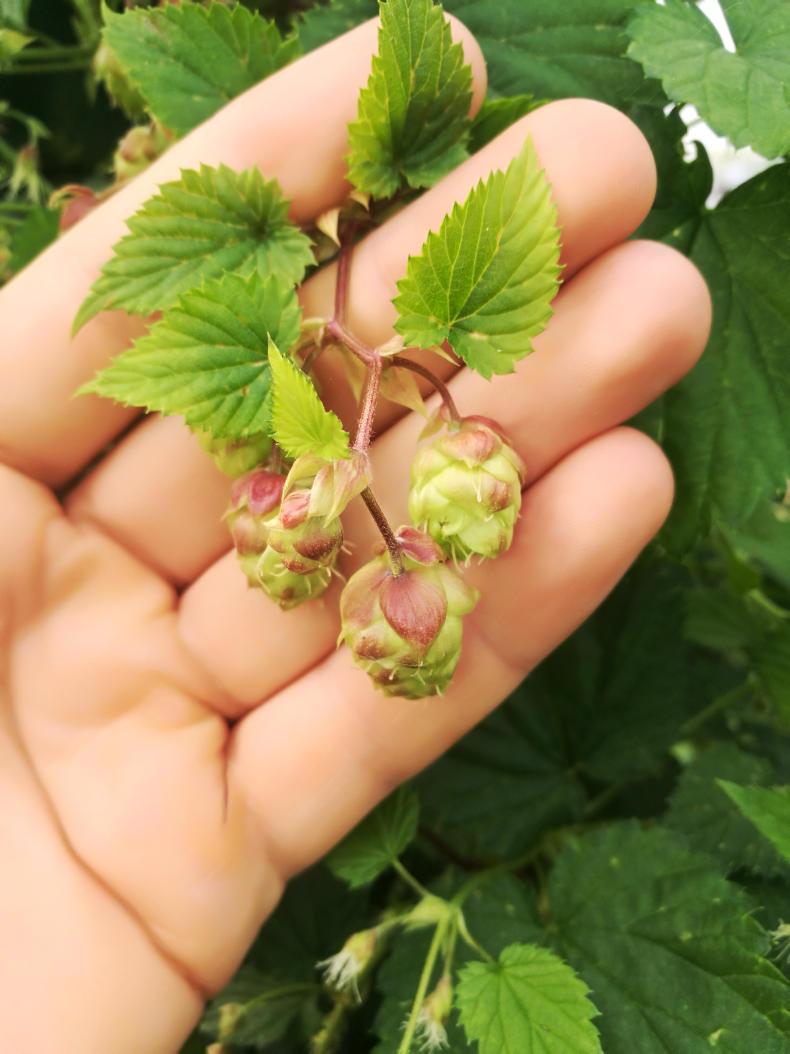
Hops a couple weeks away from harvest. Licensing can be an issue when growing hops commercially. Many of the varieties are tightly controlled by breeders and older plants need licensed to be grown commercially.

Dr Rex Brennan, leader of the soft fruit breeding group at the James Hutton Institute who managed the trail said: “It was a most enjoyable exercise. We already have a huge interesting in growing Scottish barley for brewing so it seem natural to look at hops. There was hops grown in the mid 19th century so its not unknown.”
“This year the plants grew well, but last year’s low light levels in summer meant they weren’t so productive. The main disease issue we have had is downy mildew. We
ADVERTISEMENT




ADVERTISEMENT


SHARING OPTIONS