The National Economic and Social Council (NESC), a body established in 1973 to advise the Taoiseach on strategic policy issues, published a 150-page report last week arguing that the agriculture and land use sector can increasingly become part of the solution to addressing “urgent climate change and biodiversity loss.”
The NESC said it has spent the past year and a half talking to farmers, environmental groups, community organisations, employers and trade unions in pursuit of agreement on environmental objectives that are both socially equitable and economically viable.
The report also acknowledges the distinctive characteristics in Irish agriculture, such as the strategic importance of the sector to the economy, the extent and diversity of land covered by agriculture, the diversity of farm structure and the wider social and cultural significance of the sector, all of which taken together increase the complexity and sensitivity of any transition.
In the face of this complexity, the report says no individual policy or policy measure will be sufficient to manage a transition in the agri-food sector.
Instead, it will require both incremental small-scale changes, as well as structural changes to institutions and norms which need to happen in a co-ordinated and integrated whole-of-Government way.
With that in mind, the report comes to four main policy actions, which are:
Those four policies are further broken down in 20 recommendations, including:
Workshops
As part of the extensive research for the report, the NESC engaged in workshops with farmers across the country.
The focus groups attempted to get as wide a range of views as possible, with geographically diverse representatives from small and large farms, as well as young, women and innovative farmers.
They were asked to clarify which measure, from a proposed range, they would be interested in doing.
The results of the workshop showed that the most popular measures were “easy wins” such as improved grassland management, the inclusion of clover in pastures and addition of solar photovoltaics.
The three least popular measures were afforestation, reduction of livestock numbers and rewetting of organic grassland soils – with almost universal disapproval of the last two.
The report classified these as “hard to do” and said that for some farmers they can cause potentially high levels of income reduction and loss of livelihood.
One of the key interventions recommended for this is the proper accounting for and rewarding of environmental measures undertaken at farm level
There would also be significant output reductions and job losses which would lead to knock-on social and economic costs for rural communities.
One of the key interventions recommended for this is the proper accounting for and rewarding of environmental measures undertaken at farm level.
Whether it is through payments for eco-system services or carbon farming, the report says the current misalignment of financial incentives is a key barrier to transition.
The full report, available on the NESC website at nesc.ie, is essential reading for anyone interested in the path towards agriculture transition in Ireland.
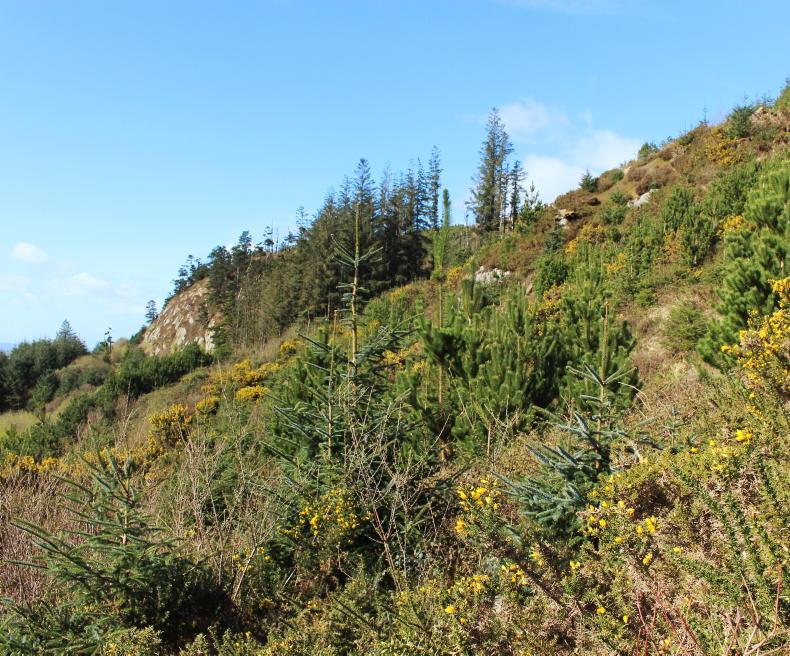
Elsewhere in climate-related reports, the EPA published the provisional greenhouse gas emissions numbers for Ireland for 2022 and it contains an astonishing piece of data – forest land in this country moved from being a carbon sink to becoming a source of carbon emissions last year.
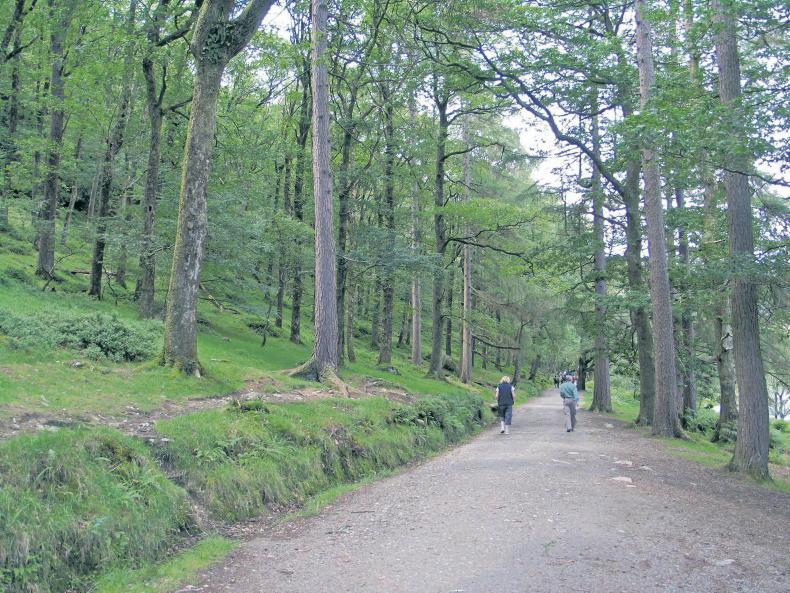
As the EPA report points out, the afforestation rate has dropped from about 15,000ha per year in the 1990s to just under 2,300ha in 2022. Those trees planted in the 1990s are now mature, meaning the harvest has risen from 1.7 million m3 in 1990 to 4.3 million m3 in 2022.
The reason for this is the continued huge failure of forestry policy.
The target for afforestation under the Climate Action Plan published this year is 8,000ha. However, right now in Ireland, there is no licensing plan in place as the European Commission and the Department of Agriculture remain deadlocked over approval of the forestry programmes which was launched in November 2022.
It really is no wonder that the NESC report found support among farmers for afforestation to be so low, listing it as one of the three “hard to do” policies.
The NESC said “farmers expressed negative views on traditional afforestation” with the way forest schemes were managed in the past seen as having “severe and unproductive restrictions.”