




The recent independent report on the State’s response to ash dieback didn’t pull too many punches.
Indeed, it lived up to its pre-publication billing, and was every bit as critical and hard-hitting as had been flagged and anticipated.
It cannot have been easy reading in the Department of Agriculture.
In fact, you may have to go back to the Beef Tribunal Report to get as damning an indictment of Department action and inaction.
The report powerfully outlines the emotional toll that ash dieback has exacted. Two extracts illustrate this point:
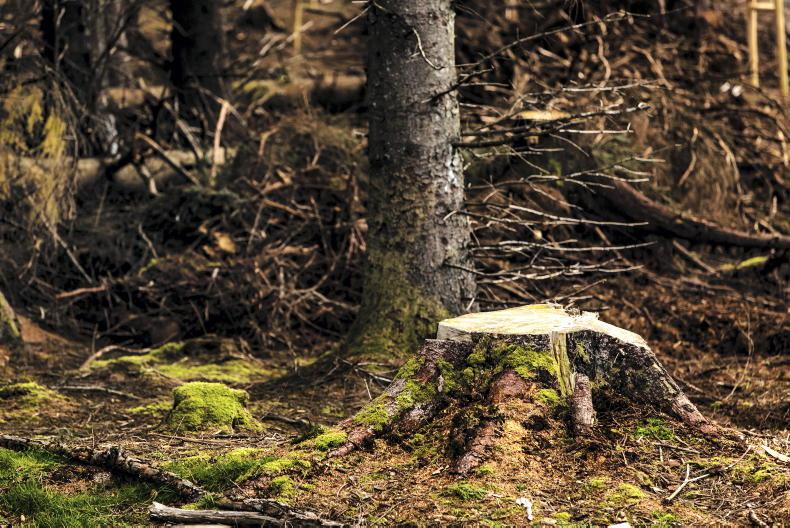
“For ourselves, the experience of standing in the middle of dead plantations was shocking, and it was easy to imagine how difficult it must be for a landowner to have to witness the slow death of their trees on a daily basis and be unable to act.”
And: “In our engagement with public and private sector stakeholders, the sense of despondency, shock, sadness and grief for the losses from the disease was palpable. This was overlain with a feeling of frustration and abandonment among the landowners we met and anger at the apparent lack of empathy and recognition demonstrated by Government.”
The review recognises that Ireland, along with the UK, sought to introduce import restrictions which may have safeguarded ash trees on these islands. Unfortunately, they were stopped from doing so by the EU.
However, the shortcomings in national policy thereafter– in initially seeking to eradicate the disease, and then in seeking to manage its impact – are laid bare in the report.
The authors are particularly critical of the period from 2018 to 2020 when there was no support scheme in operation and no official policy to deal with the disease.
Landowners were effectively left in limbo while their plantations were ravaged.
In a damning assessment, the Reconstitution and Underplanting Scheme (RUS) –introduced by the Department in 2020 to tackle ash dieback – was described as “silviculturally flawed” and “based on an out-of-date premise that ash trees in infected plantations could still be saved”.
The fact that the opinions of ordinary growers were ignored by the Department is also bemoaned by the review’s authors. The review calls for ash dieback to be treated as a national emergency. It also recommends that:
The review’s authors have correctly recognised that convincing landowners to commit to forestry in the future will depend on the fair treatment of those impacted by ash dieback.
The Department will need to take heed and do a hell of a lot better.


SHARING OPTIONS