


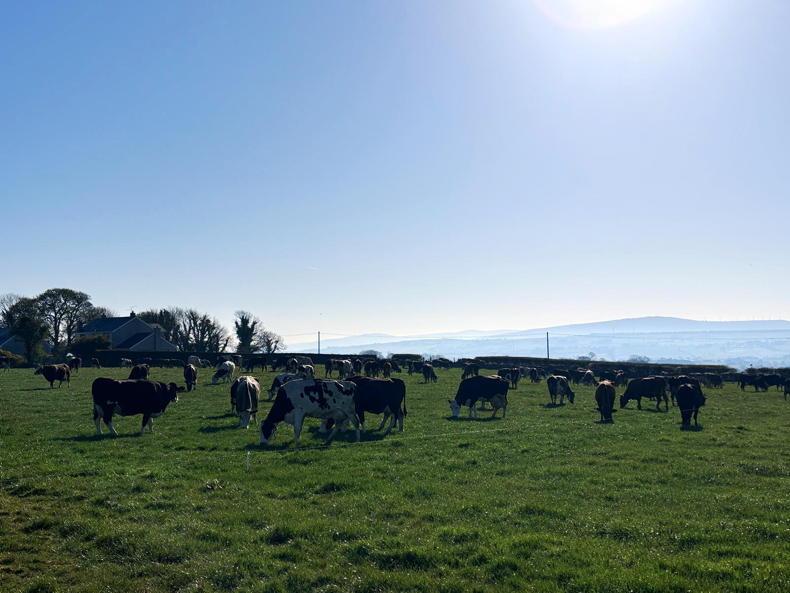
Grazing of the milking herd began this year on 12 March.
Since then – apart from two extremely wet days – when the cows showed no interest in grass and ended up poaching the corner of a field, it has been a relatively smooth and successful start to the grazing season.
Meal has been gradually reduced, with cows now receiving 1.5kg less per head through the feeder wagon.
Thankfully, milk yield has remained steady at 30 litres per cow per day, resulting in a reduced feeding rate to 0.28kg per litre of milk.
Utilisation
The great weather has resulted in high levels of grass utilisation and good graze outs at this time of year, which will hopefully help maintain graze quality into further rotations.
However, due to the colder nights, grass growth is still not quite sufficient to move the milking herd to full-time grazing just yet.
Last week’s grass walk measured growth at 36kg of dry matter (DM) per hectare.
Hulls
Back at the beginning of January, we had concerns about limited silage stocks, so we began feeding between 1-2kg of soya hulls per cow. This strategy has worked well, we now find ourselves with a comfortable reserve of silage and no immediate pressure to push cows out to grass full time.
I plan to measure grass next week and, weather-permitting, hope to get the milking herd settled onto a mainly grass-based diet at least one week before the spring artificial ineminsation (AI) programme begins at the end of April. Heifers that are due to be served at the end of April have been grazing since last week.
Lane
It’s been a busy start to spring. With ground conditions ideal, we’ve begun work on a third lane to help with access during the shoulders of the grazing season. In addition, we’ve drained and filled in a hollow in a field we plan to reseed at the end of the month. After last year’s success with minimal cultivation (discing), we plan to use the same method again. My father, years ago, had the clever idea to bury three stone ditches in that field, so ploughing it would bring up most of these stones – discing is the most practical option.
Another job ticked off the list this spring was replacing the floor in one of the silage pits. The pit had been extended into the old yard, but the fall in the floor was poor meaning effluent would not drain away. With the new floor now in place, we expect to hopefully increase dry matter content in the silage.
Scanning
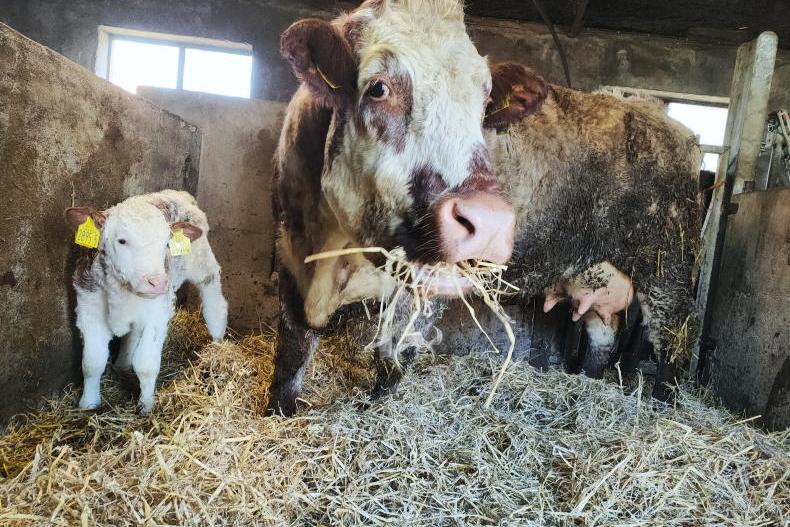
In March we also scanned the autumn-calving batch, and I’m delighted with the results.
We have 115 cows due to calve between October and November. With growing confidence each year in using AI, I’m seriously considering not replacing the stock bull I normally keep for the cows.
It feels like a waste to keep a bull for 52 weeks when he only runs with the herd for around six weeks annually. That said, I’ll still keep one for the heifers, as AI during grazing can be particularly challenging with them.



SHARING OPTIONS