



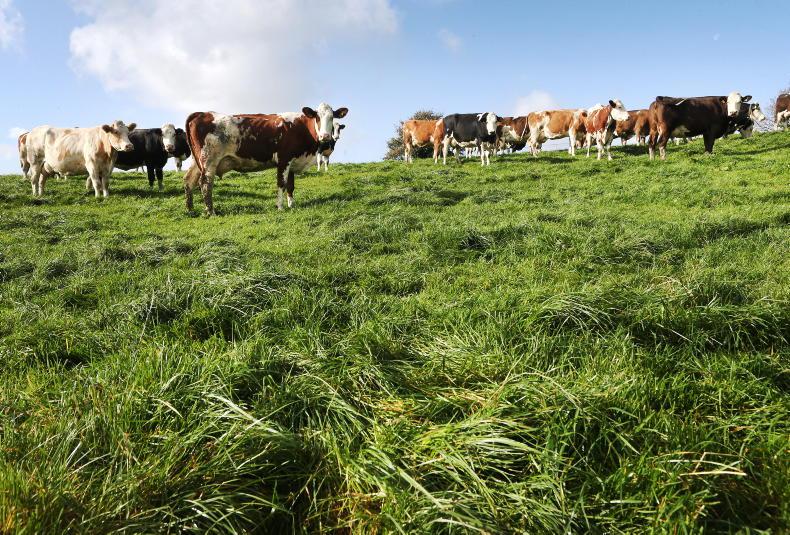
With the return of drier weather towards the end of September, we managed to get our reseeding competed, which was an absolute relief.
We only rolled both fields once before sowing the grass seed and didn’t roll it afterwards. This seems to have worked well, as storm Amy didn’t leave any tracks or cause any damage to the new reseed. Each day you can see more grass coming through and the fields are visibly greening up.
We have never sown grass seed this late in the year before, but with the current mild weather, I’m hopeful it will hold out long enough for the grass to establish properly before any frosts.
Maize
The maize silage arrived in the yard three weeks ago. We buy it in trailer loads from Meath and this year it was two months earlier than in 2024, when it didn’t get harvested until 20 November.
At that point, the autumn-calving cows were already past their peak milk production and, unfortunately due to the poor season, the maize was very wet. Thankfully, this year’s maize silage is much drier, with no runoff, and appears to be full of corn.
We’ve just opened the pit and plan to get it tested this week, but are optimistic about the quality. Although we did see a lift in milk yield last year when feeding maize silage, which was probably due to introducing a second forage into the diet, the increase was lower than the previous year. Hopefully, this year’s improved quality will lead to a more significant boost in milk yields.
Calving
October got off to a busy start, with 36 cows calving since the beginning of the month. It’s a lot of work, but all the heifer calves that will join the herd two years from now, have been born or are due to arrive within the next week. The goal is to have all the heifer calves weaned off milk before Christmas.
At a farm walk this time last year, someone asked why I hadn’t moved to a single calving block instead of splitting the herd into spring and autumn calving.
Initially that was always my intention – start with two blocks and then transition to one, depending on which one worked best for our yard. But in practice, one system seems to work better one year and the other the next, depending on the cows, calves and overall profitability.
This year also made me realise that I don’t actually have the shed space or the staffing capacity to manage all the cows calving in a single block.
Slurry
At the moment, the spring-calving cows and all the heifers are still out grazing, with grass in front of them.
However, we have grazed large areas this month just to make ground available for slurry before the start of the closed period on 15 October. This will probably mean we’ll have to house the spring cows earlier than planned, as we’ll run out of clean ground.
I’m still hopeful, perhaps too optimistic, that at some point, when all the rule changes and red tape is being reviewed, the department will see sense and lift the outdated slurry spreading ban. The days are long gone when people saw slurry as waste product – everyone now recognises the valuable nutrients it provides for grass growth.
But the increasing variability in the weather over recent years has shown us that it can be just as wet during the slurry spreading season as it is in the closed period.
A bit of common sense in how the rules are applied would go a long way.




SHARING OPTIONS