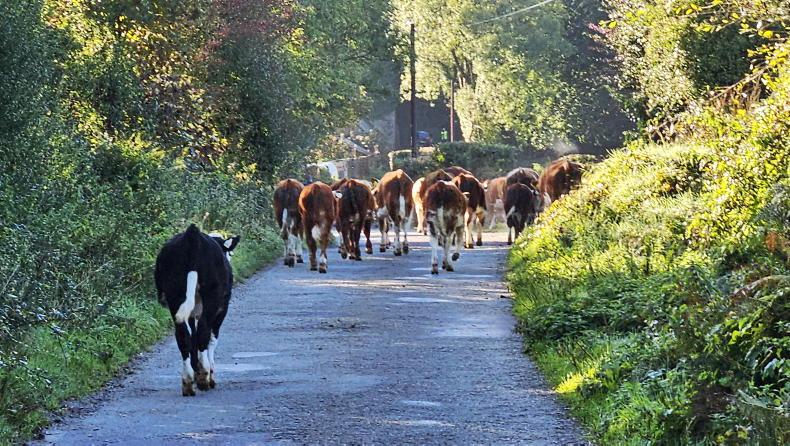
Agricultural aromas come in a wide range and one I hadn’t encountered in years, but was instantly recognisable, hit my nostrils on Tuesday last – rumen fluke. I was following the younger bull along the road back to the yard on the outfarm and the whiff of it brought back memories of our first cases of this ailment.
He was trailing the rest of the herd by a good distance and that nearly created its own issue when it came to turning the rest into the yard as some cows looked to head back for the fields.
I took dung samples anyway and the results from them confirmed what I smelled, but if I was blindfolded, I’d be confident of guessing the ailment correctly.
All were negative for liver fluke but the rumen variety showed up strong. All who needed a dose got one and as we’ve learned from experience, they’ll put back on condition fast enough. The bull will be kept home next summer so that at least if this incident impacts his fertility, AI can step in.
He was loaded up along with all the pairs with bull calves and brought back home along with any cow in poorer condition that was rearing a heifer calf. Included in the returnees were six second calvers who spent their first summer on this ground. Between them, the bull and young cows got a harder doing than the rest. On the other side of the coin, I wonder do some animals become more tolerant to it.
Maybe it’s coincidence, but three of the group looked in far better order than the rest and the weighing scales confirmed it. They weren’t dosed, for now, at least. Third to fifth calvers, they have spent all their summers on that ground and were well ahead of the pack in terms of condition.
A fourth cow looked OK visually but her weight was behind where I expected so she was dosed too.
Incubation
It was 2013 when there was an issue with it rumen fluke first and the vet told me that it had a three-month incubation period. His instructions were, if cattle were going to the ground where it was present in April and the land was wet, then the symptoms wouldn’t appear until July and there was no need to dose for it until then.
That timeframe played out this year, April and May were exceptionally dry but June balanced that out and provided ideal conditions for the mud snail, the intermediate host of rumen fluke, to thrive. Fast forward to September and some cows who had been in good order all summer, began to lose condition.
The weighing scales justified the change taken last year to hold the first calvers at home on better ground.
Usually, all first calvers and replacement heifers were sent to the outfarm but in 2023 we held the heifers back and the washout spring of last year, to give them a better chance, the first calvers stayed home and older cows went in their stead.
There’s over 40kg of a difference between the average weight of the six second calvers impacted by rumen fluke and the average of the heifers that didn’t go in calf this year. The best six first calvers are 125kg ahead of them too so it shows the impact the rumen fluke can have.
A second calver picked it up at home too. Once TB testing is out of the way, any of the first calvers whose weights are well behind those best performers will be dosed too and the better ones left alone.

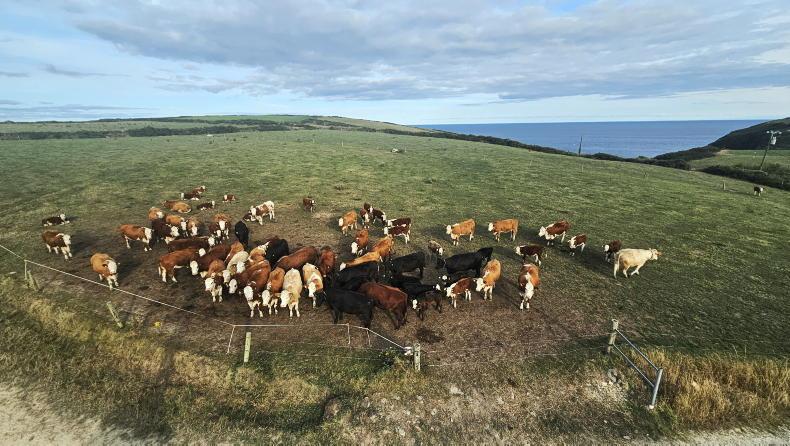
Tommy Moyles' cows and calves grazing at Ballinascarthy.
Agricultural aromas come in a wide range and one I hadn’t encountered in years, but was instantly recognisable, hit my nostrils on Tuesday last – rumen fluke. I was following the younger bull along the road back to the yard on the outfarm and the whiff of it brought back memories of our first cases of this ailment.
He was trailing the rest of the herd by a good distance and that nearly created its own issue when it came to turning the rest into the yard as some cows looked to head back for the fields.
I took dung samples anyway and the results from them confirmed what I smelled, but if I was blindfolded, I’d be confident of guessing the ailment correctly.
All were negative for liver fluke but the rumen variety showed up strong. All who needed a dose got one and as we’ve learned from experience, they’ll put back on condition fast enough. The bull will be kept home next summer so that at least if this incident impacts his fertility, AI can step in.
He was loaded up along with all the pairs with bull calves and brought back home along with any cow in poorer condition that was rearing a heifer calf. Included in the returnees were six second calvers who spent their first summer on this ground. Between them, the bull and young cows got a harder doing than the rest. On the other side of the coin, I wonder do some animals become more tolerant to it.
Maybe it’s coincidence, but three of the group looked in far better order than the rest and the weighing scales confirmed it. They weren’t dosed, for now, at least. Third to fifth calvers, they have spent all their summers on that ground and were well ahead of the pack in terms of condition.
A fourth cow looked OK visually but her weight was behind where I expected so she was dosed too.
Incubation
It was 2013 when there was an issue with it rumen fluke first and the vet told me that it had a three-month incubation period. His instructions were, if cattle were going to the ground where it was present in April and the land was wet, then the symptoms wouldn’t appear until July and there was no need to dose for it until then.
That timeframe played out this year, April and May were exceptionally dry but June balanced that out and provided ideal conditions for the mud snail, the intermediate host of rumen fluke, to thrive. Fast forward to September and some cows who had been in good order all summer, began to lose condition.
The weighing scales justified the change taken last year to hold the first calvers at home on better ground.
Usually, all first calvers and replacement heifers were sent to the outfarm but in 2023 we held the heifers back and the washout spring of last year, to give them a better chance, the first calvers stayed home and older cows went in their stead.
There’s over 40kg of a difference between the average weight of the six second calvers impacted by rumen fluke and the average of the heifers that didn’t go in calf this year. The best six first calvers are 125kg ahead of them too so it shows the impact the rumen fluke can have.
A second calver picked it up at home too. Once TB testing is out of the way, any of the first calvers whose weights are well behind those best performers will be dosed too and the better ones left alone.

Tommy Moyles' cows and calves grazing at Ballinascarthy.
SHARING OPTIONS