



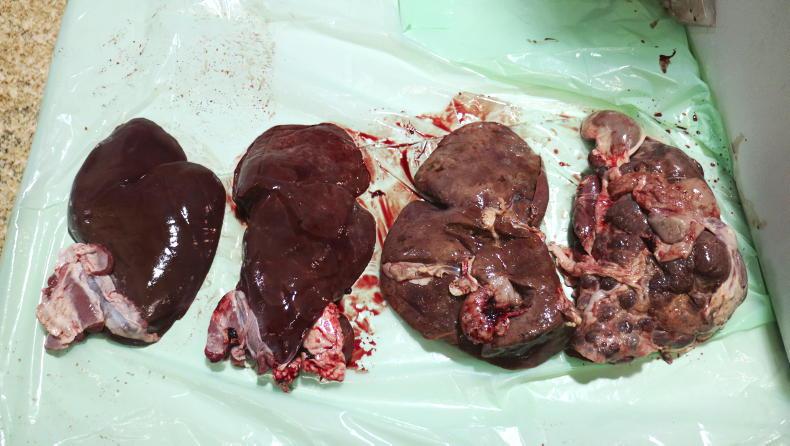
Farmers along the western half of the country and midlands and northern regions need to be mindful about a high risk of liver fluke disease this winter. The warning is contained in this week’s liver fluke forecast released by the Department of Agriculture, Food and the Marine.
The forecast developed by the Department in collaboration with Met Éireann, UCD, Teagasc and Animal Health Ireland is based on meteorological data collected between May and October 2025.
This forms the basis of the Ollerenshaw Summer Index 2025 which uses weather patterns to predict the prevalence of disease. The predictions for different areas of the country are outlined in Figure 1.
As can be readily seen, the highest risk is in the west with a high prevalence forecast in Mayo, Galway and Sligo/south Donegal while there is also a high prevalence forecast for Kerry.
In contrast, there is a low prevalence forecast for the southeast and south, with these predictions borne from dry conditions in June and September 2025.
Northern Ireland
The liver fluke forecast released in Northern Ireland on 21 October by the Agri-Food and Biosciences Institute also warned farmers of a high risk of liver fluke infection in sheep and cattle throughout autumn and winter.
The forecast was also based on climatic data and utilises the Ollerenshaw Index. AFBI stated that the Ollerenshaw Index for all sites monitored in Northern Ireland was greater than 400 citing “this level prompts a forecast of high prevalence of fluke infection in stock if appropriate measures are not taken”.
Farm-to-farm variation
While the Ollerenshaw Index provides valuable information, the forecast advises that account also needs to be taken of farm-to-farm variation. It states that in order to assess the risk of liver fluke disease on any particular farm, various environmental factors, including climate, land type and soil type, must be taken in to account.
Particular emphasis should be placed on whether soils are heavy or free-draining as the intermediate host of the parasite, the mud snail, occurs in soil that is slightly acidic or muddy. For this reason areas with rushes or wet patches (e.g. around gates, troughs etc) are said to be particularly important as they can help to maintain a population of the infective stage of the parasite. It also recommends livestock owners to factor in liver fluke history on the farm as this is an important indicator of future disease.
Disease monitoring
Liver fluke disease is more challenging in sheep than in cattle due to acute fluke infection and sudden death in cases of heavy challenge. Control of this condition is challenging due to the lack of clinical symptoms. Chronic disease can also result in the death of animals but is generally identified in ill-thrift, poor performance and characteristic symptoms of a ‘bottle-jaw’ appearance, anaemia, loose wool etc.
Farmers are advised to be vigilant for any signs listed above and to consult with their private veterinary practitioner if concerned. It is recommended to submit any carcasses from unexplained deaths for post-mortem examination to a local Regional Veterinary Laboratory and to follow up on the health status of livers from any animals sent for slaughter.
Treatment and control
It is advised to pay particular attention to dosing sheep in autumn or earlier in the year where indicated by faecal examination results or prior disease history.
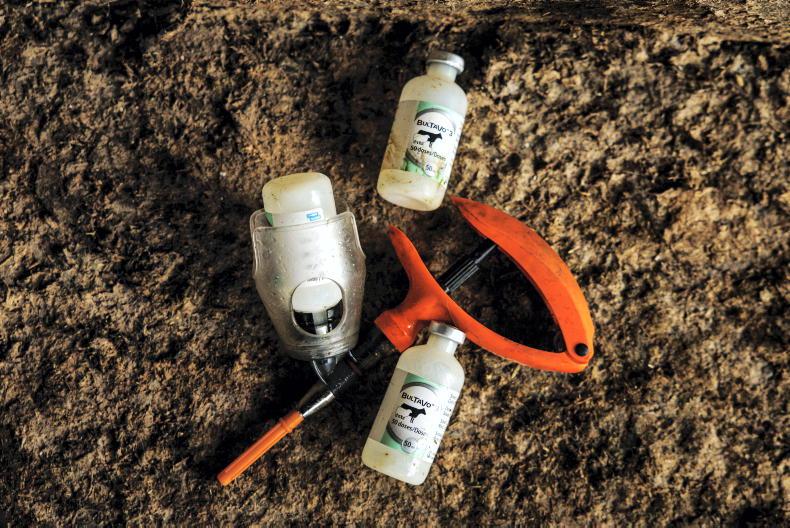
“For sheep, a drug effective against immature and mature fluke stages of the life cycle should be used to protect against acute disease. In addition, sheep should be moved from affected pasture to prevent re-infection.
For cattle, “if the flukicide given to cattle at housing is not effective against early immature fluke, then faecal samples should be taken six to eight weeks after housing and tested for the presence of liver fluke eggs. This will determine whether a follow-up flukicide treatment is necessary.”
The forecast adds that “given that flukicides do not have persistent activity, any cattle or sheep that are out-wintered are at risk of further infection post-treatment and follow-up flukicide treatments may be necessary. This is especially the case if they remain on high-risk pastures. In this case, it is advisable to monitor livestock for the occurrence of re-infection”.
With regards treatment protocols and treatment intervals the advice listed is to seek veterinary advice to determine an appropriate treatment protocol. It adds that testing faecal (FECs) samples for the presence of liver fluke eggs can help determine the need for and success of flukicide treatments. However, it is important to be cognisant of the limitations of FECs with acute liver fluke as serious damage can be caused before eggs are shed in faeces.
Figure 2 details flukicide-only products available and the stage of the liver fluke cycle targeted by each active ingredient.
Rumen fluke
Rumen fluke infection is highlighted as being extremely common, especially in cattle, but only rarely resulting in disease. The presence of rumen fluke eggs in faecal samples of animals that are thriving and producing well does not indicate that treatment for rumen fluke is warranted. Here clinical signs including rapid weight loss or diarrhoea are seen, of where there is a history of previous disease, then farmers should speak with their PVP.
The forecast also advises that “if larval rumen fluke infection is suspected, please request this test when sending a representative number of faecal samples for examination to a laboratory as routine parasite examination may not detect this life cycle stage of the parasite. Post-mortem examination may also aid diagnosis”.



SHARING OPTIONS