



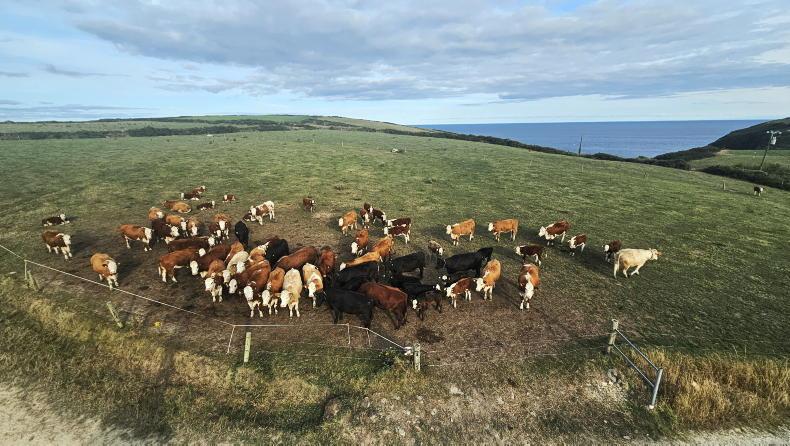
TB testing rolls into town this week. Most farm decisions over the last month have been driven by a combination of that impending test and the dry spell.
Cows are used to coming into the yard now so, hopefully, that will save a bit of time on both mornings.
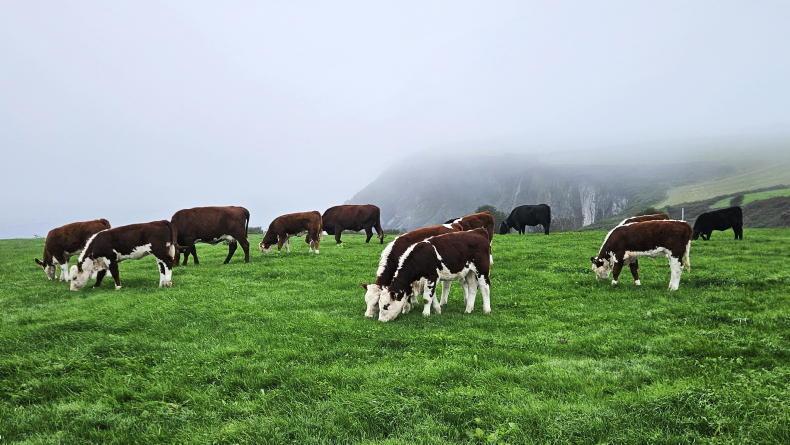
Calves are normally split into bulls and heifers by now, but with the TB test on the horizon and the fact cows needed feeding due to the dry weather, it was more efficient to run them as one group. At least it was in the short-term, and I’ll have to deal with any fall-out from this later.
For most of August, I was rotating the cows between three different paddocks. It wasn’t best practice for grass, but the change of scene made it easier to get them to go back out to bare paddocks. With the last week, they were kept to one paddock, and they were much slower to go back out, but I need covers to build up.
Usually, suckler calves don’t get any ration until weaning time, but they’re on it now as they too needed something to entice them in. Once the test is out of the way, I’ll split them and they will go to a new field of grass for the first time in a month.
No doubt that has the potential to throw up issues of its own, but we’ll deal with that too.
Conversation starter
A field near the yard was set with redstart at the end of June and had been doing well until three weeks ago.
It was planted just ahead of the last rain we had in June and made rapid progress on the back of that moisture; however, heading into the middle of August, the field of dark green leaves turned yellow with a hint of purple.
What to do with it made for a good conversation starter at a discussion group visit to the farm two weeks ago, and the general consensus was similar to my gut feeling: wait for the rain and reconsider the options.
It’s in a field that would be one of the driest on the farm so doing anything ahead of precipitation would have been a waste of time. There was a strong temptation to graze it, but I’d rather target its best yield for when I need it most in October and November. If the main group had gone in there, it would have been wiped in a few days and I’d be in bother later on. A short-term win that could create a long-term problem.
Rainfall
Rain returned in earnest late last week, and the plants greened up gradually over the weekend.
I’ll walk it before making a decision on whether to give it a shake of nitrogen when doing the last spread before the deadline. While some plants would be driven over, the field is relatively narrow so two passes of a tractor should catch most of the crop if I take that option. It’s another way to build up dry matter and relieve any concerns on fodder. Extra straw was ordered, and weather over the next fortnight will determine how much more silage enters the system but, hopefully, we will be comfortable.
Scanning of the heifers who were bred in May will take place on the second day of the test, and any empties along with the biggest of the non-replacement heifers and the cull cows will come home after Friday.
Moving them to a finishing period now will reduce the number of mouths around for later in the winter.




SHARING OPTIONS