


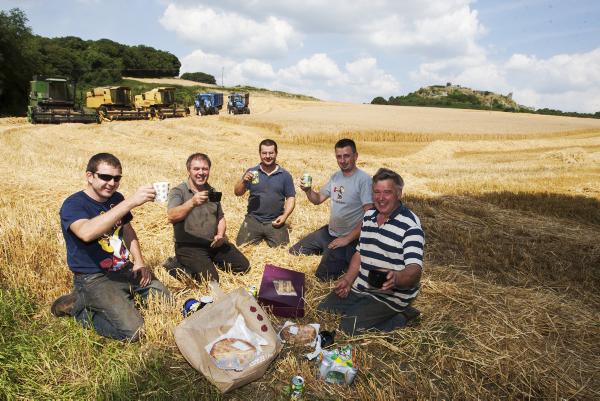
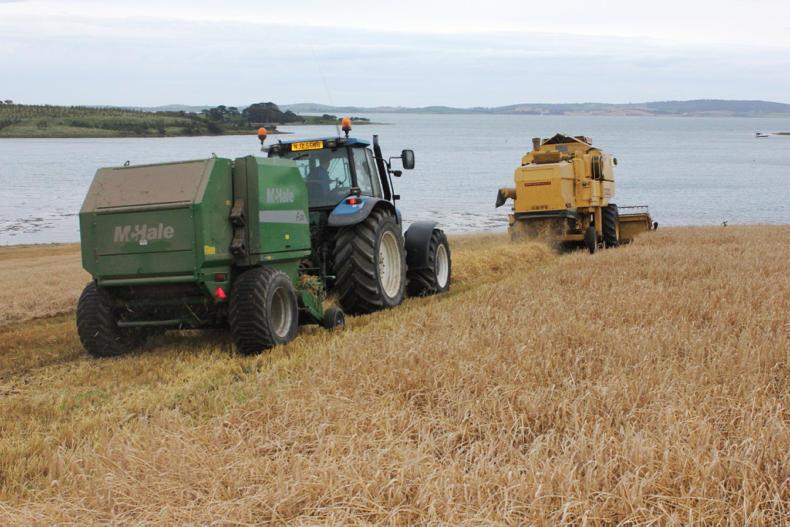
I was sitting in the air-conditioned combine cab, with a flask of tea and eating a bag of Tayto crisps with nice salad sandwiches. It was a scorching hot day and the tar was melting on the road. The oilseed rape moisture had plummeted to 6% and the yield was looking good. The Barra oaten straw was being baled across the road and the rest of the oats (Mascani) would soon be ready in this heat. If the weather held, we’d be at the wheat in a fortnight. And the joy of a zero compaction harvest on the hard soils. Absolute happiness, indeed, even if only for a short time.
My relaxed mind wandered back to a previous hot summer combining the same field. I can’t remember the year but I’d say it was 1984, which was an absolute cracker. The crop was winter barley and the cab blower wasn’t working on the New Holland 1540S. In fact, the blower never really worked but most years it didn’t matter.
I remember it was like sitting in a hothouse and there wasn’t a breath of air out. I had the sliding window open and the cab door tied back, which made no difference to my soaring body temperature and only filled the cab with dust. The dust billowed up in clouds off the header and stuck to every sweating pore on my practically naked body. Barley awns lodged in my neck and armpits and I was scratching like a tormented soul everywhere from head to foot. In the desert-like heat of the summer of 1984, you could fry an egg on the cab floor – if you had an egg – and you’d certainly kill for a pint of Harp. And if Sally O’Brien came with it, so much the better...
It was an uncomfortable situation and I don’t think the yield was up to much. Touching 3t/acre was seen as a smashing crop of Igri winter barley then. But I’d say the grain price was little different to what it is now and that’s 30 years ago.
Back then, a new combine would be paid for in a couple of years. But the cab – if you had a cab – would leave lots to be desired by today’s standards. You see, a combine cab in those days was only meant to keep you dry as you drove home with the header on a wet evening.
The winter barley harvest got off to an early start on 17 July this year and I was pleasantly surprised with the yield. I don’t expect an awful lot from winter barley as it doesn’t suit our heavy land but, this year, it had been grown with a winter wheat-like level of inputs and it certainly made the difference. With an average yield of 3.80t/acre at 19% moisture, I was happy. Financially, at that yield, it’s a slightly better option than either second or continuous wheat.
Oats
The winter barley was followed by a single field of Barra oats which, against the odds, stood to harvest. The yield here too was satisfactory at 3.28t/acre at 18% moisture, with a bushel of 54kph green.
The Extrovert oilseed rape was next in line having been sprayed off 15 days earlier. It was a nice crop but it didn’t look particularly branched from the combine seat. Initially, I felt the yield would disappoint, but the final result of 1.88t/acre at 9% moisture was pleasing. The pigeon-grazed Compass oilseed rape remains to be cut.



SHARING OPTIONS