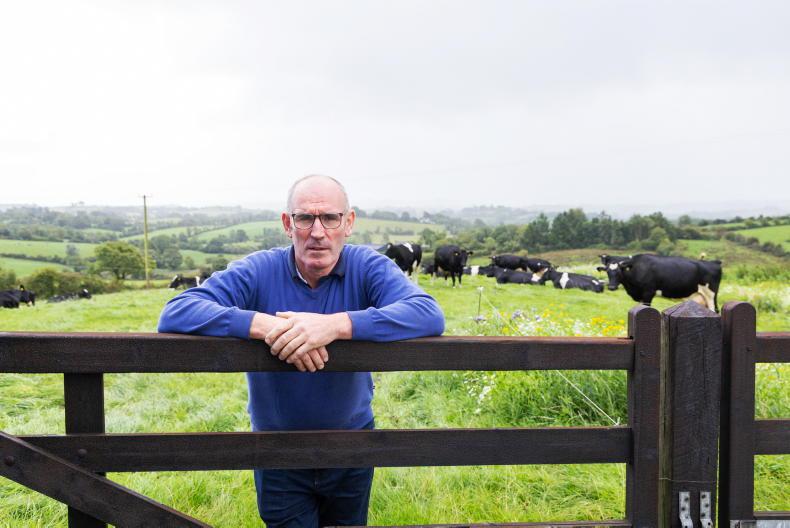
Dairy farmers do not have to milk half the cows in the parish to make a good living, the former Irish Creamery Milk Suppliers Association (ICMSA) deputy president Lorcan McCabe has insisted.
Taking aim at the sector’s obsession with scale, the Cavan man pointed out that the “best of farmers” were milking 60-70 cows “and doing very well”.
While McCabe said dairy expansion had been overwhelmingly positive for rural Ireland, he warned that the drive for size had fostered a creeping elitism in the sector and had undermined confidence in the enterprise’s traditional family-farm structure.
“I’ve seen over the years everyone pushing the idea of scale and size. And that includes Teagasc and Government and co-ops, encouraging lads to have 100, 120 and 150 cows – and then there’s fellows going on to 300 and 400 cows,” McCabe said.
“And that’s great if you’re fit to deal with it. I’m not against size or expansion, but there are consequences to the constant focus on scale,” he maintained.
One of the most damaging consequences is that it erodes young people’s confidence that they can make a decent living from 60-80 cows, he said.
“If I was 22 again and was listening to all the talk about needing 120 cows, or 250 cows and a rotary milking parlour, and I’m there with my eight-unit milking parlour and 40 cows and maybe I can go to 60 or 70 cows – you’d be convinced that you’re not at the races,” McCabe explained.
However, the Cavan farmer pointed out that he and his wife Brid raised four children, put them all through college and had a foreign holiday each year on the strength of a 65-cow dairy herd and a weekly wage.
“We’ve made a very good living from the cows and Brid’s job. And that sort of living can still be made from dairying,” the Cavan man told the Irish Farmers Journal.
“That line that you hear rolled out, ‘go big or go home’, is one that really drives me mad,” he said.
Scale
Equating increased scale with greater efficiency and higher profitability is a common misconception which needs to be challenged, McCabe contended.
“If you have an efficient system with anything over 60 cows, you can make a good living. There are people with 200 cows who wouldn’t make half what I am making. I know that,” he said.
McCabe, who farms 130ac on Loughanleagh Mountain outside Ballieborough – 30ac of which is rented – currently milks 84 cows, but generally kept 65-70 over the last decade since the end of quotas.
“For the last 15 years anyone who didn’t make an average of €1,500 profit per cow, before tax, needs to look at what they’re doing, because it was there to be got,” he maintained.
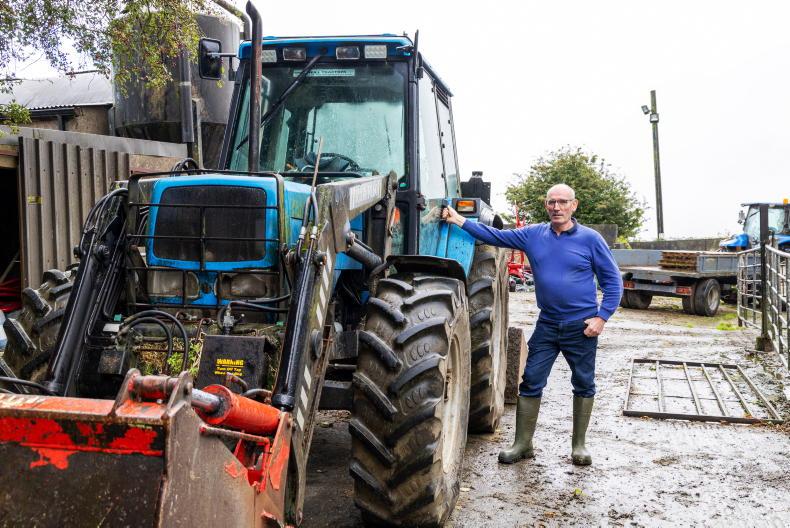
McCabe accepted that his investment in equipment – he has a 26-year-old tractor and a 15-year-old tractor – and his spend on contractors and hired-in labour has been kept to a minimum.
“I do everything myself bar the main cut of silage. I do all the slurry, fertiliser and topping. I mow the second cut, I row it and I bring in the bales myself.”
This approach has helped cut costs, but meant that McCabe has always had a very busy schedule.
“I admit that I put in too long of hours, but that is down to bad habits on my part,” he said.
Sidelined
McCabe is not suggesting that a return to 30 or 40-cow units is the way forward for the industry, but he is disappointed that the merits of the 50 to 100-cow herd appear to have been sidelined and even ignored.
“I’m not saying farmers can make a living at 30 or 40 cows, but I think 50 to 100 cows is a great spot to be in, because you don’t have the need for full-time labour and all the hassle that comes with that,” he explained.
Much more needs to be done by Teagasc, the farm organisations and processors to educate and inform young farmers about the level of income that is possible from a 60 to 100-cow herds, McCabe claimed.
“Expansion is an expensive business. You have to buy or rent the land, build infrastructure and invest in cows,” he pointed out.
“You have to ask if you’re better to be earning €1,500 a cow on 80 cows or €600-800 [a cow] on 200 or 300 cows?” he said.
“There is a place for the bigger dairy farm, without a doubt; and fair play to anyone who wants to milk 500 cows. But surely there is a place for the farmer milking 50 to 80 cows as well. And the industry needs to look after both.”
No need for the negativity
The “negativity” that has been directed towards the Government, Bord Bia and the EU from sections of Irish society and some farmers has been disappointing and damaging, said Lorcan McCabe.
“I am annoyed at the negativity towards Government and towards Bord Bia,” he said.
“Farmers need to remember that they are producing food that other people eat.
“There has to be quality standards, and those standards have to be credible if we are to retain the premium markets we are selling into,” McCabe said.
Regulation
“What business in life is there not regulation in?” he asked.
Remaining compliant with the Bord Bia quality assurance schemes was the “simplest thing in the world”, McCabe maintained.
“Ten minutes a month on paperwork, and a couple of days with a power washer and a brush before the auditor comes – that’s it,” he claimed. “I am not suggesting I fly through the audit every year. There are times when the auditor picks up something that needs to be done – but usually it’s fairly obvious that it needed to be done anyway.
“But I’m always able to fix it myself within a couple of hours.”
With regard to the negative sentiment expressed towards Europe, McCabe said those articulating such views need to be reminded that Ireland has been transformed since joining the EEC – the forerunner of the EU.
“People forget that we were a third world country in the 1950s and the 1960s,” the Cavan farmer pointed out.
EU membership
That changed with the Lemass government of the late 1950s and Ireland’s entry into the EEC a decade and a half later, he said.
“The amount of good that the EU has done for Ireland is just phenomenal – and is still doing it, particularly for farmers.
“You take the average BISS payment, it’s around €10,000. That’s a nice starting point for any farm family.”
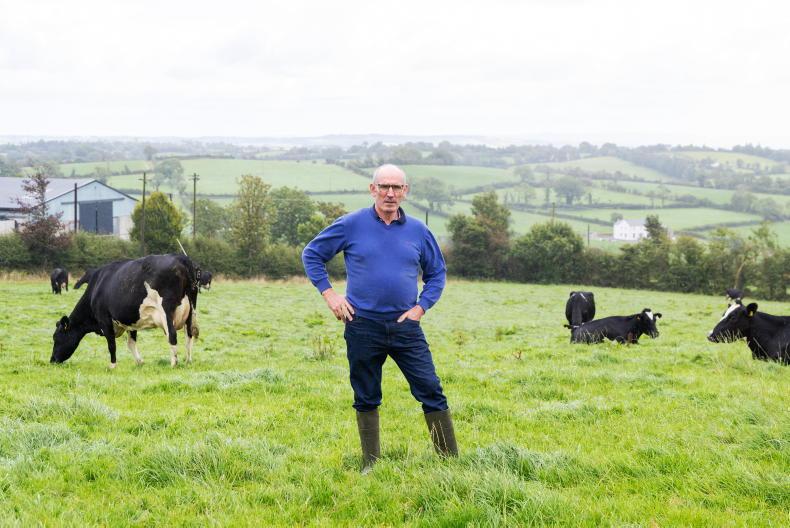
The flexibility available to farmers is something that has been “largely overlooked” in the discussion around the merits of farming as an occupation”, Lorcan McCabe claimed.
“For example, the childcare element of farming is a huge advantage,” he said.
“Some families are now spending half of the second wage on child minding,” McCabe explained.
“But when Brid went back to work after our youngest daughter Shannon was born, I took on a big part of the child minding and the chauffeur – bringing the children to school, bringing them to swimming, and driving here and there.
“We adapted the cab in an old Zetor 7011 – which people used to say was as big as a hen house – and I had two seats bolted down in it and the two older lads were strapped in when I was bringing in silage and stuff,” he said.
“I used to try and be finished milking at 8.15 in the morning, get the two big ones up to the school bus by 9am, and the two little ones to play school by 9.30. Then I’d have to work like hell from 9.30 to 12.30 before the wee ones would come home.”
He’d then collect the lads from creche and school, fed and minded them until Brid came home at 4.30pm, and he then headed out farming again.
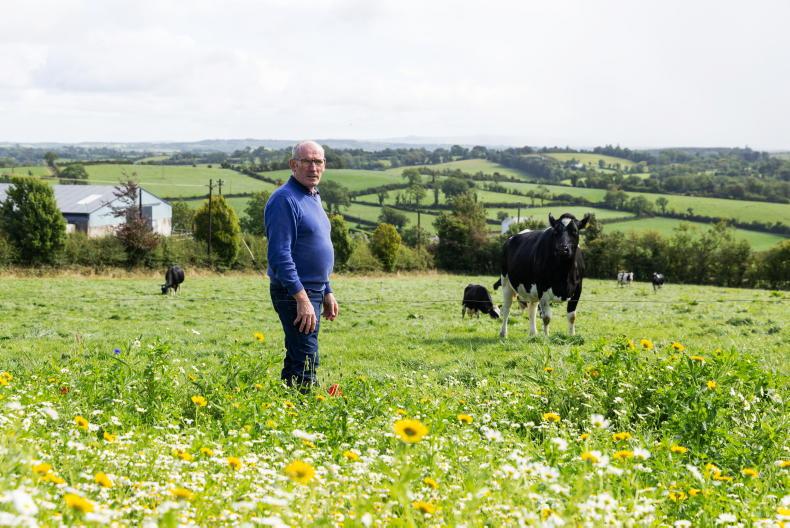
Long hours
While McCabe accepted that there were long hours involved, he pointed out that the flexibility the farm provided meant that their spend on child minding was significantly reduced.
“Sometimes we would be milking very early in the morning, and sometimes very late, but it worked.
“The children could have been down with me in the mornings or evenings for milking and they having a ball in the calf house with straw and all the antics kids will get up to.
“But that was good for the lads. I think it gave them a bit of initiative and cop on.”
Talking pensions, succession and travel
A strong pension is vital in assisting the transfer of the family farm from one generation to the next, according to Lorcan McCabe.
A good pension can change the dynamics around succession by cutting out the need for the farm to provide two full incomes, he explained.
Although none of McCabe’s four children is likely to take over the farm on a full-time basis, he said his pension is good enough to allow him to retire now at age 62 if he wished.
“I’ve always minded my pension, so if there was a young farmer here, I could retire at the minute,” said McCabe.
“It’s an awful hard thing to get through to farmers, to look after their pension. But it is something I always did, since I started working and farming initially and then when I went full-time farming in 1989,” he said.
“In good years you see farmers buying expensive jeeps or tractors to reduce tax, instead of putting the money into their pension.
“When you’re 70 your expensive tractor or jeep won’t do anything for you, but your pension will. It is a better use of funds,” McCabe pointed out. Lorcan McCabe has accepted that none of his children will milk cows on the Loughanleagh farm when he retires.
“There is going to be no dairy farmer here; and whether there will be any part-time farmer is still up in the air,” he said.
“All four of the lads have their own careers.
“Laura is an accountant in London, Seán is a senior accountant with a firm in Dublin, Andrea is a schoolteacher, while Shannon is doing law,” McCabe explained.
At 62 and with nobody following him on, McCabe intends to run down the number of cows on the farm over the coming years to 30 or 40, and he may even exit dairying altogether.
In the interim, the cows he milks will supply calves for a calf-to-beef system.
However, he doesn’t intend to vegetate in his semi-retirement.
“If I’m healthy, I’ll travel the world,” he said.
“I have done a lot of travel over the last few years and intend to do more.
“As a neighbour once said: ‘I don’t intend to be the richest man in the cemetery’.”