



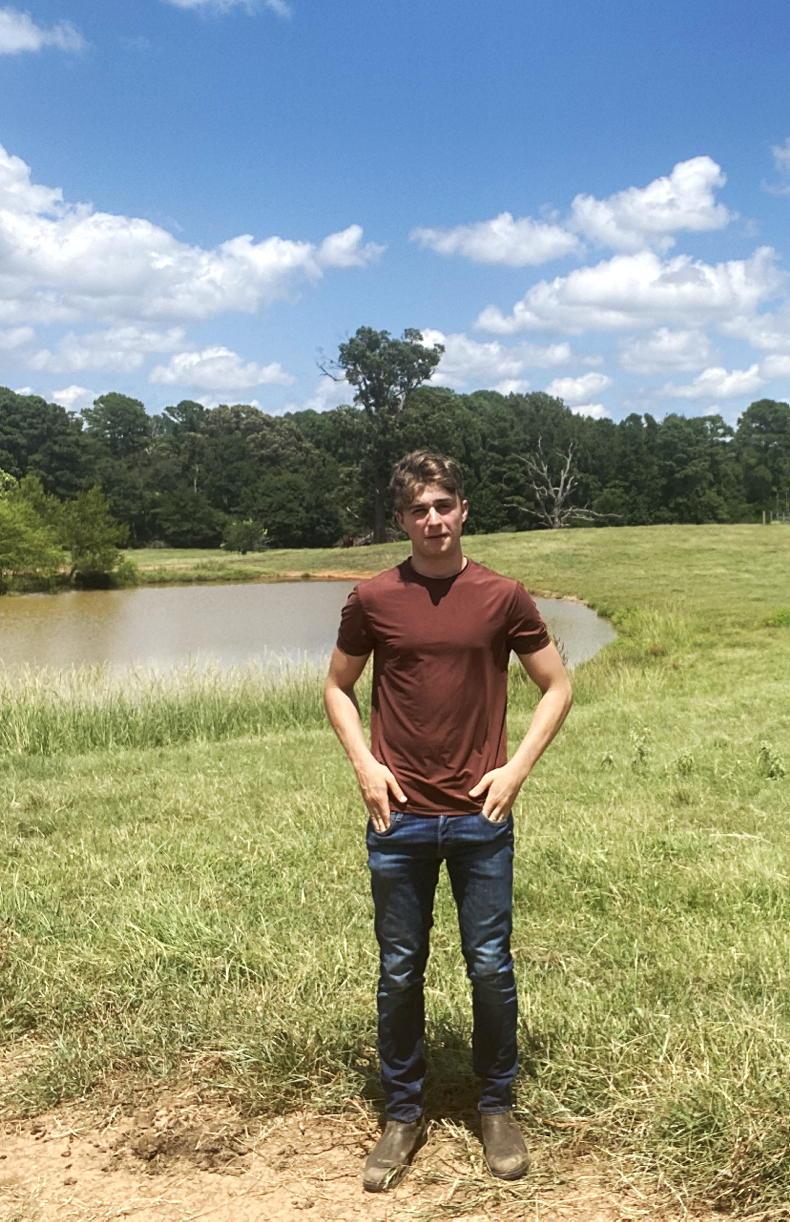
Liam Byrne, University College Dublin
I have worked with livestock from a young age as I grew up on my family’s sheep farm in Wexford. My interest in livestock and farming grew as I came through school and therefore encouraged me to study animal science at third level.
I completed my first placement abroad in Northumberland in England. This farm is situated on the English-Scottish border alongside the Cheviot Hills. The farm covered 1,200 acres and consisted of a flock with 1,500 ewes.
A percentage of the Blackeys were bred to a Swaledale ram to produce the replacements for the hill flock. The addition of the Swaledale added a better mothering ability and easier-handling sheep.
All the sheep were lambed outside. The system used involved having the sheep separated into groups of early singles, late singles, early doubles, late doubles and triples.
This allowed greater observation of the sheep, particularly when dealing with large numbers.
I chose this place to do my placement as it involved the lambing of a vast number of ewes in an outdoor lambing system.
This is of particular interest to me as it allows the farmer to lamb more sheep with less labour and facilities such as shed space, whilst encouraging less disease.
A key takeaway from this system for me was incorporating the lambing field into the grazing system.
US research farm
I completed the final leg of my placement in the US, completing on a Texas A and M research farm.
This farm has in the region of 600 breeding stock and over 1,000 cattle collectively, excluding suckling calves.
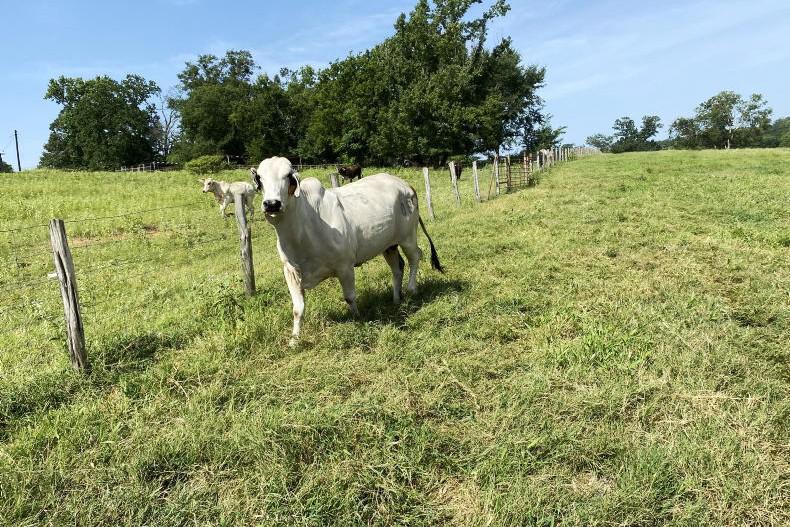
The farm runs over 200 registered Brahman cows. The current drawback to the take-up on these Brahman cattle is their late maturity and late age at puberty.
This is why they are of particular interest to reproduction physiologists.
I got exposed to both cattle work, systems and lab work, such as carrying out breeding soundness examinations, ultrasound scans of follicles, pregnancy checks and hormone examinations such as the presence of estradiol and progesterone in the blood. I am also getting exposure to BVD lab tests. Calving on the farm is just starting, meaning I will be assisting in the calving field as the cows are calving outside. The newborn calves are tagged, genotyped and BVD sampled when born similarly to Ireland.
I chose to complete my placement here due to the large numbers of beef cattle, as well as being able to get exposure to the ongoing research and changes in the area. I am also very interested in seeing and learning the different farming systems.
Certain practices may be applicable to different operations as exposure to more systems and different methods will hopefully encourage me to think in a broader way and think outside the box when facing challenges in the future.
The agricultural sector has many opportunities for young people to face. Equally many challenges in agriculture can be looked at as opportunities, as these issues will need to be overcome and fresh minds and concepts may be required to face these challenges.
As a whole, young farmers are being challenged with the increasing cost of land and rent. This makes farm land a limited resource to these aspiring farmers.”


SHARING OPTIONS