


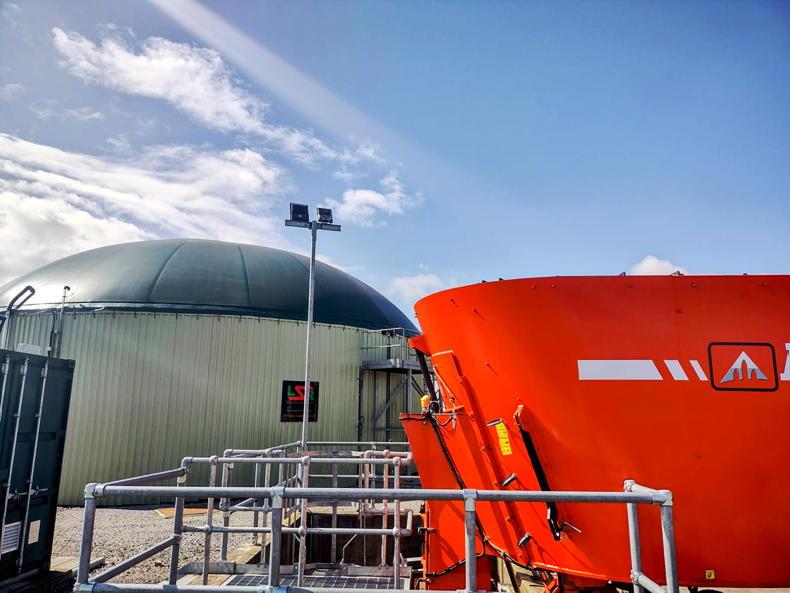
Teagasc’s flagship anaerobic digestion (AD) plant project at Grange is set to face further delays before it becomes fully operational, nearly 10 years after its construction.
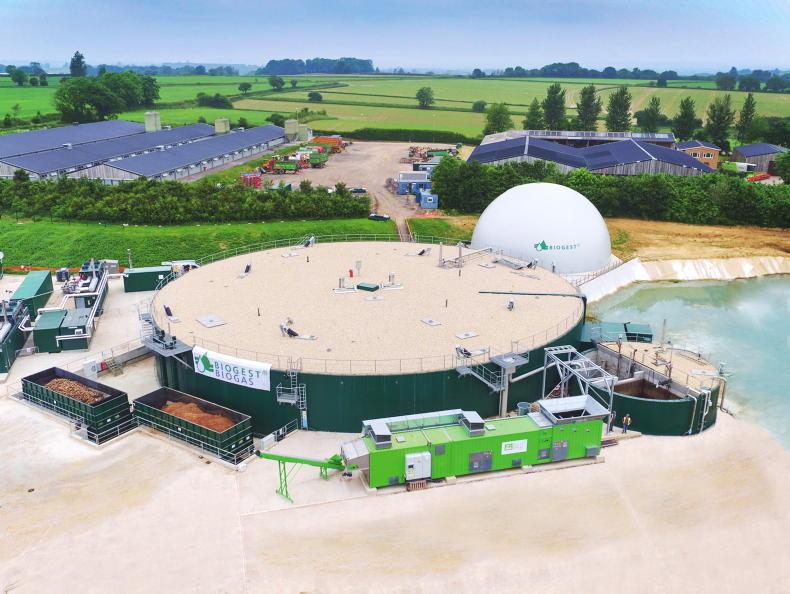
The small-scale AD plant in Grange, built in 2017, has faced significant setbacks, including a change from the original design to produce electricity to instead producing biomethane gas.
Now the project is set for further delays, as Teagasc has gone to tender for a supplier of gas upgrading equipment, having already selected a technology supplier in 2021.
Change of design
The plant was originally designed to produce 175kW of renewable electricity and 195kW of heat through a combined heat and power (CHP) plant.
However, as the focus for AD moved from electricity generation to biomethane gas, Teagasc took the decision to sell the CHP unit and work with a technology supplier to provide the equipment to upgrade the biogas to biomethane.
The plant was started in 2024, with the gas flared until the upgrading equipment was supplied and installed.
The biomethane was planned to be loaded into specialised gas trailers and transported to the gas grid injection point in Cush, Co Kildare.
However, the project was dogged by delays, with the gas upgrading equipment continually delayed. The plant was expected to be upgrading gas by 2025, after the delivery of an upgrader unit, which is being provided through Gas Networks Ireland’s innovation fund.
New tender
Teagasc has now gone back to the drawing board and is looking for a new technology supplier for the upgrader.
Teagasc is inviting tenders for the supply, delivery, installation and commissioning of a complete biogas-to-biomethane upgrading, compression and compressed natural gas (CNG) storage system.
The system is intended to upgrade biogas produced from agricultural substrates to grid-quality biomethane and to compress and store the biomethane for on-site CNG storage and trailer loading for off-site transport to a gas grid injection point.
The proposed system must be capable of upgrading approximately 50 to 90Nm³/h of biogas to biomethane and compressing the biomethane to 250 bar for storage and dispensing.



SHARING OPTIONS