



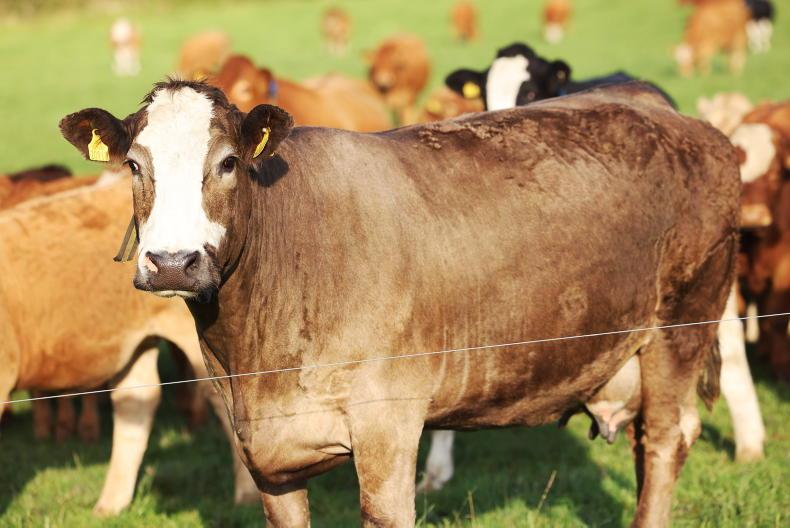
Payments under the 2026 Basic Income Support for Sustainability (BISS) and Complementary Redistributive Income Support for Sustainability (CRISS) will be delayed, the Department of Agriculture has confirmed.
It is anticipated that payments will not now take place until Tuesday 27 October, 11 days later than the planned date of 16 October.
Industrial strike action is being blamed for the delay in payments being made.
The Department has confirmed that payments under the Eco Scheme will instead take place on Friday 16 October, a week earlier than the planned date of 23 October 2026.
A Department spokesperson said: “Issuing of payments on time and to the maximum number of farmers is a key priority for the Department and every avenue has and continues to be explored to minimise delays insofar as possible.
"As previously indicated, payments under these schemes will issue at the higher rate of 75%.”
The difference in payments reaching farmers' bank accounts due to BISS and CRISS being delayed and the Eco Scheme being paid earlier is in the region of €315m.
Minister for Agriculture Martin Heydon announced advance BISS and CRISS payments (70% advance) to 110,499 farmers commencing on 15 October 2025, while Eco Scheme payments worth €195m commenced to 110,000 farmers on 22 October 2025.
Cashflow issues
Minister Heydon said that in light of the delayed payments, liquidity and cashflow may arise as issues for some farmers in the coming days.
"Conscious of this, I have asked Department of Agriculture officials and they have since written to the main banking institutions asking that they show forbearance with the farming sector where cashflow issues are emerging and continue to support these sectors during this time and make sure farmers continue to have access to the appropriate levels of short-term finance," he said.
Industry response
Macra president Josephine O’Neill called on the department to expedite the “shock” 11-day delay to farm payments.
She said the delay will place huge additional financial pressure on farm families, particularly young farmers who depend on these payments to meet ongoing farm costs and loan repayments.
“[The Department] has said that it has done all that it can to minimise the delay, but we cannot accept that an 11-day postponement is the best possible outcome for farmers,” she said.
“It beggars belief that one day of strike action can delay payments by 11 days - the Department must continue to explore every available avenue to get these payments out sooner than 27 October.”
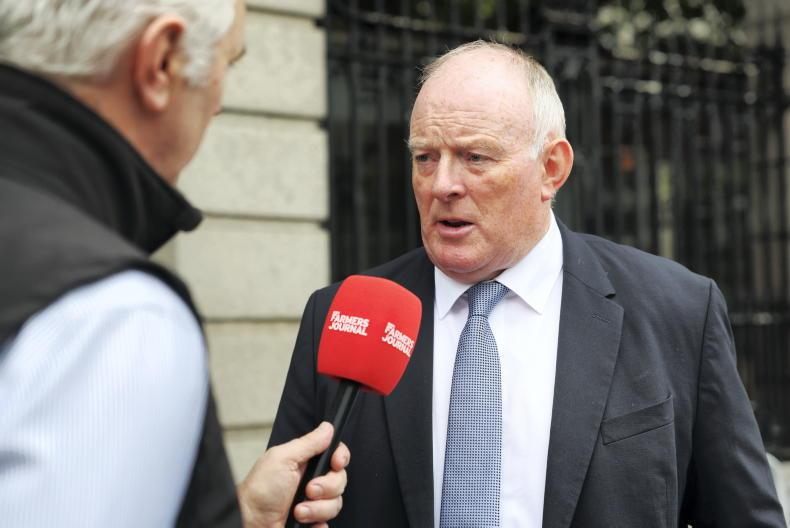
Irish Creamery Milk Suppliers Association (ICMSA) president Denis Drennan described the Department’s blaming of the public sector worker strike for the payment delays as “stunning and totally inexplicable”.
Drennan said that the unions concerned had given notice of the strike action at least three weeks ago and it beggared belief that all the preparatory work involved in making these “desperately needed” payments had not been accelerated to completion and ready-to-go status.
“Thousands of farmers received their ANC a number of weeks ago, why can’t the BISS and CRISS thus be paid automatically?,” he asked.
“Has someone refused to press a button?”
The Irish Cattle and Sheep Farmers Association (ICSA) said it too strongly condemns the last-minute decision.
“Farmers should not be left to bear the cost of this industrial action,” a spokesperson said.
“These payments are essential to farmers’ cashflow and to meeting the day-to-day costs of running a farm.
“Farmers have bills to pay and financial commitments to meet and cannot be expected to absorb the consequences of a dispute in which they have no part.”
More to follow on this story.



SHARING OPTIONS