


Sometimes life tosses an opportunity in your direction, and the chance has to be grabbed with both hands.
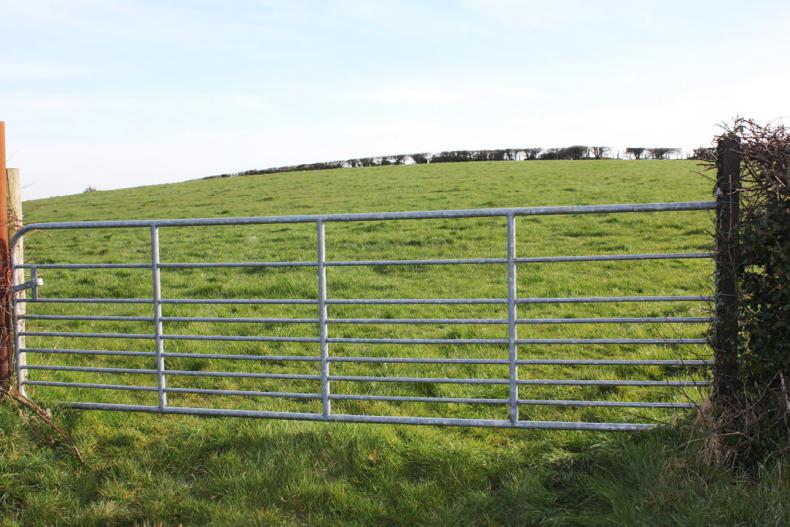
At exactly the same time as finding myself with some inherited money, a large ‘‘For sale’’ sign appeared on four small fields at the back of the farm.
My father had a lifelong desire to own those particular fields, so it was almost eerie that the money to buy it came from my parents’ estate. The whole deal was completed in an atmosphere of genuine neighbourliness. If you believe in either fate or destiny, then this transaction absolutely reeked of it.
Adding 9.4 acres of farmable land isn’t going to set the world on fire, but some things are worth far more than their face value. The larch hedge that allows access to the new ground is less than 50m from the back of my poultry houses, and each purchased field has road frontage. That same narrow road runs down a hill for a few hundred yards and joins up with another piece of this farm. It rounds out the current farm perfectly, and to say it will be useful would be something of an understatement.
During the whole buying process, plenty of well-worn clichés were offered for me to digest. Neighbouring farmers told me, ‘‘I was the only man for it’’, ‘‘sure they’re not making any more land’’, and, ‘‘you couldn’t afford not to buy it’’.
Well, the truth is that my farm business contributed less than a quarter of the total amount, and if I hadn’t had the money available (from my father’s estate), then there would have been no purchase. At 54 years of age, with neither son nor daughter planning on making a full-time career out of farming, I could see no point in putting my head into a financial noose.
Everyone tells us about the importance of benchmarking as a means of driving our businesses forward, but equally the same results highlight when we are driving up a dead-end street.
I can dream up all sorts of excuses and reasons for buying land (for inheritance purposes, as an investment, or for long-term tax purposes), but getting rid of excessive profits from beef and sheep is definitely not one of them.
Hidden costs
As with anything purchased, there are always a few hidden costs too. Solicitors’ fees, Land Registry, and land transfer documents are far from cheap, and that’s before you consider the whole business of buying entitlements. It may be a relatively small percentage of what you’ve already coughed up, but it’s still another few thousand pounds.
In the early nineties, my father and I bought 21 acres (a mixture of agricultural land and woodland), and that was all conducted through an urban estate agent.
This time, it was done the old-fashioned way and over the course of five months, the vendor and I stopped on the roadside occasionally and chatted about everything under the sun – except the actual land.
It was eventually agreed that I would like to buy it; the seller also seemed keen to have me as a near neighbour, so we decided to have a bit of a get-together to discuss matters fully.
Then another few months passed (both of us were trying to be really cool about the whole thing) before a sit-down in our kitchen. This conversation was equally casual, and after a remarkably short while, we shook hands across the table. Just like that.
The warm glow of buying something a bit special will take a while to subside, but reality soon sets in.
Soil analysis
Soil analysis tells me I’m not finished spending money just yet (lime and phosphate levels are slightly low) and one of the fields is extremely prone to flooding after heavy rain, so a longer-term drainage plan will have to be put in place.
As for a razor sharp farm plan, incorporating this new land, and utilising its area fully so that I can carry more livestock and increase my efficiency? You must be joking – I just want it to make my life that wee bit easier. Is that too much to expect?




SHARING OPTIONS