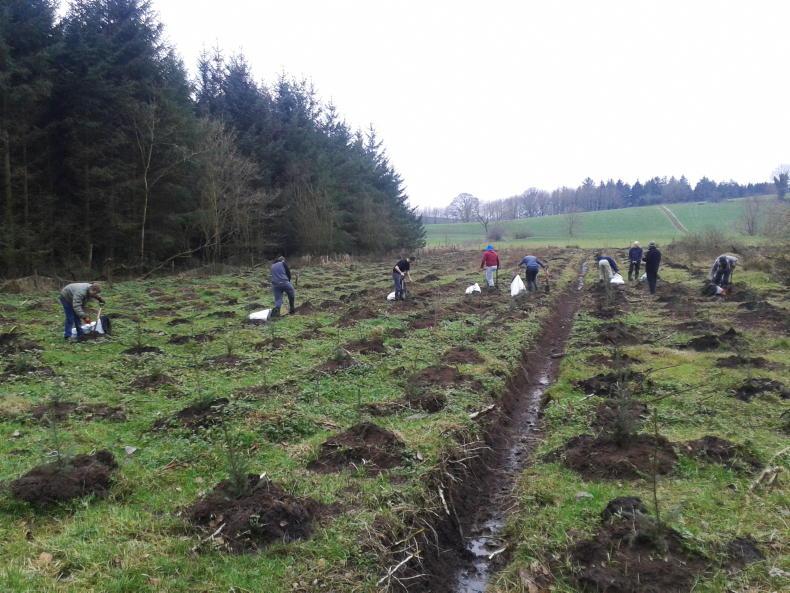
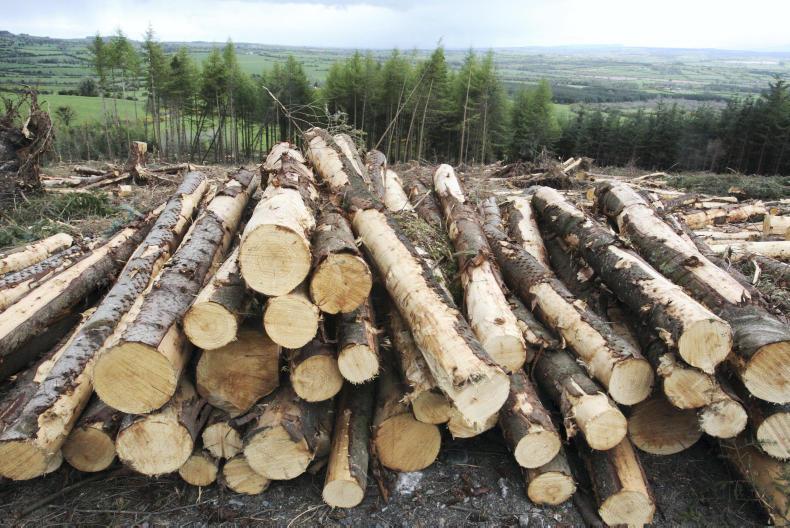
Reforestation is a new experience for most private forest owners. However, it is increasing as the large planting programmes of the 1980s and 1990s reach clearfell harvest. The main objective of reforestation (planting after clearfelling) is the same as afforestation (planting on bare ground), which is to establish a viable tree crop.
The full cost of afforestation is covered by the State, which also provides annual premium payments for 15 years. Conversely, the cost of reforestation and the unproductive aftermath is funded by the forest owner through revenue generated from the previous crop.
If the previous crop generated sufficient revenue, there will be adequate funds to cover reforestation and the unproductive period. For example, revenue from clearfelling Sitka and Norway spruce can vary between €20,000/ha and €30,000/ha, while the cost of reforestation ranges from €3,000/ha to €3,500/ha. If the previous crop has underperformed or has been damaged by windblow, the forest owner may have insufficient funds available to compensate for reforestation and the unproductive stage which can last for 15 to 20 years for conifers and much longer for most broadleaves.
While the objectives are the same for afforestation and reforestation, there are planning and operational differences.
Advantages
For owners with sufficient funds generated from the previous crop, there are two main advantages in reforestation:
Species selection: The replanted area has a history of forestry, so species selection is easier. Where the previous crop has been successful the owner is likely to continue with a similar species mix, while mistakes made in previous selection can be corrected.Infrastructure and access: In most forests, roads, culverts and possibly bridges will have been constructed – and grant-aided – during the first rotation, providing access for planting and vegetation control. Drains and fences will also be in place but likely to need maintenance.Disadvantages
Apart from lack of State funding, there are two disadvantages in reforestation:
Replanting: The presence of brash (branches and treetops or ‘‘lop and top’’) and tree stumps can present practical difficulties when replanting and add to costs.Crop protection: The reforested area is vulnerable to attack by the large pine weevil for at least two years after clearfelling (weevil control will be discussed in next week’s Irish Farmers Journal).Environment
The protection of natural and man-made features is a requirement of forest establishment but is even more crucial in reforested sites. The site is likely to require greater care as some soil disturbance will have been caused during clearfelling, especially after heavy harvesting machinery. However, with careful planning including adherence to Forest Service guidelines especially on forestry and water quality, reforestation can be carried out in an environmentally sensitive way.
Individual trees and groups of trees along with hedgerows and riparian zones (along rivers and streams) need to be maintained and incorporated into the planting plan. Some clearfelled areas originally planted in the 1980s may have been planted with one species, so there will be opportunities to switch from a monoculture to a more diverse forest second time round, resulting in improved landscape design.
Planting
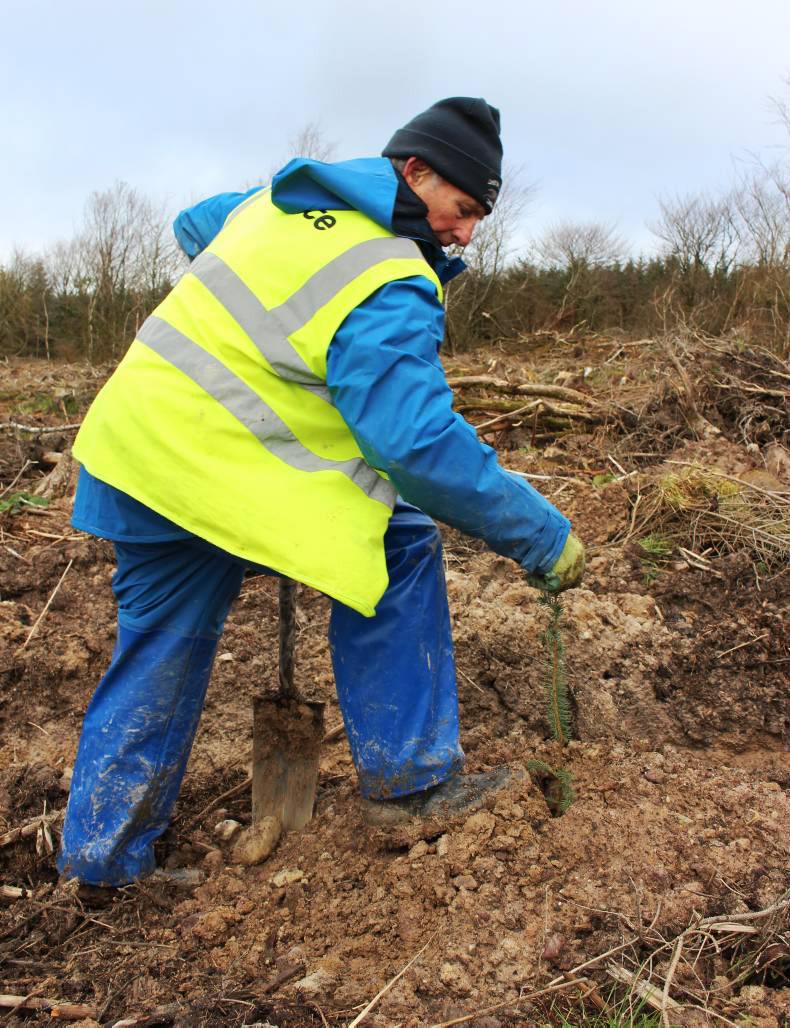
Planting is more difficult in reforested sites unless brash is cleared, while tree stumps also present obstacles. However, the site will be vegetation-free if planted soon after clearfell, but is likely to require weed control during the second and third years as grasses, weeds and woody plants can quickly recolonise clearfelled sites.
If the site has not been thinned or underthinned, there will be a large volume of brash on the site, which will need windrowing, by bulldozing into parallel rows. This allows planting between the rows. Care should be taken not to remove topsoil during this operation.
In recent years, the brash and roots are being removed and harvested for wood energy. This has some income potential for the grower, but it is usually carried out at cost.
Even where no income is received, the removal of brash provides significant cost savings (up to 25% of establishment) as the site is easier to plant and operations such as vegetation control, fertiliser application – if required – and treatment against weevil damage are easier to carry out and are more cost-effective.
The argument against harvesting brash for energy is that it removes valuable nutrients that follow the breakdown of leftover wood after clearfell. The argument has some merit in low nutrient soils, but if the previous crop has been regularly thinned, there should a build up of sufficient nutrients from brash throughout the crop rotation.
The removal of tree stumps, however, is only advised on reasonably deep mineral soils and should be avoided on infertile shallow soils and wet sites.
Site preparation, such as mounding or ripping, may be required in reforestation sites, but in sites where brash and/or tree stumps are removed, cultivation may not be required.
The removal of roots and brash could reduce the risk of large pine weevil damage, as they are ideal breeding material. However, it is likely that plants will require chemical treatment to prevent large pine weevil damage on all reforestation sites.
Begin again
Reforestation provides opportunities to increase biodiversity as well as changing and diversifying species selection The owner can avail of improved planting stock and explore suitable provenances with the potential to increase yield and quality.
Reforestation is a time to begin again; a time to explore opportunities to change silvicultural practices. While the current practice of clearcutting at rotation end maximises revenue for some crops, there are alternatives, including continuous forest cover, which we will discuss next month.
Regardless of the silvicultural system, the owner is armed with valuable knowledge and experience of having established, maintained and harvested the first crop. As a result, the forest owner is well positioned to explore all silvicultural options when replanting, to maximise the quality and revenue of the next-generation forest.
Reforestation is a new experience for most private forest owners. However, it is increasing as the large planting programmes of the 1980s and 1990s reach clearfell harvest. The main objective of reforestation (planting after clearfelling) is the same as afforestation (planting on bare ground), which is to establish a viable tree crop.
The full cost of afforestation is covered by the State, which also provides annual premium payments for 15 years. Conversely, the cost of reforestation and the unproductive aftermath is funded by the forest owner through revenue generated from the previous crop.
If the previous crop generated sufficient revenue, there will be adequate funds to cover reforestation and the unproductive period. For example, revenue from clearfelling Sitka and Norway spruce can vary between €20,000/ha and €30,000/ha, while the cost of reforestation ranges from €3,000/ha to €3,500/ha. If the previous crop has underperformed or has been damaged by windblow, the forest owner may have insufficient funds available to compensate for reforestation and the unproductive stage which can last for 15 to 20 years for conifers and much longer for most broadleaves.
While the objectives are the same for afforestation and reforestation, there are planning and operational differences.
Advantages
For owners with sufficient funds generated from the previous crop, there are two main advantages in reforestation:
Species selection: The replanted area has a history of forestry, so species selection is easier. Where the previous crop has been successful the owner is likely to continue with a similar species mix, while mistakes made in previous selection can be corrected.Infrastructure and access: In most forests, roads, culverts and possibly bridges will have been constructed – and grant-aided – during the first rotation, providing access for planting and vegetation control. Drains and fences will also be in place but likely to need maintenance.Disadvantages
Apart from lack of State funding, there are two disadvantages in reforestation:
Replanting: The presence of brash (branches and treetops or ‘‘lop and top’’) and tree stumps can present practical difficulties when replanting and add to costs.Crop protection: The reforested area is vulnerable to attack by the large pine weevil for at least two years after clearfelling (weevil control will be discussed in next week’s Irish Farmers Journal).Environment
The protection of natural and man-made features is a requirement of forest establishment but is even more crucial in reforested sites. The site is likely to require greater care as some soil disturbance will have been caused during clearfelling, especially after heavy harvesting machinery. However, with careful planning including adherence to Forest Service guidelines especially on forestry and water quality, reforestation can be carried out in an environmentally sensitive way.
Individual trees and groups of trees along with hedgerows and riparian zones (along rivers and streams) need to be maintained and incorporated into the planting plan. Some clearfelled areas originally planted in the 1980s may have been planted with one species, so there will be opportunities to switch from a monoculture to a more diverse forest second time round, resulting in improved landscape design.
Planting
Planting is more difficult in reforested sites unless brash is cleared, while tree stumps also present obstacles. However, the site will be vegetation-free if planted soon after clearfell, but is likely to require weed control during the second and third years as grasses, weeds and woody plants can quickly recolonise clearfelled sites.
If the site has not been thinned or underthinned, there will be a large volume of brash on the site, which will need windrowing, by bulldozing into parallel rows. This allows planting between the rows. Care should be taken not to remove topsoil during this operation.
In recent years, the brash and roots are being removed and harvested for wood energy. This has some income potential for the grower, but it is usually carried out at cost.
Even where no income is received, the removal of brash provides significant cost savings (up to 25% of establishment) as the site is easier to plant and operations such as vegetation control, fertiliser application – if required – and treatment against weevil damage are easier to carry out and are more cost-effective.
The argument against harvesting brash for energy is that it removes valuable nutrients that follow the breakdown of leftover wood after clearfell. The argument has some merit in low nutrient soils, but if the previous crop has been regularly thinned, there should a build up of sufficient nutrients from brash throughout the crop rotation.
The removal of tree stumps, however, is only advised on reasonably deep mineral soils and should be avoided on infertile shallow soils and wet sites.
Site preparation, such as mounding or ripping, may be required in reforestation sites, but in sites where brash and/or tree stumps are removed, cultivation may not be required.
The removal of roots and brash could reduce the risk of large pine weevil damage, as they are ideal breeding material. However, it is likely that plants will require chemical treatment to prevent large pine weevil damage on all reforestation sites.
Begin again
Reforestation provides opportunities to increase biodiversity as well as changing and diversifying species selection The owner can avail of improved planting stock and explore suitable provenances with the potential to increase yield and quality.
Reforestation is a time to begin again; a time to explore opportunities to change silvicultural practices. While the current practice of clearcutting at rotation end maximises revenue for some crops, there are alternatives, including continuous forest cover, which we will discuss next month.
Regardless of the silvicultural system, the owner is armed with valuable knowledge and experience of having established, maintained and harvested the first crop. As a result, the forest owner is well positioned to explore all silvicultural options when replanting, to maximise the quality and revenue of the next-generation forest.






SHARING OPTIONS