


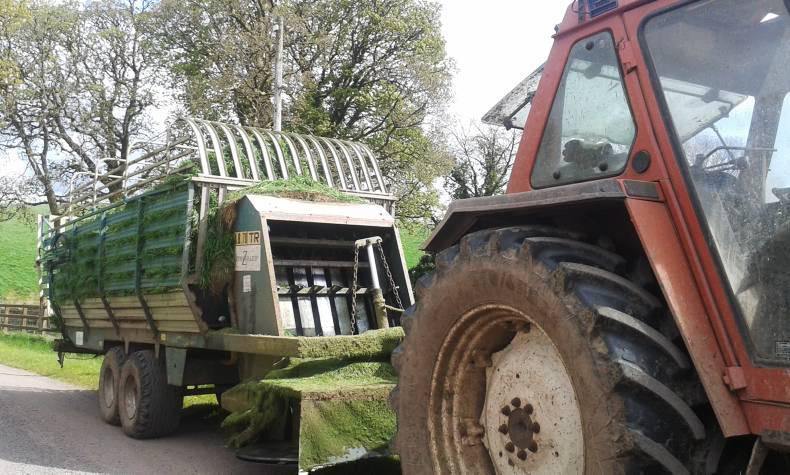
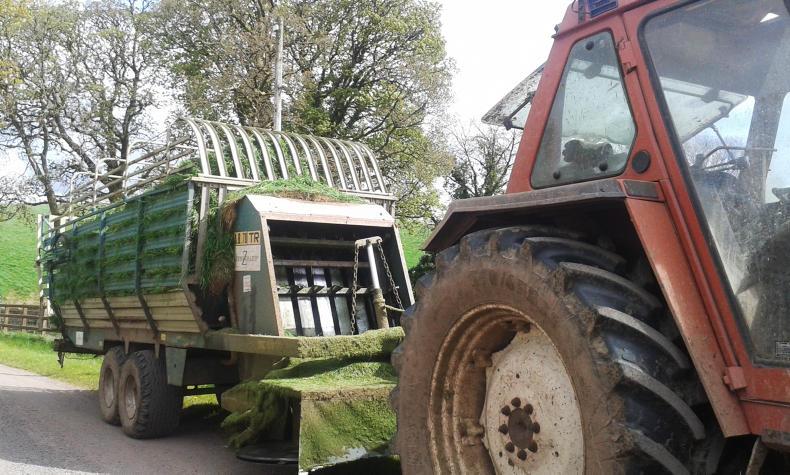
Robin Clements is using zero grazed grass to meet the shortfall in grass supply for increasing cow numbers.
Zero grazing started this year on the farm in March and with grass growth increasing every week, Robin intends to stop zero grazing by the middle of this month.
Zero grazing will start again in September as cows start calving and grass growth tails off.
So how is Robin managing the herd with the zero grazed grass? How have cows been selected from the main herd and how do the costs stack up for zero grazing?
The herd is managed in two groups. A group of 110 cows grazing day and night on the home block of 100 acres and a second group of 60 cows on zero grazed grass housed 24 hours a day, seven days a week.
The home block is well established, with continuous grass reseeding over the past five years resulting in 80% of the farm reseeded in this period.
Good grazing infrastructure with laneways and water drinkers allows easy access to paddocks on the relatively heavy soil.
The outlying farm is used to grow grass for the zero-grazed cows and also provide silage for all cows during the winter. This farm has only recently been purchased and requires attention in terms of reseeding, drainage, fencing and infrastructure.
Robin selected cows for the zero-grazing group based on calving dates, with the last 50 cows to calve on the farm making up the group.
Calving starts on the farm in August and is completed by the first week in January, with the 50 zero-grazed cows calved between mid-November and 7 January.
Stocking rate is the key limiting factor for Robin on the farm. He has 100 acres at the home farm with 170 cows – a stocking rate of four cows/ha.
Based on weekly grass measurement data, he would require a daily growth rate of 60kg DM/ha to sustain the herd. Grass will only hit this level of growth or above it from mid-May and into June. For the remainder of the grazing season, Robin will use the zero-grazed grass to meet demand.
The option of keeping the herd as one group and using zero-grazed grass for all cows in the herd at night was considered. This would mean cows could graze during the daytime and would stay inside at night on zero-grazed grass.
This was ruled out based on the cows having a suppressed appetite when they return to grass each morning.
Robin decided to split the herd, with 60 cows remaining inside, and once grass growth reaches 60kg DM/ha, he can get all cows out on the home grazing block.
Before looking at the cost side of zero grazing, let’s be clear as to why Robin is using zero grazing.
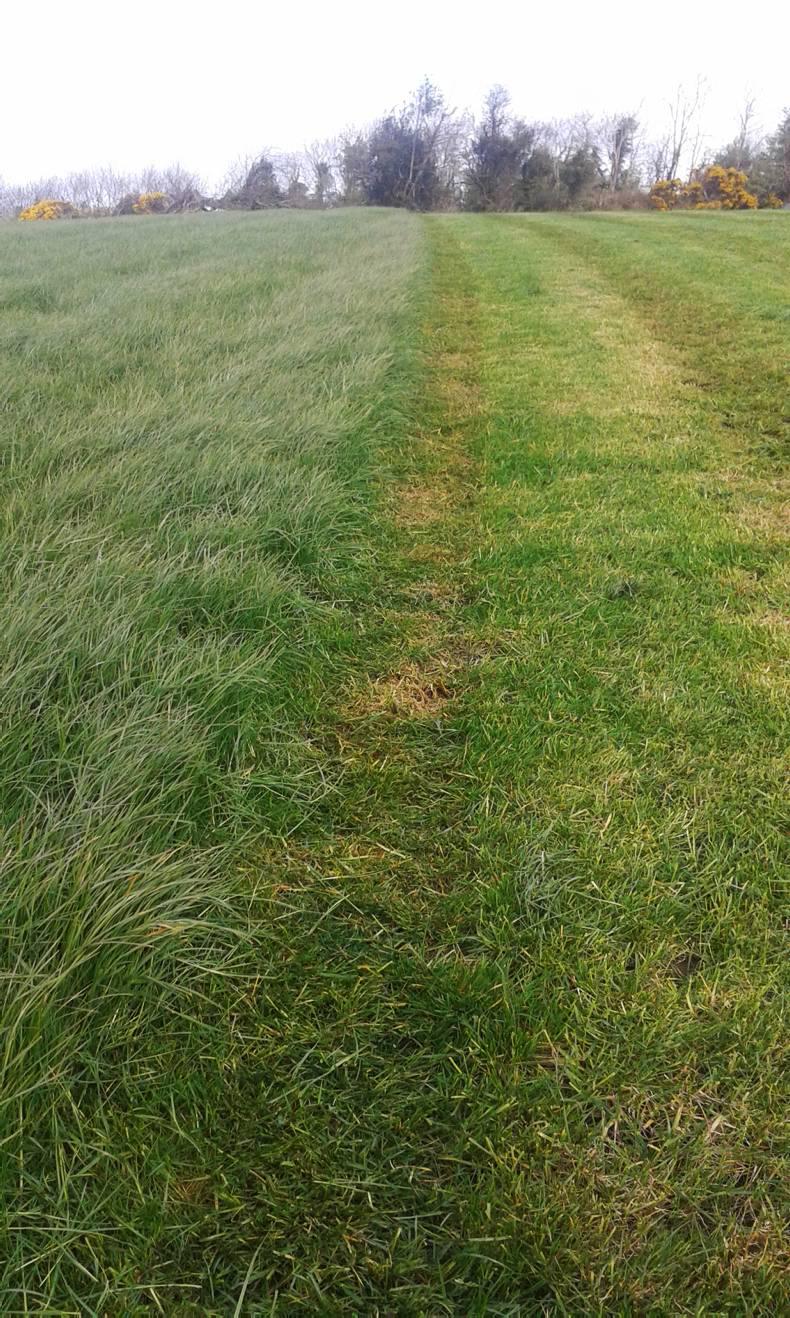
The farm is wet, and heavy land type means grass growth is slow at the start of the season and slows down quickly at the end of the season.
At the start of the season, zero-grazed grass is used to fill in the shortfall in grass supply during March, April and May, then again in September and October when herd demand is increasing with cows calving and grass growth slowing down for the winter.
Robin makes it very clear he does not want to be zero grazing all through the season and if he had the land within walking distance for the cows, he would not use the zero-grazing machine at all.
The total cost of zero grazing for the year on Robin’s farm is £5,931 (breakdown in Table 1). This cost excludes a land charge or grass-growing charge on zero-grazed land. It is simply the cost of Robin’s machine including the fuel, labour and maintenance associated with using it.
Robin zero-grazes 4t fresh weight per day, which is approximately 96t DM/year. Based on his cost of £5,931, this is £61/t DM. If we add this cost to the full economic cost of growing grass of £70/t DM, this means Robin’s zero-grazed grass is costing him £131/t DM.
While this cost is more expensive than grazed grass, it is slightly cheaper than alternatives – for example, three-cut pit silage at £140/t DM, baled silage at £148/t DM or concentrate at £200/t DM.




SHARING OPTIONS