


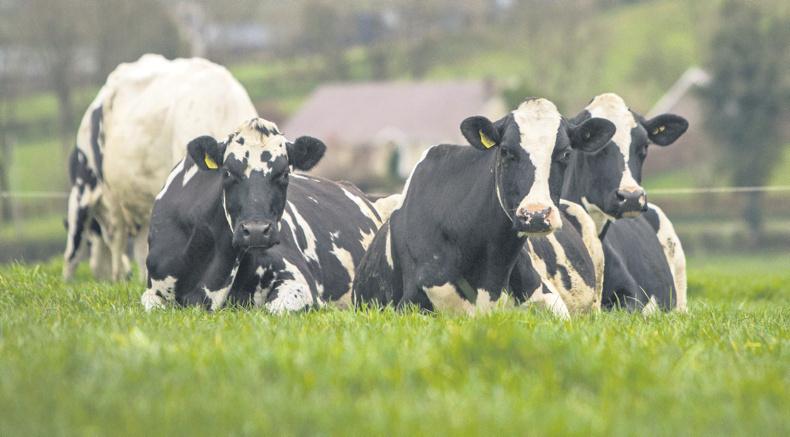
Grass growth on all of the Dairylink farms has been excellent over the past week. The challenge for farmers now is switching over from building up grass cover to managing the growth and maintaining grass quality.
On most of the project farms, grass growth has exceeded demand from the herd for grazing.
To counteract this, programme farmers are adopting a number of strategies with the ultimate aim of maintaining grass quality for milking cows.
Tyrone
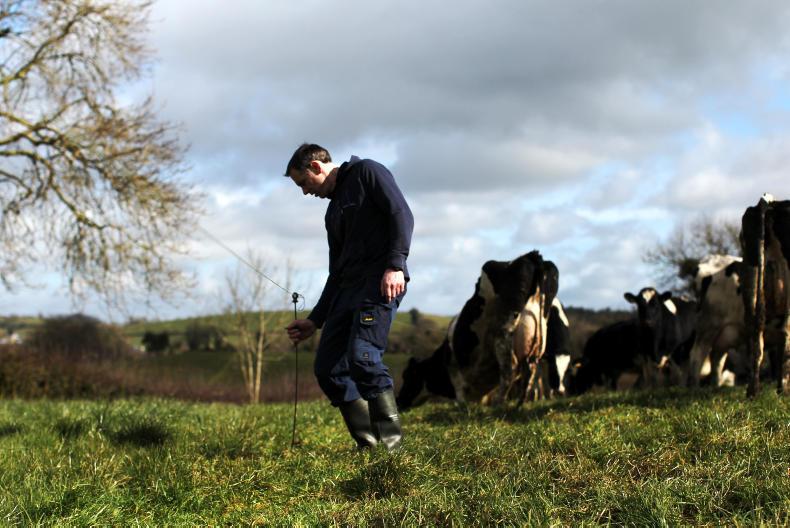
In Tyrone, both Kevin McGrade and Robin Clements have identified paddocks to be closed for silage.
One of the main benefits of this is that it will enable Kevin and Robin to match grass growth with herd demand by increasing the stocking rate on the remaining grazing platform.
In both cases, grass growth was in excess of 65kgDM/ha last week and a stocking rate of between 3.5 and four cows/ha on the grazing platform is required to manage this spurt in growth.
Both men have selected to close those paddocks with grass covers greater than 1,500kgDM/ha (3,000kgDM/ha total cover) for silage, with the intention of cutting for big bale silage within the next three weeks if weather conditions allow.
Despite the fact both Tyrone herds are gone past peak milk, both suggest maintaining grass quality is key.
Kevin said: “Some of the cows in this herd are over half-way through their lactation, so consistency in grass quality is critical.
Any deterioration in the grass quality at this stage will have a negative knock-on effect on milk yield.”
Down
In Co Down, poor grass growth on Nigel Corbett’s farm in early spring can be attributed to heavy ground conditions, sheep grazing the cow ground over winter months and some underperforming grass swards.
These factors all contributed to the shortfall of spring grass and resulted in a delay in getting the cows out full-time. Nigel acknowledges that he must address these areas where possible for next year.
With grass covers only now moving close to herd demand on the farm, Nigel can finally start thinking about moving his herd to 24-hour grazing.
Weed control on Dairylink farms has also been an issue recently, with docks the most common problem.
Co Down farmer Bill Brown sprayed approximately 20% of his silage area and 10% of the grazing block for docks three weeks ago. He got good results using Minstrel herbicide at approximately half rate. Charles Clarke in Co Cavan also has widespread dock problems on his grazing platform, but he plans to restrict his spraying to no more than 10% of the platform at a time to avoid negatively affecting the current good grass growth.
Focus – Grass mixture selection
Following on from last week’s article on the cost of grass reseeds, making the decision on which grass mixture to use is critical for all farms, especially when reseeding. Typically, this only tends to take place once every 10 to 15 years on dairy farms.
Getting the correct varieties in the mixture and matching the mixture to the location and land type on each individual farm is critical. However, it is equally important to select the correct varieties depending on whether the sward is to be grazed or continuously cut for silage.
Early and intermediate grass varieties will generally perform best in terms of yield and quality, as can be seen in the recommended lists available from www.afbini.gov.uk and www.agriculture.gov.ie.
However, selecting grass varieties is about more than just the yield. For example, the aforementioned early and intermediate varieties are harder to manage during mid-summer, as they tend to run to seed quicker, whereas late-heading varieties produce respectable yields of grass throughout the year, as shown by research and trial work conducted by AFBI and Moorepark.
This research also suggested that in terms of ease of management and improved animal performance, the late-heading varieties of grass seed tend to out-perform both the early and intermediate varieties.
Tetraploids and diploids
Tetraploids tend to have a higher sugar content, are more palatable, are more tolerant to drought conditions and establish faster. However, they have fewer tillers (produce a less dense sward), tend to have lower durability year-on-year and generally have a higher moisture content.
As a result of these characteristics, the proportions of late-heading tetraploid grasses in most mixtures will usually not exceed 20% to 30% and generally speaking should not be used in mixtures for heavy and wet land types due to the poor carrying capacity of this variety.
On the other hand, some farms with good dry soils are trialling 100% tetraploids on grazing areas to take advantage of the extra grass yield.
The most resilient grass varieties are late-heading diploid perennial ryegrasses and these will tend to make up the majority of the seed mixture used on a typical farm’s grazing platform.
These varieties produce a denser sward, produce fewer seed heads and give excellent quality silage and mid-season grazing. In comparison with tetraploids, they will tend to produce a lower yield.
Good evidence of the benefits of diploids can be seen from the Dairylink Tyrone farmers.
Both Kevin McGrade and Robin Clements suffer from wet and heavy land types and are prepared to sacrifice a higher yield for a denser sward with an improved carrying capacity through the extensive use of diploid grass varieties.
Take home point
Based on the AFBI recommended list in relation to grazing varieties, the variation in yield alone between the highest and the lowest yield of the perennial diploid ryegrass is approximately 1.5tDM/ha.
The fact that this variation is so significant outlines the fact that when it comes to the selection of grass seed, it is important to consult the recommended list and base variety choices not only on improved grass yield, but also heading date and grass quality.
Undoubtedly, selecting the best grass for your farm can have an impact on profit and loss.




SHARING OPTIONS