You will often hear people saying a game is won and lost before the game even starts, well that is definitely the case when it comes to preparing livestock for summer shows.
Many of this year’s show stoppers have already been selected by their owners and are being prepared for the show season.
Feeding
It is important these animals are dosed properly and well cared for in the weeks and months leading up to show day. Excellent feeding management is essential for growth, weight gain and hair, however, it is also important animals are not over pushed.
Animals that are over fed at a young age can develop various problems, such as infertility, feet problems and poor milk production.

Some essential items for show day. \ Donal O' Leary
Training
Training of animals for shows should commence well in advance of the first show. Ideally animals should be tied up as young as possible. They should be tied up for at least three hours at a time, secured by a proper halter. Walking should be left until the animal is settled and comfortable to lie down.
In order to achieve a nice coat of hair, animals should be washed and combed regularly to generate hair growth. As the saying goes - a hand full of hair is worth a tonne of flesh.
Clipping
Before starting to clip your animal, it is important you visualise what you want your animal to look like. The main objectives are to level the top line, level the bottom line, make the animal look longer by clipping into its neck, tidy its tail and tail head, and for some breeds, clip the head.
Remember, not every animal is the same, so you have to adjust to suit the animal and its breed.
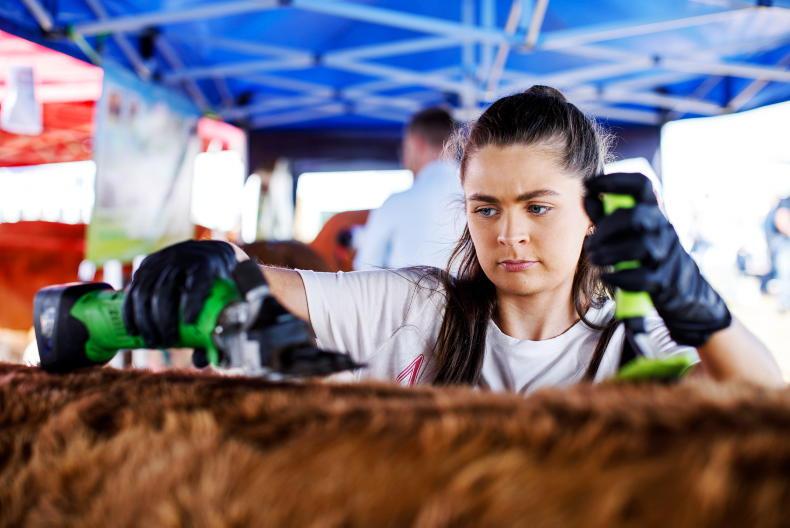
Marie Walsh from Ballinasloe, Co Galway, clipping her heifer at Tullamore Show in 2024. \ Philip Doyle
Show day essentials
White coat.Clean halter. Snaffle and lead rope.Combs/brushes.Soap/sprays/shine.Show stick.Blow dryer.Clippers.Generator if no power.Show day tips
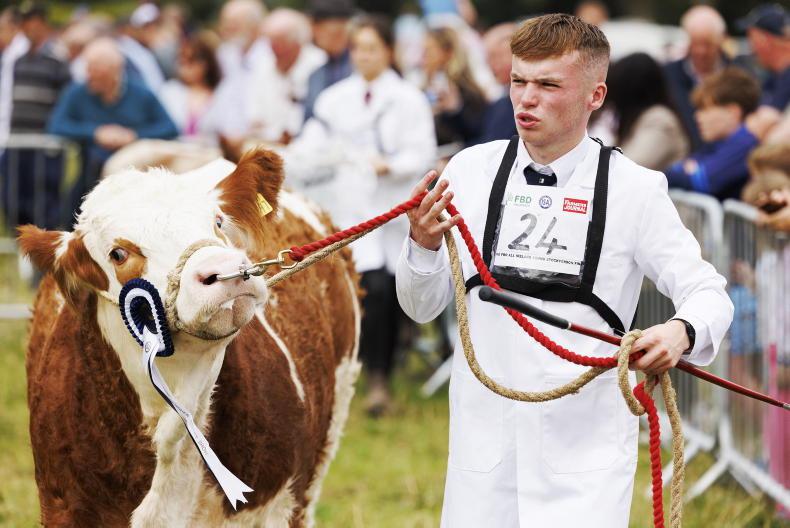
Allow enough time to prepare your animal before judging starts and be ready when your class is called.Have both yourself and your animal turned out to a high standard. Ensure your animal is washed, clean and dry. Always be polite to the judge and other competitors.Be patient with your animal, especially if it’s their first time out.Always keep an eye on the judge and don’t relax after he/she has looked at your animal, as they could still be looking at your animal when they are further down the line.Be alert to what the judge or ring steward may want you to do, for example, turn your animal around, walk them etc.Most importantly, don’t worry where you are placed, just enjoy the day and take the opportunity to learn as much as possible from your competitors. Remember, you learn more from losing than winning.Finally, smile, shake hands with the judge and your competitors.
You will often hear people saying a game is won and lost before the game even starts, well that is definitely the case when it comes to preparing livestock for summer shows.
Many of this year’s show stoppers have already been selected by their owners and are being prepared for the show season.
Feeding
It is important these animals are dosed properly and well cared for in the weeks and months leading up to show day. Excellent feeding management is essential for growth, weight gain and hair, however, it is also important animals are not over pushed.
Animals that are over fed at a young age can develop various problems, such as infertility, feet problems and poor milk production.
Some essential items for show day. \ Donal O' Leary
Training
Training of animals for shows should commence well in advance of the first show. Ideally animals should be tied up as young as possible. They should be tied up for at least three hours at a time, secured by a proper halter. Walking should be left until the animal is settled and comfortable to lie down.
In order to achieve a nice coat of hair, animals should be washed and combed regularly to generate hair growth. As the saying goes - a hand full of hair is worth a tonne of flesh.
Clipping
Before starting to clip your animal, it is important you visualise what you want your animal to look like. The main objectives are to level the top line, level the bottom line, make the animal look longer by clipping into its neck, tidy its tail and tail head, and for some breeds, clip the head.
Remember, not every animal is the same, so you have to adjust to suit the animal and its breed.
Marie Walsh from Ballinasloe, Co Galway, clipping her heifer at Tullamore Show in 2024. \ Philip Doyle
Show day essentials
White coat.Clean halter. Snaffle and lead rope.Combs/brushes.Soap/sprays/shine.Show stick.Blow dryer.Clippers.Generator if no power.Show day tips
Allow enough time to prepare your animal before judging starts and be ready when your class is called.Have both yourself and your animal turned out to a high standard. Ensure your animal is washed, clean and dry. Always be polite to the judge and other competitors.Be patient with your animal, especially if it’s their first time out.Always keep an eye on the judge and don’t relax after he/she has looked at your animal, as they could still be looking at your animal when they are further down the line.Be alert to what the judge or ring steward may want you to do, for example, turn your animal around, walk them etc.Most importantly, don’t worry where you are placed, just enjoy the day and take the opportunity to learn as much as possible from your competitors. Remember, you learn more from losing than winning.Finally, smile, shake hands with the judge and your competitors. 






SHARING OPTIONS