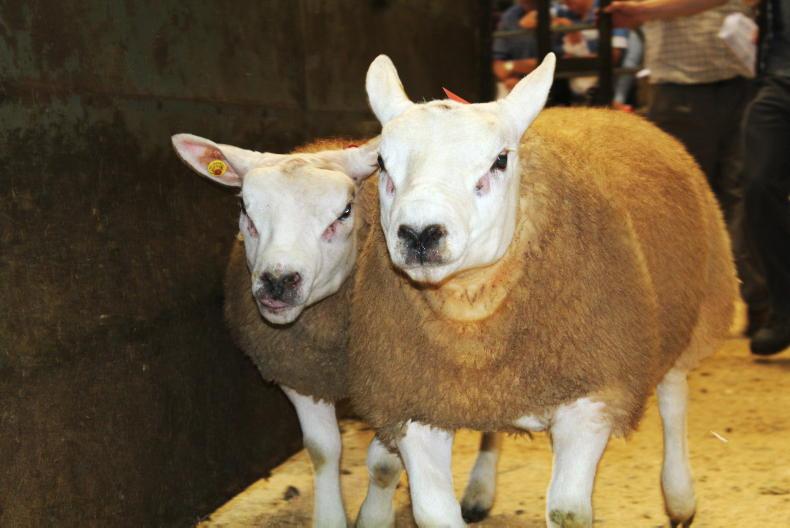
Cheviot lambs on the Athenry finishing trail. The trial also found no difference in performance between shorn and unshorn lambs.
ADVERTISEMENT
Teagasc held a store lamb finishing event on Tuesday in Mellows Campus, Athenry, Co Galway. The event run by research and advisory staff highlighted the main production areas finishers should focus on with special focus placed on hill lambs.
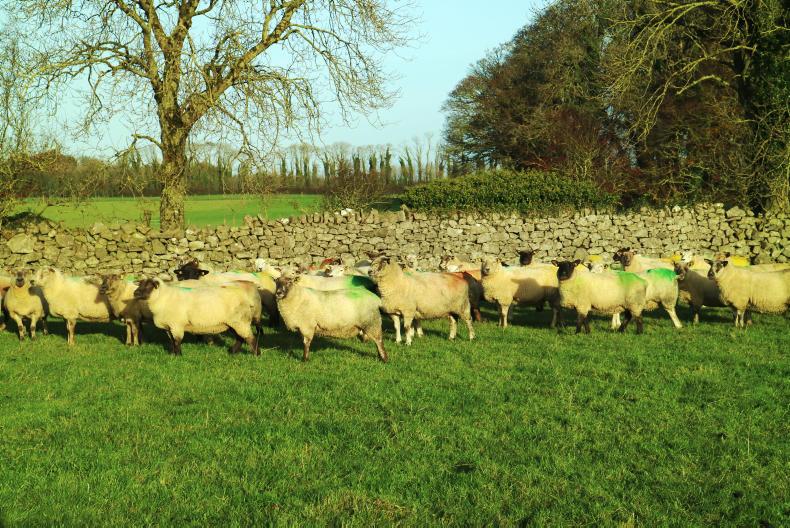
An overriding message across all production systems is the importance of maximising the role of grazed grass in the finishing diet. While performance from a grazed grass diet is likely to be on a downward trend in November and December (ball park of 50g to 80g/day on good quality grass, reducing to negligible weight gain in poor conditions), finishers were told it can still have a role in certain production systems to allow light lambs in particular to reach a more suitable weight for intensive feeding. In general, the ball park ideal weight for pushing lambs on to an intensive finishing diet was 33kg to 35kg for pure hill lambs and 38kg to 40kg for lowland and crossbred lambs.
Absence of light lamb market
ADVERTISEMENT
The target weight for the hill lambs is higher than in the past and is stemming from a continued absence of traditional light lamb markets where lambs were finished for niche market demand in Spain and Portugal at 9kg to 14kg carcase weight. With this market outlet not available, or minuscule, the best option farmers have to finish lambs is to bring to French lamb weights or at least 15kg carcase weight upwards. If lambs are put on to an intensive finishing diet at too low of a weight, they will not reach this carcase weight without going over fat or production costs exceeding returns.
Key points delivered on finishing lambs intensively are as follows:
There is no room for passengers. Unhealthy lambs do not perform and significantly increase finishing costs. Address health concerns first before transferring lambs on to an intensive finishing diet.
Train lambs to eat firs,t if possible. When starting feeding, assume that all lambs are starting from the same base and introduce concentrates gradually, starting at 0.1kg per head per day.
Watch lambs closely. With hill lambs there will inevitably be some shy eaters that may need to be removed into their own pen for special attention.
Build up to ad-lib meals increasing by 200g every three days until feeding. This will take about two weeks to achieve.
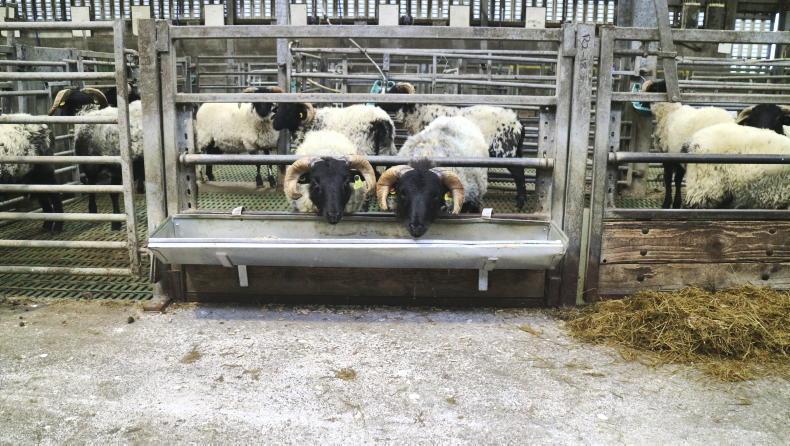
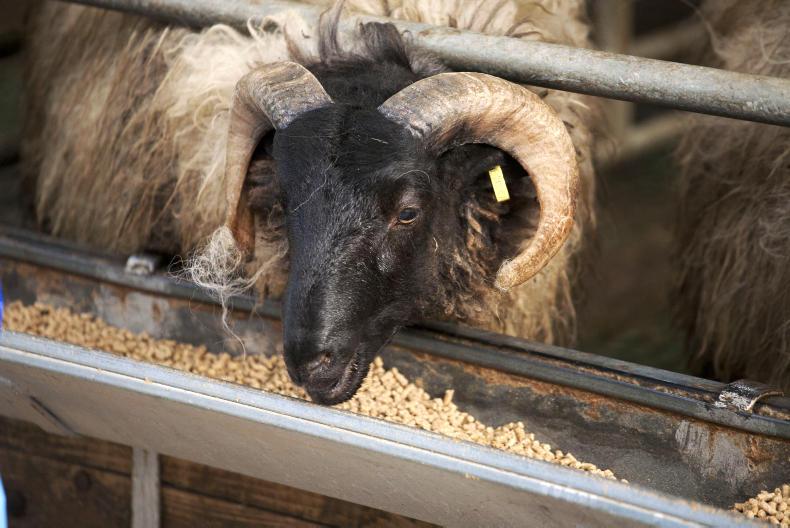
Remember feeding space is critical and the normal allocation of 400mm will need to be increased to about a foot with horned lambs until they become accustomed to an ad-lib diet.
Offer lambs access to a small quantity of roughage (hay, silage, straw) at the outset. This can be continued but reduce it to a small level as offering too high of quantities will only serve to displace meal intake. Roughage can be cut out as long as the crude fibre content is over 7%.
Water is crucial at all times. Remember to account for small lambs that may not easily reach the water bowl. Placing a couple of blocks on front of the drinker will aid lambs in reaching the required height to eat.
Focus on high-energy ingredients avoiding finely ground ingredients or very high starch diets that will break down fast. Whole cereals work well in a ration in slowing down digestion.
Register for free to read this story and our free stories.
This content is available to digital subscribers and loyalty code users only. Sign in to your account, use the code or subscribe to get unlimited access.
The reader loyalty code gives you full access to the site from when you enter it until the following Wednesday at 9pm. Find your unique code on the back page of Irish Country Living every week.
CODE ACCEPTED
You have full access to the site until next Wednesday at 9pm.
CODE NOT VALID
Please try again or contact support.
Teagasc held a store lamb finishing event on Tuesday in Mellows Campus, Athenry, Co Galway. The event run by research and advisory staff highlighted the main production areas finishers should focus on with special focus placed on hill lambs.
An overriding message across all production systems is the importance of maximising the role of grazed grass in the finishing diet. While performance from a grazed grass diet is likely to be on a downward trend in November and December (ball park of 50g to 80g/day on good quality grass, reducing to negligible weight gain in poor conditions), finishers were told it can still have a role in certain production systems to allow light lambs in particular to reach a more suitable weight for intensive feeding. In general, the ball park ideal weight for pushing lambs on to an intensive finishing diet was 33kg to 35kg for pure hill lambs and 38kg to 40kg for lowland and crossbred lambs.
Absence of light lamb market
The target weight for the hill lambs is higher than in the past and is stemming from a continued absence of traditional light lamb markets where lambs were finished for niche market demand in Spain and Portugal at 9kg to 14kg carcase weight. With this market outlet not available, or minuscule, the best option farmers have to finish lambs is to bring to French lamb weights or at least 15kg carcase weight upwards. If lambs are put on to an intensive finishing diet at too low of a weight, they will not reach this carcase weight without going over fat or production costs exceeding returns.
Key points delivered on finishing lambs intensively are as follows:
There is no room for passengers. Unhealthy lambs do not perform and significantly increase finishing costs. Address health concerns first before transferring lambs on to an intensive finishing diet.
Train lambs to eat firs,t if possible. When starting feeding, assume that all lambs are starting from the same base and introduce concentrates gradually, starting at 0.1kg per head per day.
Watch lambs closely. With hill lambs there will inevitably be some shy eaters that may need to be removed into their own pen for special attention.
Build up to ad-lib meals increasing by 200g every three days until feeding. This will take about two weeks to achieve.
Remember feeding space is critical and the normal allocation of 400mm will need to be increased to about a foot with horned lambs until they become accustomed to an ad-lib diet.
Offer lambs access to a small quantity of roughage (hay, silage, straw) at the outset. This can be continued but reduce it to a small level as offering too high of quantities will only serve to displace meal intake. Roughage can be cut out as long as the crude fibre content is over 7%.
Water is crucial at all times. Remember to account for small lambs that may not easily reach the water bowl. Placing a couple of blocks on front of the drinker will aid lambs in reaching the required height to eat.
Focus on high-energy ingredients avoiding finely ground ingredients or very high starch diets that will break down fast. Whole cereals work well in a ration in slowing down digestion.
Do not let feeding troughs run empty. If this occurs, build lambs gradually again to full feeding.
Don’t forget to add minerals and vitamins. Teagasc advises to include ammonium chloride at 0.5% for male lambs on feed long term to prevent urinary calculi.
There is huge variation between intake and performance with intake ranging from 0.5kg concentrates to 1.8kg to 2kg at the top end. This influences performance with daily liveweight gain as low as 80g rising to 400g to 500g in the highest performing lambs. The average is 200g to 250 for Scotch Blackface and Cheviot and 270g to 350g for crossbred lambs.
Wether lambs will go over fat faster than ram lambs. Lambs should be drafted regularly once they approach finishing weights.
If you would like to speak to a member of our team, please call us on 01-4199525.
Link sent to your email address
We have sent an email to your address. Please click on the link in this email to reset your password. If you can't find it in your inbox, please check your spam folder. If you can't find the email, please call us on 01-4199525.
ENTER YOUR LOYALTY CODE:
The reader loyalty code gives you full access to the site from when you enter it until the following Wednesday at 9pm. Find your unique code on the back page of Irish Country Living every week.






SHARING OPTIONS