



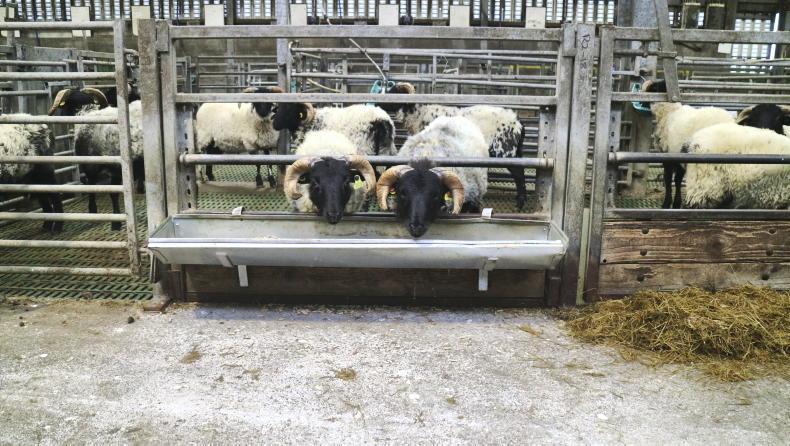
There has been an improvement in marketing opportunities for light hill lambs in recent years with a recovery in demand seen in the Italian market along with opportunities developing in the French market.
James Smyth, general manager at Irish Country Meats (ICM), said that falling sheep production in Italy and tight supplies from competing export markets has witnessed an upturn in demand for light lamb carcases weighing from 12kg to 16kg carcase weight.
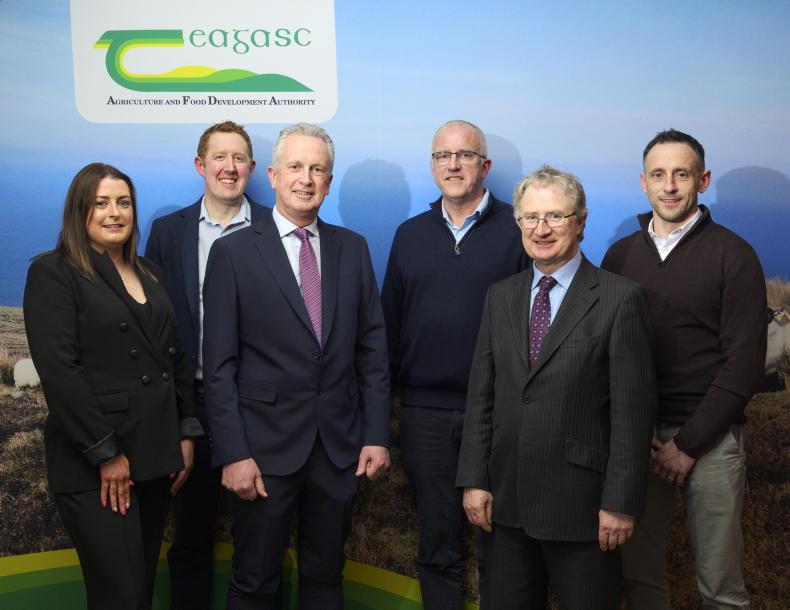
James was speaking at last week’s Teagasc hill sheep conference in Westport, Co Mayo on a panel discussing the marketing of hill lambs. He was joined by Seamus McMenamin, Bord Bia sheep and livestock sector manager; Teresa Gibsey, Aurivo Ballinrobe mart manager; and Brendan Joyce, hill sheep farmer.
Traditional markets
The Italian and Spanish markets were traditionally Ireland’s main market outlets for light hill lamb carcases, but both came under significant pressure over a decade ago with volumes traded reducing to a negligible level.
The recent recovery in the Italian market has been underpinned by a continuous decline in sheep milking flocks and flock numbers.
A similar trend has emerged in the south of France with sheep numbers falling, while Seamus explained that reduced export volumes from the Spanish market is also creating greater market opportunities right across the EU.
Production of light lambs in Spain fell by more than 5% in 2025 with tight supplies fuelling an increase in farmgate prices. The current farmgate price in Spain is currently upwards of €10.50/kg.
While there is a resurgence in light lamb markets James said that the optimum position for farmers and the processing sector is to continue to strive to bring hill lambs to heavier carcase weights, ideally of 18kg upwards.
He said that this leaves producers with a much greater proposition of generating higher output value from each animal produced and added that there is no certainty that light lamb markets can handle higher volumes. Whereas a continued decline in sheepmeat production across Europe is underpinning demand for sheep weighing from 18kg to 21kg for new season lamb and up to 22kg to 23kg as the market transitions to hoggets.
Heavier carcases
This was a view echoed by Brendan. He said that having access to a light lamb market for carcases weighing from 12kg to 16kg is vital for producers to be able to market lambs that do not have the potential to be fed to heavier weights but that longer term the focus should be to try and maximise the value of each lamb produced.
He said that the demise of traditional light lamb markets over a decade ago hit hill sheep systems hard initially but that over time farmers have adopted different finishing budgets based on research carried out in Teagasc Athenry.
Brendan is a member of the Atlantic Hill Lamb group which markets sheep through the Kepak Group.
He estimated that upwards of 70% to 80% of throughput is falling in to French market weights of 17kg to 21kg with the remainder typically entering the light lamb market.
Finishing light lambs
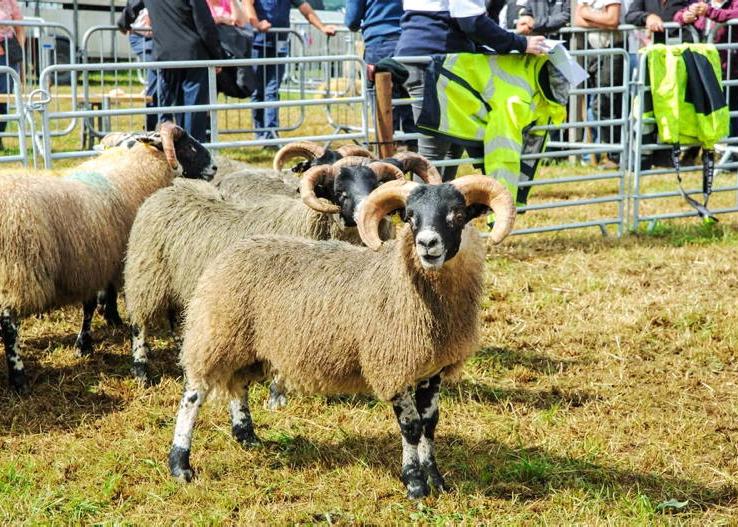
Earlier in the evening Frank Campion, Teagasc research officer, summarised research on finishing blueprints for light lambs. One recent trial has examined the performance of Scottish Blackface ram and castrate lambs when offered two dietary treatments and slaughtered at carcase weights of 12kg to 16kg.
In the trial ram lambs were selected for slaughter at less than 33kg with wether lambs selected for slaughter at less than 32kg to take account of the higher kill-out potential of wether lambs. These upper weights were selected to deliver a carcase weight of 12kg to 16kg while the target grade was R grade and a minimum fat cover score of 2.
Trial results
The two dietary treatments were concentrates offered ad lib and perennial ryegrass supplemented outdoors with 500g concentrates per head daily.
As expected, the lambs offered ad lib concentrates indoors achieved a 79g per day higher growth rate (208g v 129g). This resulted in lambs in the indoor treatment finishing 36 days quicker (53 v 89 days).
The effect of gender is summarised in Figure 1. Ram lambs achieved a significantly higher daily liveweight gain across the two dietary treatments.
Given the large variation in performance between the two systems and unpredictable nature of performance of lambs finished outdoors, indoor finishing of lambs is seen as a more feasible option.
Outdoor feeding has a role in allowing lambs to develop a frame and in turn reduce the level of concentrates required during the finishing phase and also leave lambs in a better position to reach French market weights without going overfat.
However, finishing lambs solely on such a system proves challenging in delivering lambs to the desired specification.
Indoor finishing
For this reason, Frank concentrated on elements of note for indoor finishing. Table 1 details the slaughter performance of lambs finished indoors by gender.
Wether lambs had a higher kill out, but this failed to compensate for the higher performance of ram lambs and a heavier liveweight at slaughter.
Wether lambs had a slightly better carcase grade but with such a small differential between payment grades this is not significant. Frank explains that the average fat score of 2.9 also failed to highlight challenges seen in finishing lambs indoors to the desired fat score.
As demonstrated in Figure 2, almost 37% of ram lambs weighing less than 16kg failed to hit the optimum fat score with a lower figure of 30% for wether lambs. This dropped to approximately 23% and 10%, respectively for lambs brought to a heavier carcase weight of 17kg with a further significant reduction to 11% of rams failing to hit the desired carcase weight and just 2% of wethers when brought to a carcase weight of less than 18kg carcase weight. This, according to Frank, is another reason why if possible the aim should be to bring lambs to a higher carcase weight.
Marketing live
Frank outlined that upwards of 300,000 hill lambs are sold as stores on an annual basis.
There is also scope to increase the value of hill lambs marketed live by taking account of optimum presentation.
Teresa told farmers that there can be a significant differential between the price of lambs depending on presentation.
She highlighted aspects such as presenting lambs in a uniform batch based of lamb type, gender and size as unlocking greater competition between buyers.
Added selling points such as lamb cleanliness and health treatments such as clostridial disease vaccination, blowfly protection should be highlighted where applicable.
She highlights the sales ring in the mart as a significant benefit in selling sheep as it will allow all animals to be viewed in full.
Challenges finishing organic hill lambs
A significant percentage of the recent growth in farmers switching to organic production is hill sheep systems. Teagasc is currently undertaking research to see if finishing blueprints can be tailored to finish lambs efficiently.
The challenge compared to finishing blueprints for conventional systems is that at least 60% of the dry matter intake (DMI) must be either fresh green food or unmilled forage grown to organic standards.
This means that the tried and tested ad lib concentrate diets cannot be offered.
Teagasc experimented with three diets in 2025: grass silage (GS), red clover silage (RCS) and whole crop – barley, oats and pea – silage (WCS) mixture with each offered with 500g concentrates.
None of the diets were successful with the percentage of lambs drafted ranging from zero on WCS to 16% on RCS and 43% on GS after a 128-day feeding period.
Frank explains that the diets have been tweaked in 2026 WCS being a barley/pea mix under-sown with RCS. The DMD is still below target however at 62.1DMD.
The RCS harvested in 2026 was much better quality, testing at 74.2DMD and 35% DM. The composition of concentrates was also changed to 25% of each of wheat, barley, pea and bean mix formulated in to a pellet rather than a ration. Time will tell if these changes deliver any improvements.
Brendan said that farmers are committed to trying to finish more lambs organically but highlighted that the 60% minimum forage inclusion rate needs to be reviewed if there is any hope of achieving this target for farmers retaining hill lambs.
Furthermore any opportunity to market hill lambs organically will be for heavier carcases with James and Seamus explaining that at present market opportunities are at French market weights.
Teresa said there is interest from farmers in sourcing organic lambs and urged farmers interested in developing a sale to make contact with the mart.



SHARING OPTIONS