


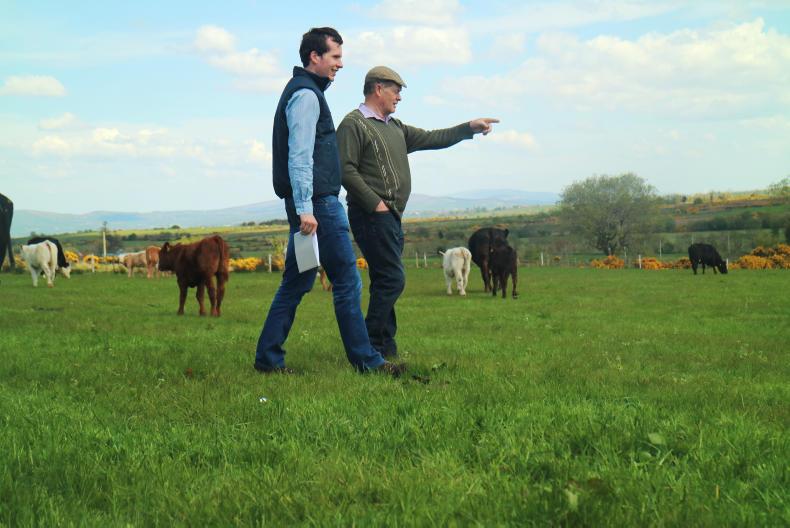
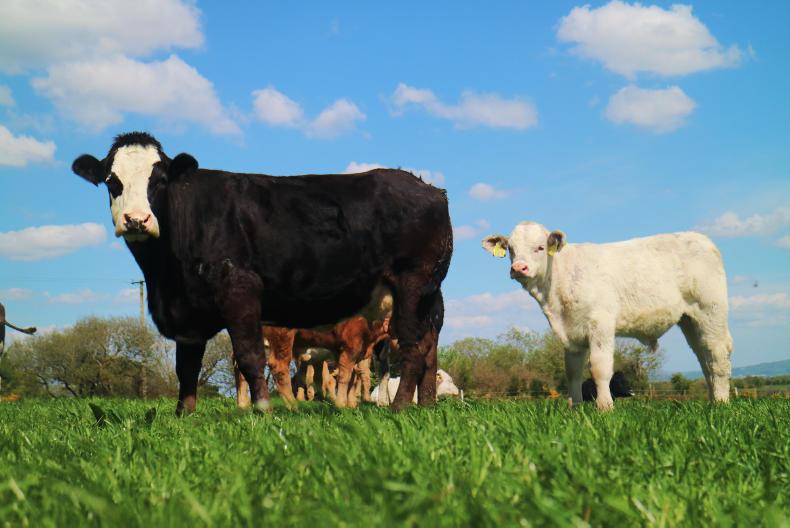
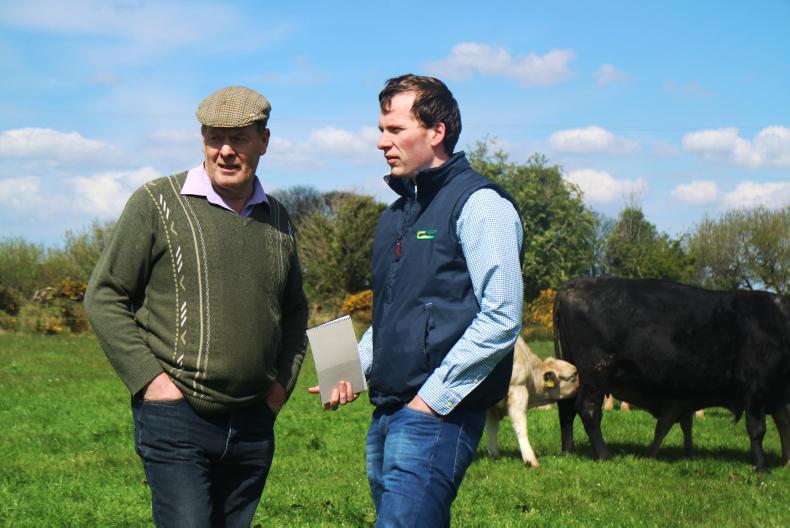
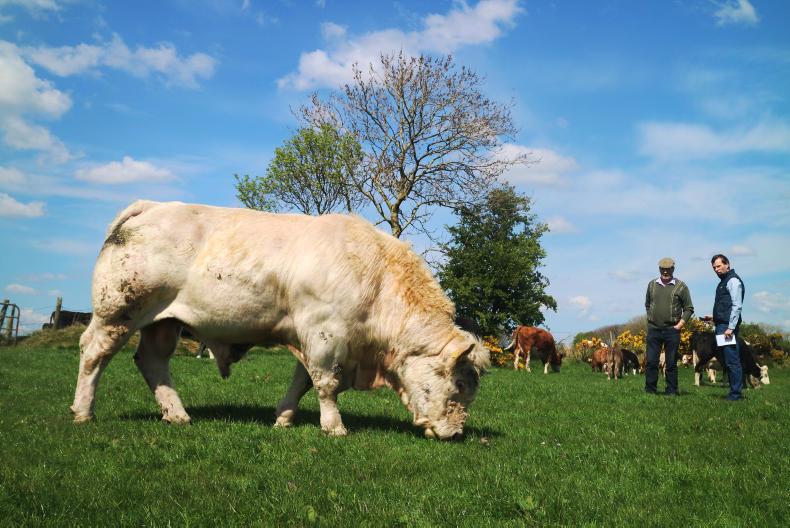
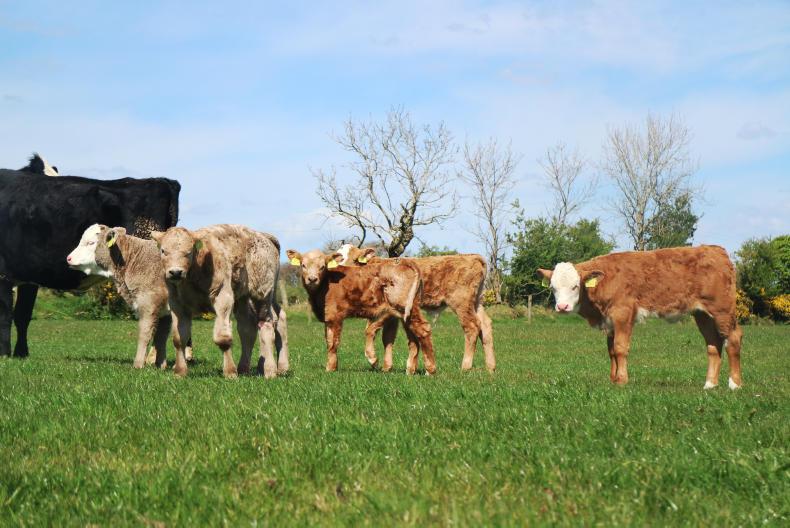
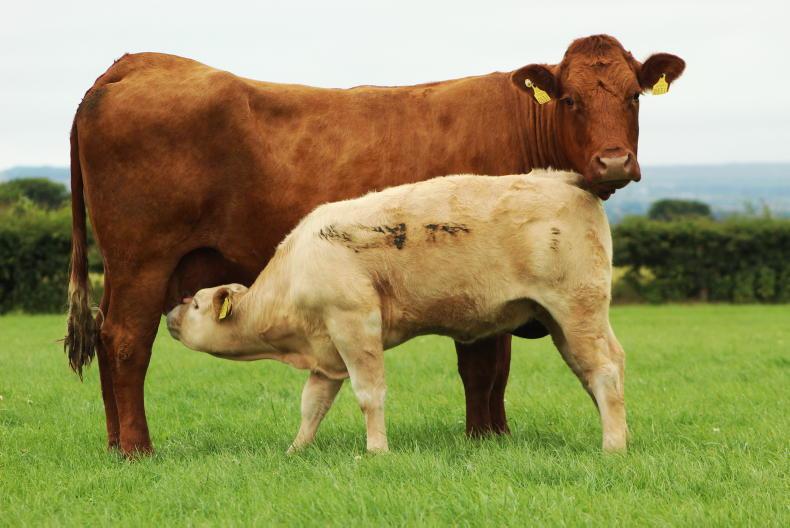
John and his father Gerard Grieve are farming in partnership in Castlefinn, Co Donegal, with help from Gerard Jr. At present, the Grieves are calving approximately 50 cows from early January and aiming to sell a weanling in the autumn sales. The suckler herd is rife with first- and second-cross whitehead cows as well as some continental genetics. The Grieves use Charolais sires.
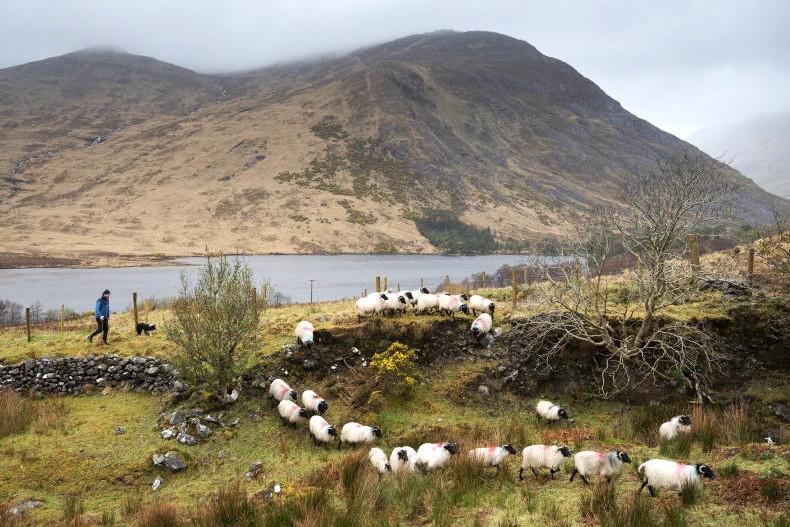
Currently, there are a number of issues on the farm negatively affecting spring grass supply – approximately 120 issues, in fact. The Grieves run a mid-season lambing flock of 120 ewes, which effectively lick the 35ha farm clean during the winter and leave the grass situation tight early on in the year.
The Grieves in Donegal have an issue with grass supply in the spring. Read more later on farmersjournal.ie #BETTERfarm #beef pic.twitter.com/j8ZwjrVA3d
— FJ Beef (@FJBeef) May 9, 2017
“We are always tight for grass around this time of year,” Gerard told me, “it’s difficult to manage the two, but the sheep are great for cashflow”.
To compound this, the land is not ‘‘early ground’’ from a grazing point of view. It is heavy in nature and situated atop a hill where cold winds can shackle grass growth at times.
Ahead of the Grieve’s farm planning meeting, where a four-year farm plan will be put in place by the team along with Teagasc beef specialists and the Grieve’s local B&T adviser Tommy Doherty, BETTER adviser John Greaney and I visited Gerard to discuss his options.
One option we floated was to evenly split the suckler herd’s calving pattern to spring and summer. The cows calving in spring would tighten from the current 12-week, to a tighter eight-week calving period and their progeny would be sold in the autumn as weanlings. Summer calvers would calve in July and August, outdoors. Their calves would wean the following March, having had the option to creep outside all winter – the Grieves already have excellent creep facilities in place. Upon weaning these summer calves, cows could remain indoors for the month of April and May, if necessary, going out to a bared paddock in the weeks prior to calving.
Such a strategy would drastically reduce the demand for grass in the spring time. However, its success would hinge on making top-quality silage for the summer-calved cows for the wintering period and not letting infertile cows ping-pong between the two herds.
With the Grieves keen to finish some of their cattle, the option is there to send the summer-born weanlings to grass for a full season from March and then finish them indoors during the winter period.
Summer calving is one option for the Grieves, and all three involved will have to agree for it to run.
Turkish exports drive weekly live exports over 9,000 head



SHARING OPTIONS