Irish teenagers are some of the least happy compared to other high income countries, with Ireland ranking 24th out of 36 countries. This is according to a UNICEF report released last year, which ranked Irish teenagers in the bottom half of the developed world when it comes to wellbeing. The study also found the country’s youth suicide rate to be above the international average, standing at 6.4 per 100,000.
The UNICEF figures highlight an escalating mental health crisis in Ireland, and Aibhlin O’Leary, head of advocacy at UNICEF Ireland told Irish Country Living: “nearly one in three 15-year-olds in Ireland report low life satisfaction. There isn’t a single cause, but young people today are facing a combination of pressures, including academic expectations, the lingering effects of the pandemic and digital environments that can intensify comparison and body image concerns.
Aibhlin adds that, “young people in rural communities can face additional challenges in accessing support, including fewer local services and greater isolation. That’s why it’s so important that mental health supports are available through schools and communities so that every young person can get help early, wherever they live.”
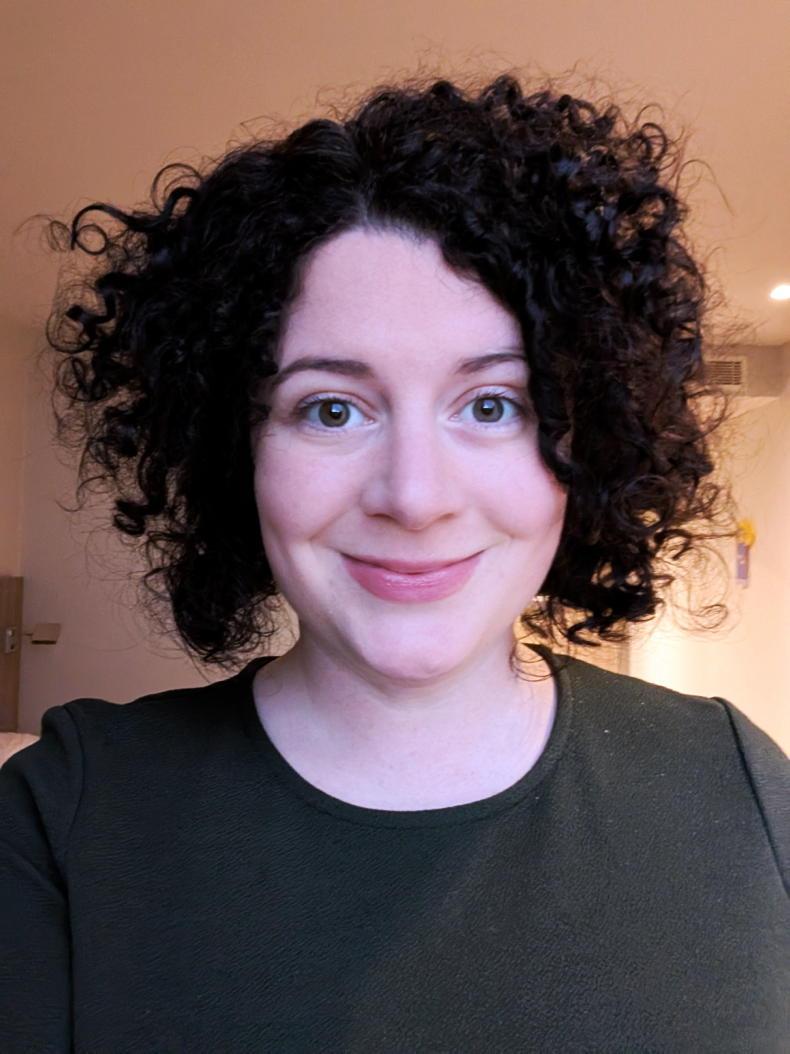
Aibhlin O’Leary, head of advocacy at UNICEF Ireland.
Cousellor and pyschotherapist Emma Lynch (@emmalynchpsychotherapy on Instagram ) says a lot of young people are presenting with anxiety in their clinic “because of the state of the world at the minute... looking at the world and thinking, what is going on?”
Emma, who is based just outside Waterford city, adds that: “for teenagers in this country, there’s very little to do, which means a lot of them fall into the predictable traps of drug use, substance abuse, and bad habits, crime, joy riding, all of that kind of stuff, because basically there’s just a lack of occupation.”
Lack of housing and cost of living are also affecting young adults’ wellbeing, according to Emma. “If we [as young people] feel like we’re falling behind or like we’re not meeting where we thought we would be at a certain point, it can be incredibly disappointing. We can end up losing confidence in ourselves. It can affect our self-esteem, and it really has a knock-on effect so many things, including mental health.”
Mental health services
Demand for mental health services continues to rise, but waiting lists for Child and Adolescent Mental Health Services are very long, with 3,830 children awaiting a first appointment, according to the Children’s Rights Alliance Report Card 2025.
All Lives are Precious (ALPS), a community-based mental health charity in Northern Ireland is one of the many charities across the island that has stepped in to fill the gap.
Established in 2014, ALPS has engaged with hundreds of thousands of individuals across Ireland on the important matter of mental health and suicide prevention.
Working in partnership with two other mental health services, Lisheens House in Cork and Futures in Mind in Wexford, it provides free counselling and support to those who need it, particularly in remote and rural parts of Ireland.
Founder Ronan Gilchrist has been working in suicide prevention since he was 21 years old.
“When ALPS started, the whole idea behind it was just to train and educate people in suicide prevention and mental health training,” he explains. “We started in churches, engaging churches in conversations around mental health and wellbeing. Over the years, people needed help, and we weren’t set up to help them. Then in 2017 we got our first counsellors on board.”
There are now 12 councillors available through ALPS; and in addition to providing the access and means for counselling services, the charity delivers talks in schools and community groups on mental health and emotional wellbeing.
Part of the success, Ronan says, is that the charity looks at mental health through the lens of community development.
“We’re very involved in community engagement,” he explains. “We do a lot of activities and we don’t go anywhere once. We want to become part of the actual community. We’re very involved with quite a few young farmers groups. We work with GAA clubs and soccer clubs and rugby clubs and provide wellbeing for all their activities.
“I do a lot of work with young farmers. We used to do a sunflower project in Downpatrick every year and we got the young farmers to come and do it. We planted the bigger sunflower field in Ireland for four out of the last six years. We open it up every year and we raise money for ALPS, and then Macmillan Cancer as well.
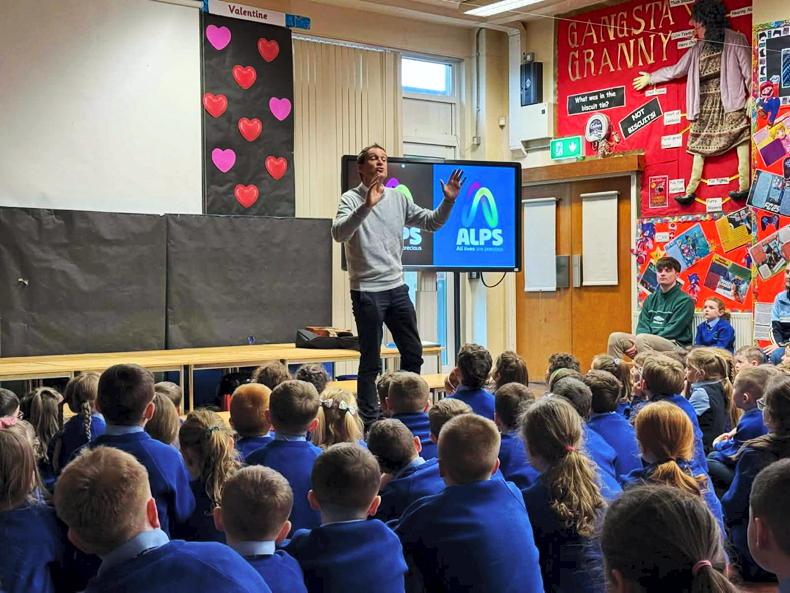
Mental health consultant Frank Diamond delivering a talk to the pupils of St John’s Primary School, Dernaflaw, Co Derry.
Mental health consultant Frank Diamond is one of the facilitators employed by ALPS to deliver talks in schools and businesses across the country on the topic of mental health. He has many reflections on the challenges facing mental health in rural Ireland.
“Isolation and loneliness are the key factors now for mental health and that lack of human connection.
“The phone is an absolute disaster, and it’s now one of the biggest addictions with our young folk, and another one that has really crept in as well is cocaine. Cocaine is absolutely rampant in our country, and we are not doing enough about it at all.
“I see this every time I go into school, and from the age of 12 and 13 up, when I mentioned the word cocaine in my talk, I see the reaction of those children in front of me. The little smiles, the way they look over at each other, because they know the ‘craic’ better than me – excuse the pun.
We do a lot of activities and we don’t go anywhere once. We want to become part of the actual community. We’re very involved with quite a few young farmers groups. We work with GAA clubs and soccer clubs and rugby clubs and provide wellbeing for all their activities
“I’m telling you for a fact that cocaine is in every GAA club in Ireland. Cocaine is there.
“Another one that is rampant now, everywhere in rural Ireland, is gambling.”
Frank says the biggest barrier preventing people from seeking the appropriate support for their mental health, is stigma.
“It’s thinking that they are weak if they reach out and ask for help. Because of embarrassment and shame.
“In this country, we’re devils for worrying about what people will think,” Frank says. “What will the neighbours think? What will Aunty Mary think? We can’t control it. Perfection does not exist.
“We’re not called to be perfect. We are called to be authentic, to be real, and to take off the mask that we may wear and be our true selves. And that takes courage and bravery, especially in this world with social media. Never compare yourself to anyone else. You are who you are, and that’s the gift that you bring to this world. You are enough.”
See alpsltd.org
- Futures In Mind is a counselling service based in Gorey, Co Wexford that offers free support for both adults and children. See wexfordcypsc.ie/services/young-people-mental-health/futures-mind
- Lisheens House is a community-based mental health charity in Cork that provides free counselling and services for those experiencing a mental health crisis. They also run a free phone service available to older people or individuals who may feel lonely. Helpline is 023 888 8888. See lisheenshouse.ie
The HSE has a full list of organisations that provide mental health supports and services on their website. See hse.ie/mental-health/services-supportMake the Moove: confidential support and guidance for individuals in farming and rural communities. See makethemoove.ie
Irish teenagers are some of the least happy compared to other high income countries, with Ireland ranking 24th out of 36 countries. This is according to a UNICEF report released last year, which ranked Irish teenagers in the bottom half of the developed world when it comes to wellbeing. The study also found the country’s youth suicide rate to be above the international average, standing at 6.4 per 100,000.
The UNICEF figures highlight an escalating mental health crisis in Ireland, and Aibhlin O’Leary, head of advocacy at UNICEF Ireland told Irish Country Living: “nearly one in three 15-year-olds in Ireland report low life satisfaction. There isn’t a single cause, but young people today are facing a combination of pressures, including academic expectations, the lingering effects of the pandemic and digital environments that can intensify comparison and body image concerns.
Aibhlin adds that, “young people in rural communities can face additional challenges in accessing support, including fewer local services and greater isolation. That’s why it’s so important that mental health supports are available through schools and communities so that every young person can get help early, wherever they live.”
Aibhlin O’Leary, head of advocacy at UNICEF Ireland.
Cousellor and pyschotherapist Emma Lynch (@emmalynchpsychotherapy on Instagram ) says a lot of young people are presenting with anxiety in their clinic “because of the state of the world at the minute... looking at the world and thinking, what is going on?”
Emma, who is based just outside Waterford city, adds that: “for teenagers in this country, there’s very little to do, which means a lot of them fall into the predictable traps of drug use, substance abuse, and bad habits, crime, joy riding, all of that kind of stuff, because basically there’s just a lack of occupation.”
Lack of housing and cost of living are also affecting young adults’ wellbeing, according to Emma. “If we [as young people] feel like we’re falling behind or like we’re not meeting where we thought we would be at a certain point, it can be incredibly disappointing. We can end up losing confidence in ourselves. It can affect our self-esteem, and it really has a knock-on effect so many things, including mental health.”
Mental health services
Demand for mental health services continues to rise, but waiting lists for Child and Adolescent Mental Health Services are very long, with 3,830 children awaiting a first appointment, according to the Children’s Rights Alliance Report Card 2025.
All Lives are Precious (ALPS), a community-based mental health charity in Northern Ireland is one of the many charities across the island that has stepped in to fill the gap.
Established in 2014, ALPS has engaged with hundreds of thousands of individuals across Ireland on the important matter of mental health and suicide prevention.
Working in partnership with two other mental health services, Lisheens House in Cork and Futures in Mind in Wexford, it provides free counselling and support to those who need it, particularly in remote and rural parts of Ireland.
Founder Ronan Gilchrist has been working in suicide prevention since he was 21 years old.
“When ALPS started, the whole idea behind it was just to train and educate people in suicide prevention and mental health training,” he explains. “We started in churches, engaging churches in conversations around mental health and wellbeing. Over the years, people needed help, and we weren’t set up to help them. Then in 2017 we got our first counsellors on board.”
There are now 12 councillors available through ALPS; and in addition to providing the access and means for counselling services, the charity delivers talks in schools and community groups on mental health and emotional wellbeing.
Part of the success, Ronan says, is that the charity looks at mental health through the lens of community development.
“We’re very involved in community engagement,” he explains. “We do a lot of activities and we don’t go anywhere once. We want to become part of the actual community. We’re very involved with quite a few young farmers groups. We work with GAA clubs and soccer clubs and rugby clubs and provide wellbeing for all their activities.
“I do a lot of work with young farmers. We used to do a sunflower project in Downpatrick every year and we got the young farmers to come and do it. We planted the bigger sunflower field in Ireland for four out of the last six years. We open it up every year and we raise money for ALPS, and then Macmillan Cancer as well.
Mental health consultant Frank Diamond delivering a talk to the pupils of St John’s Primary School, Dernaflaw, Co Derry.
Mental health consultant Frank Diamond is one of the facilitators employed by ALPS to deliver talks in schools and businesses across the country on the topic of mental health. He has many reflections on the challenges facing mental health in rural Ireland.
“Isolation and loneliness are the key factors now for mental health and that lack of human connection.
“The phone is an absolute disaster, and it’s now one of the biggest addictions with our young folk, and another one that has really crept in as well is cocaine. Cocaine is absolutely rampant in our country, and we are not doing enough about it at all.
“I see this every time I go into school, and from the age of 12 and 13 up, when I mentioned the word cocaine in my talk, I see the reaction of those children in front of me. The little smiles, the way they look over at each other, because they know the ‘craic’ better than me – excuse the pun.
We do a lot of activities and we don’t go anywhere once. We want to become part of the actual community. We’re very involved with quite a few young farmers groups. We work with GAA clubs and soccer clubs and rugby clubs and provide wellbeing for all their activities
“I’m telling you for a fact that cocaine is in every GAA club in Ireland. Cocaine is there.
“Another one that is rampant now, everywhere in rural Ireland, is gambling.”
Frank says the biggest barrier preventing people from seeking the appropriate support for their mental health, is stigma.
“It’s thinking that they are weak if they reach out and ask for help. Because of embarrassment and shame.
“In this country, we’re devils for worrying about what people will think,” Frank says. “What will the neighbours think? What will Aunty Mary think? We can’t control it. Perfection does not exist.
“We’re not called to be perfect. We are called to be authentic, to be real, and to take off the mask that we may wear and be our true selves. And that takes courage and bravery, especially in this world with social media. Never compare yourself to anyone else. You are who you are, and that’s the gift that you bring to this world. You are enough.”
See alpsltd.org
- Futures In Mind is a counselling service based in Gorey, Co Wexford that offers free support for both adults and children. See wexfordcypsc.ie/services/young-people-mental-health/futures-mind
- Lisheens House is a community-based mental health charity in Cork that provides free counselling and services for those experiencing a mental health crisis. They also run a free phone service available to older people or individuals who may feel lonely. Helpline is 023 888 8888. See lisheenshouse.ie
The HSE has a full list of organisations that provide mental health supports and services on their website. See hse.ie/mental-health/services-supportMake the Moove: confidential support and guidance for individuals in farming and rural communities. See makethemoove.ie 




SHARING OPTIONS