



Farmers will soon be able to access free one-on-one farm sustainability advice, as Teagasc expands the advisory aspect of its flagship sustainability initiative, the Teagasc Signpost programme.
The advisory services will be made available to all farmers, including those who are not paying clients of the agency in the “next step” of the Signpost programme.
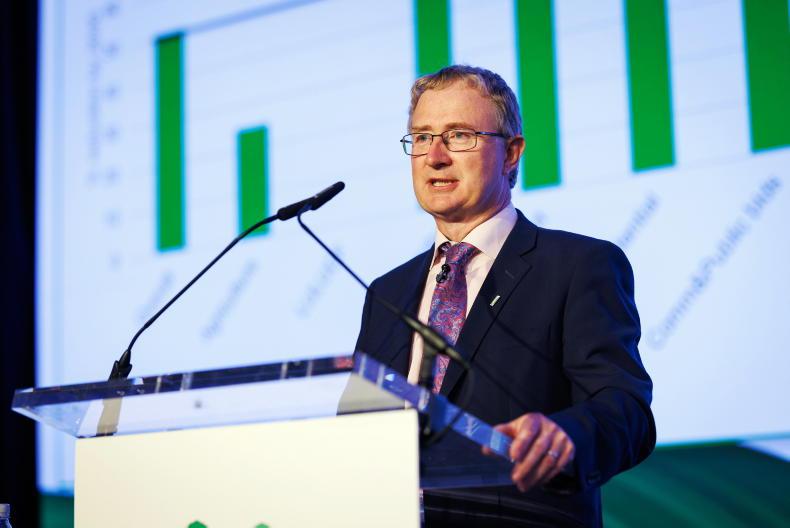
Teagasc director Professor Frank O’Mara said that the move would individualise sustainability advice and help farmers understand the changes they should make to meet legally-binding climate targets.
“It’s one thing getting a group of farmers coming to events and distributing materials to them, but you need to sit down at their table or go to their field and say: ‘Look, this is what you can do’,” Prof O’Mara said.
Technology adoption trajectory
The dedicated advisory programme is set to give farmers an indication of their farm’s emissions baseline and tell them the “four or five most important things” to reduce emissions.
O’Mara spoke at the Agricultural Science Association’s (ASA) conference on Thursday, where he also commented on the provisional indications of the direction of travel in the sustainability metrics of the 2021 national farm survey (NFS).
I think we see very positive trends emerging in terms of adoption rates of those technologies
These provisional results show “very positive trends” for the sector, as an increasing number of farmers are adopting sustainable practices and technologies, O’Mara continued.
“I think we see very positive trends emerging in terms of adoption rates of those technologies,” he stated, also recognising that the increase was coming from a low starting point.
However, a note of caution was issued that further analysis of the results would be needed to draw definitive conclusions.
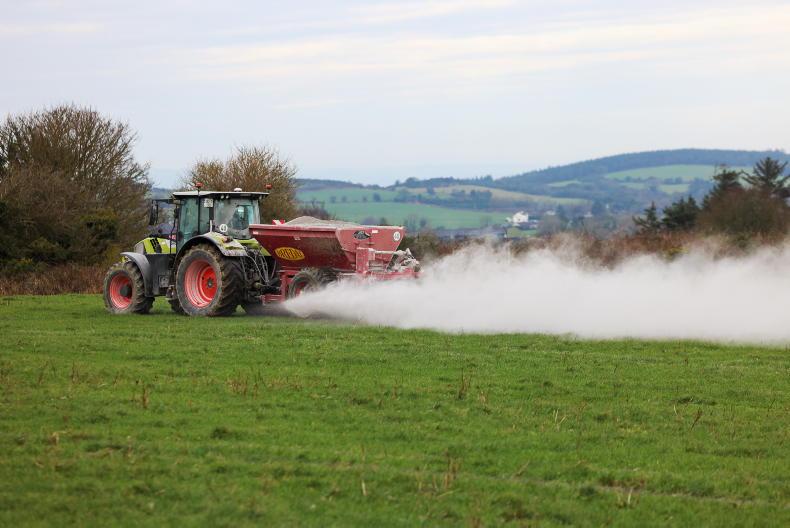
The provisional NFS results point towards a higher farmer uptake of liming, low-emissions slurry spreading (LESS) and the use of protected urea.
Specialist
They also suggest that approximately 80% of specialist dairy farmers are using LESS, while around 40% are spreading lime.
The relative proportion of drystock farmers adopting these technologies is lower. Beef farmers are incorporating clover into their swards at one-third the rate seen in the dairy sector.
Department of Agriculture figures suggest that the volume of protected urea sold between 1 October 2021 and 30 June this year is up 47% on the equivalent period the year previous.
The product now represents 16% of all straight nitrogen used across the country, O’Mara pointed out.
“Again, still low but very encouraging in terms of trajectory,” the Teagasc director said.


SHARING OPTIONS