




What is the media's role in telling the story of food and farming in Ireland?
Climate change cannot be denied or even downplayed, and yet nuance, effective and clear communication and telling the full, complex story is something every journalist needs to consider when approaching the topic.
Are we promoting enough good news stories when it comes to food production, agriculture and climate change? How can food science, for example, help us navigate our uncertain future?
These are some of the things I think about every day when researching food, climate and political articles for Irish Country Living and they're also some of the ideas and topics which were covered in the recent annual Food Science and Technology Conference, hosted by University College Cork (UCC) and the Institute of Food Science and Technology of Ireland (IFSTI).
Food Science and Technology Conference
The conference was held at UCC on 6 and 7 December and focused on providing opportunities for up and coming scientists to present their research. You rarely see the opportunity for newer researchers to present their learnings, so the conference is unique in this regard.
The title of the conference was ‘Frontiers in Agri-Food Science: Addressing the Problems of Today for a Brighter Tomorrow’, and the timely focus was on sustainable food production, advances in food chemistry and technology, food processing, and technological innovations, food safety and quality, nutrition and healthy ingredients, and food business and marketing.
This year marks the 50th anniversary of the conference, which has been fundamental to developing future talent in food and beverage science in Ireland.
Can food science help us reach our climate goals?
Conferences and gatherings like these rarely attract much media attention, but can be the best place to learn about new approaches, research and what the future of food and agriculture in Ireland might look like.
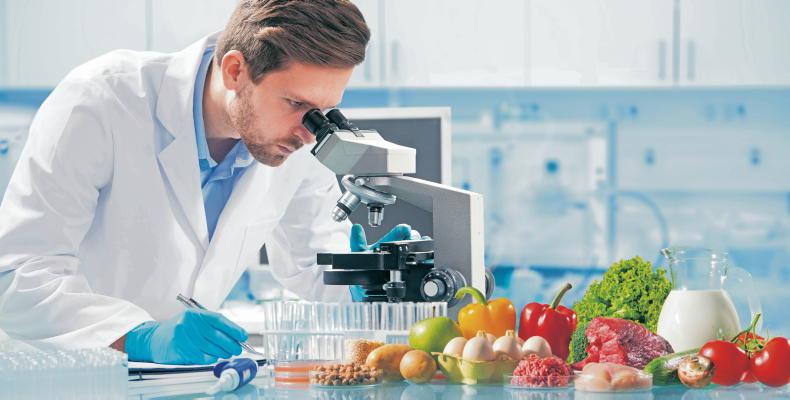
As within agricultural science, progress is being made within the food science realm, which will hopefully make our food systems more sustainable as we race to reach our climate targets.
Plant-based protein
Earlier this year, Irish Country Living spoke with agricultural scientists who are currently working to ascertain which types of protein-rich crops might be grown in Ireland in the future, and they are working with food scientists to also develop a nutritionally dense plant-based protein product.
Palm oil
It was also recently announced that British researchers are close to creating an in-lab alternative to palm oil.
In 2021, Irish Country Living reported that certified 'sustainable' palm oils have not been proven to be fully sustainable and illegal palm plantations in the global south continue to clearcut rainforest; endangering animals and having an ill effect on the biodiversity of these regions.
On 5 December, EU-Startups.com reported that UK foodtech start-up Clean Food Group had received backing to develop the palm oil alternative.
Until now, lab-based palm oil alternatives were not considered a realistic development. Clean Food Group claims its alternative is scalable, accessible and sustainable. Of course, only time will tell if it will be successful.
Seaweed
We are seeing progress in seaweed additives and alternatives, such as making plastic-free alternatives to everyday items and continuing with the development of methane reduction in cows.
Loliware, an American start-up, has created a seaweed-made drinking straw alternative which is not just compostable, but is full of beneficial carbon once it breaks down, thanks to its seaweed components.
American media company CNBC reported in 2022 that food businesses in the States are purchasing these straws as opposed to paper ones, which become soggy too quickly.
More room for research
Meanwhile, closer to home, Irish Farmers Journal's Stephen Robb reported that a new €4.8m agritech innovation and veterinary research hub will be developed at University College Dublin (UCD) at their Lyons Farm site in Co Kildare.
The hub is being funded by Enterprise Ireland and will combine UCD's AgTechUCD Innovation Centre and their Bimeda Herd Health Hub.


SHARING OPTIONS