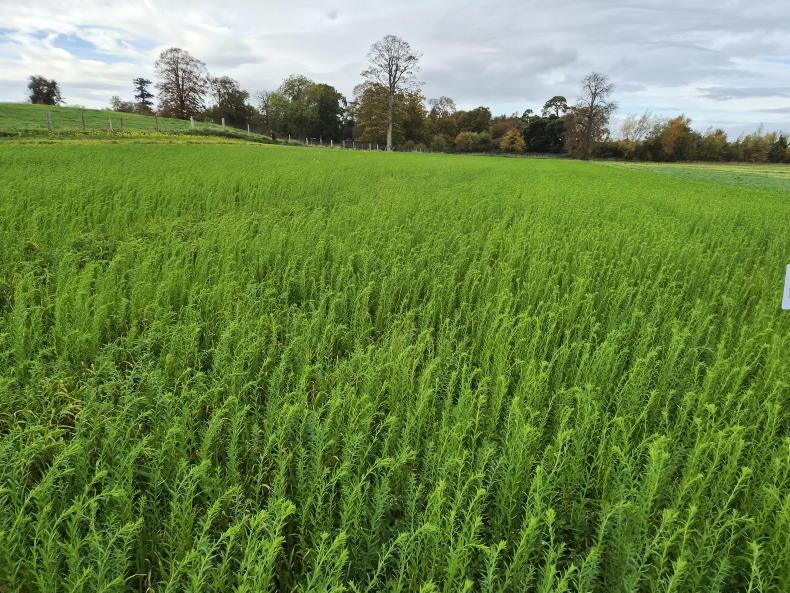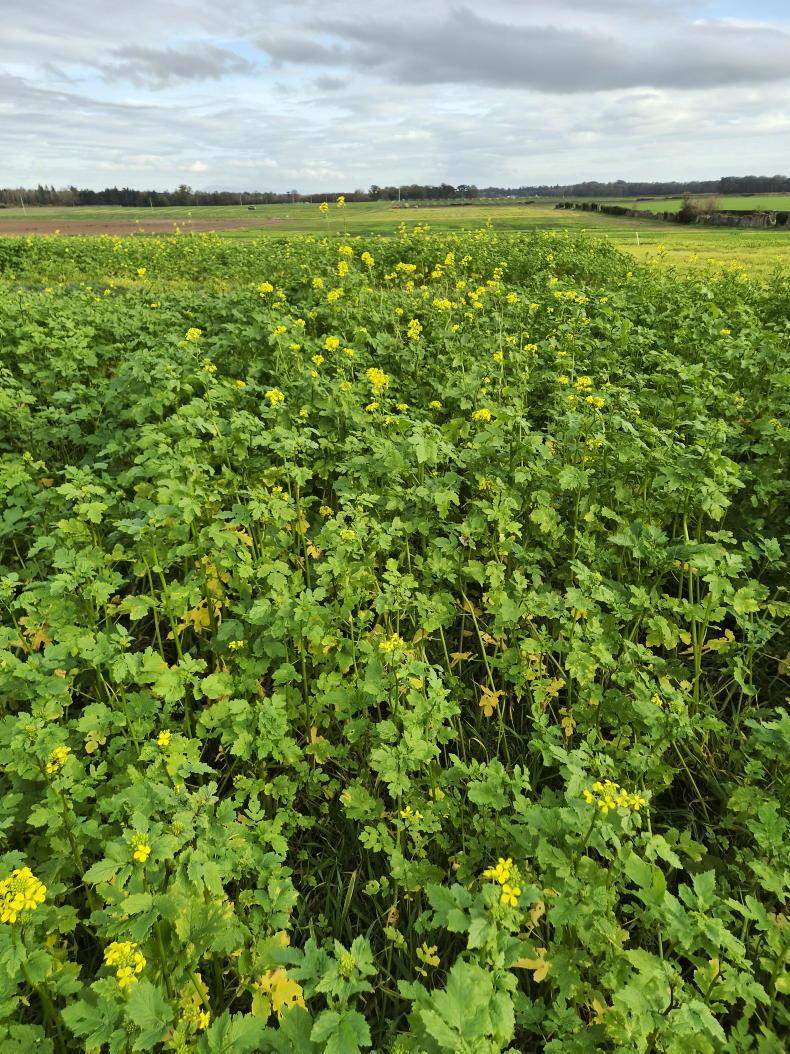
The inclusion of legumes in cover crop mixes can have big benefits in providing nitrogen to the cover crop and the following crop. However, with this comes a risk that the nitrogen will be leached from the soil and cause issues in our waterways.
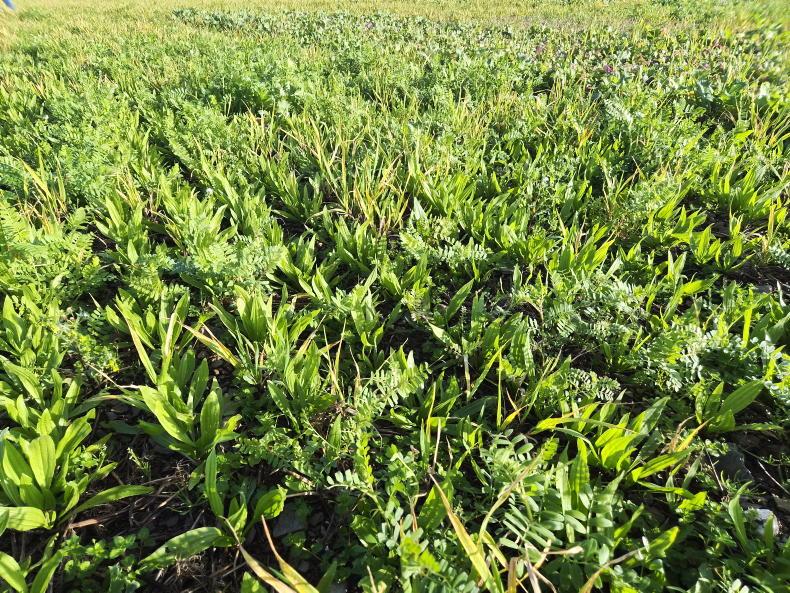
Teagasc researcher Bridget Lynch is carrying out trials in this area to see whether plantain could be used to hold some of the nitrogen produced by the legumes in the soil until the following crop is planted.
Plantain is commonly found in multi-species sward mixtures and is known to have biological nitrification inhibition characteristics, which can be useful in this regard.
Phacelia is being replaced with plantain in a mixture with vetch to investigate this, but it is unknown whether the plantain is in the ground for long enough as part of a cover crop for its inhibiting characteristics to take effect.
However, preliminary one-year results from this trial, replicated in the free-draining soils of Castledockrell and the moderately-drained soils of Johnstown Castle, both in Co Wexford, indicate that plantain may not be needed at all.
With legumes only taking up a proportion of a cover crop mix and growing during the autumn and winter months, no additional nitrogen losses are being seen from the treatments that include vetch.
“I’m not too sure it’s a great threat,” Bridget said.
“When we look at the concentrations from what we recorded last year, there wasn’t any significant difference in the vetch or non-vetch sown treatments.” Bridget also explained that the legume plants themselves will contain nitrogen, which can carry over to the following crop and any additional nitrogen produced may be used by the other species in the cover crop, reducing the amount that could be lost through leaching. More data is needed to confirm these findings, and it will continue to be collected over the winter months.