



With protein crops set to occupy a bigger footprint in our tillage area, it is important that growers make the best of them. As well as attracting a production support premium, protein crops (or legumes or pulses) also bring the benefit of producing their own nitrogen and leaving residual nitrogen in the soil for the following crop.
This is not a simple or automatic process. This article focuses on the process of enabling legumes to be better producers of nitrogen.
This year is the United Nations International Year of Pulses. Pulses, or grain legumes, include a range of crops including beans, peas, chickpeas, lupins and lentils. As well as producing their own nitrogen, pulse grains tend to be high in protein, fibre and micronutrients. But it remains a challenge to secure high yields on a regular basis, even from the best-suited crops.
There are also market concerns associated with beans which cannot be ignored by those planting the crop. Many merchants are concerned that they will still have 2015 beans in store for the 2016 harvest and that price will have to reflect this to encourage utilisation.
A few weeks ago, I had the opportunity to chat to a man who has spent much of his working life involved with pulses.
Dr Bruce Knight began his career as a researcher in Rothamsted, Hertfordshire, England, where he initially examined population change in Rhizobium caused by agricultural practice and pollution. Rhizobium is a soil-living bacteria which enables pulse crops to fix atmospheric nitrogen.
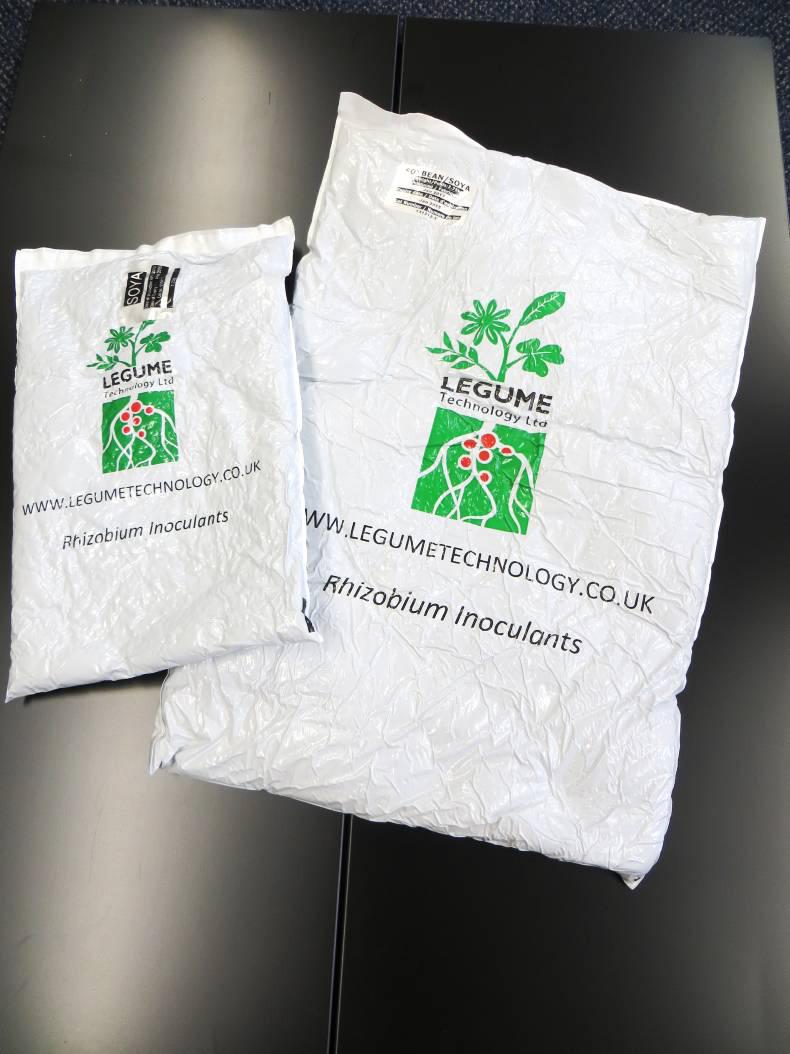
He since moved from there to create his own hi-tech company, Legume Technology Ltd, which produces rhizobium cultures used to treat legume seeds before planting. Rhizobium bacteria are critical to inoculate legume plant roots to produce nodules which fix nitrogen from the air and make it available to plants roots.
However, if there are none of these bacteria in the soil, then nodulation cannot happen. While the natural population in the soil may be relatively low, it is highly unlikely that there would be no rhizobium present.
But the lower the population, the longer it may take for a growing root tip to come into contact with a rhizobium bacteria to begin the nodulation process.
Bacteria populations
It is important to understand some simple things about bacteria in soil. Bacteria are single-cell entities that just exist in the soil and they multiply much more rapidly when conditions occur that suit specific ones.
But they are quite immobile and do not tend to move through the soil, like the take-all fungus does. Also, nodulation can only happen when the meristematic tissue, or growing point, of a legume root hair comes in contact with the bacteria.
Populations of bacteria in the soil are heavily affected by conditions which are either favourable or unfavourable for their growth and multiplication.
So when a legume (any crop) is present, certain bacterial species are likely to thrive, while others may be suppressed as part of that same process. You could say that soil populations are on a seesaw and when one goes up, another is likely to fall. That is one of the ways that rotation affects our soils.
It is easy to understand that the higher the population of rhizobium in the soil, the greater the chance that root-growing points will come into contact with the bacteria to enable nodulation to take place.
It is also easy to understand that the soil population is likely to be higher when other legumes were present in the recent past, and vice versa.
It is possible to test soil for the presence of this population of bacteria. This is a broadly similar process to taking a soil sample – a standard W-shaped walk through a field taking sub-samples.
However, Bruce questioned its usefulness because the natural occurrence of bacteria populations is highly variable in the soil. So you can get one patch with a lot and another patch with none – the consequence does not result in 50% of the population because some areas might not get any nodulation.
It is not uncommon to see variable growth in a crop of legumes with good and poor patches evident. This could be related to nodulation and nitrogen fixation, with the poor growth areas having a low bacteria population. But other standard husbandry factors could also apply.
Early nodulation is important to drive early growth to maximise yield potential. While any one of a number of factors can affect growth potential, especially early in the season, many of the others such as P, K and pH can be looked after separately, but the nitrogen is down to the process of fixation.
It is not uncommon to have a legume crop, and especially a bean crop, appearing to just sit there once it hits the three- to four-leaf stage. Could this be nitrogen deficiency due to lack of nodulation and fixation? Some farmers have been applying nitrogen to legumes to help overcome this hiccup, but this can be counterproductive in other ways.
Asked about the factors that help to depress rhizobium populations, Bruce said that there are many. Obviously, the absence of a suitable host plant or crop in the recent past is an important factor as populations will fall over time. The population will stabilise at some point, but there is no guarantee that this will be uniform within a field and hence his concerns.
The soil itself can also affect population levels. A light sandy soil will tend to have a lower population compared with a heavier soil, where beans in particular tend to be grown.
Low soil pH has a negative effect, while higher pH is favourable. Lower soil organic matter level is another negative factor, while higher or active organic matter inclusion is positive for population.
Basically anything that is negative for biomass is negative for rhizobium populations and vice versa.
Bruce said that the benefits of inoculants on some of the very worn soils in the US can be dramatic. In fields where inoculant application is done by injection or granule application, a blocked row can be very visible and remain evident for some time. This indicates that it can take a long time before roots of that plant get access to an inoculum source.
It is important to remember that inoculation can only take place at the growing tip of a root and that once this has passed, then that opportunity has passed.
Seed inoculants
Early nodulation is important to support growth so that the plant is not short of nitrogen at the early stages when yield potential is being generated.
Bruce argues that the best way to ensure this inoculation is to have the seeds treated with an inoculant containing the rhizobium bacteria. This is not something that is particularly widespread in Europe, but he pointed out that over 60% of the soyabean area in the US is treated with inoculant. And this is in a situation where the legume is being grown every second year.
In this scenario, inoculants must be worth examining. Some Irish growers had a proportion of their winter bean crop treated last backend, but Bruce said that he would not normally expect to see a benefit on a winter crop. This is because the crop is planted late into soil that is getting colder and it is common that nodulation would not take place in the autumn.
However, some of these treated crops are showing nodules, which are on the main root and located very close to the seed where the inoculum was placed during dressing.
Early nodulation is important and the use of a seed dressing helps ensure that it is the first root produced that is inoculated. This then helps to drive subsequent plant root growth into soil where other nutrients and bacteria may be present to continue the growth process.
“There are good reasons why inoculants had a bad name historically,” Bruce stated. Lack of hygiene and quality control in the past meant that many products had a poor shelf life and indeed may have been technically dead before application.
Successful inoculation depends on having a pure sample of rhizobium bacteria only, as anything else can or will be detrimental.
Bruce explained that the production process used by Legume Technology is of a medical standard for hygiene. This increases the shelf life of the inoculant, which, he says, is over two years for his product.
He told me that his product is carried in a sterilised peat medium to help with the dressing process and there is no need for refrigeration. And to preserve its integrity, the dressing process is actually done by the farmer at the point of planting. It is easy to do in the drill hopper. This leaves minimum chance that the rhizobium can be contaminated or die.
Bruce said that successful inoculation is a numbers game. The application rate for Legume Technology’s inoculant is 4g/kg of seed and there are two billion bacteria per gramme in the formulation. This then applies a number of millions of rhizobium bacteria per seed.
The nodulation process
Understanding the process of nodulation is important. Initially, it depends on the presence of rhizobia bacteria beside the meristematic or growing point of a root tip. When this happens, the root skin or epidermis softens in that immediate area to enable the bacteria to enter the root. So the opportunity to produce a nodule is short-lived.
After the bacteria enters the plant root, it remains just beneath the skin and then multiplies in the intercellular spaces and forms a nodule, but it never enters the plant cells, as this could result in cell death.
The process of nitrogen fixation is a definite symbiosis – a win-win situation for both the bacteria and the plant. The bacteria can multiply and thrive and the plant receives nitrogen from the process when it is needed for growth.
As for everything else in life, multiplication and reproduction is essential for bacteria. However, in the natural rhizobium population, a mutation can occur which can leave the bacteria with the ability to create nodules. However, some of these nodules do not have the capacity to produce nitrogen. So it is sometimes possible to have nodules and still have a hungry plant.
Bruce pointed out that a nodule producing nitrogen will show a visible red colouration in its centre. This occurs as a result of an essential process which reduces the oxygen concentration to enable the enzymes to fix the atmospheric nitrogen.
Bruce explained that a proportion of the rhizobium population can lose a little piece of DNA coding which affects its ability to fix nitrogen. This is responsible for decreasing the oxygen concentration in the nodule, which is essential for nitrogen fixation.
This little piece of DNA coding behaves in a similar way to haemoglobin in blood, with the result that an active functioning nodule will be a red colour in the centre. If this DNA coding is not present, nitrogen fixation will not occur.
Bruce said that this is an important characteristic to judge functioning nodules. He also said that rhizobia which do not have this DNA coding can multiply more quickly and take over a population.
This is another reason to consider inoculation because it leaves one unsure of what a population will do until the beans are growing.
Research under way
“We are only now beginning to look at the bean and pea market in this part of the world,” Bruce said. “Up to now, our main concentration was on the soyabean market. Now we are in a position to look again at these crops. We are conducting research to help evaluate these inoculants for this environment.
“We are just beginning to evaluate these products in Ireland, with trials in Oak Park with Teagasc. We also have a number of Irish growers using the product this year. So far, we are surprised to see such benefit on winter-sown crops in terms of visible nodule formation.”
Researchers at the James Hutton Institute in Scotland have been selecting and examining different rhizobium strains for use on pulses for the past six years.
Some of these products were used in commercial fields last year and one field in Jedburgh recorded a 1t/ha yield advantage over adjacent non-inoculated fields, which were said to be largely uniform.
These researchers found that inoculated crops can fix up to 95% of their N requirements from the air. And these same field crops also produced consistently high yields of over 6t/ha and up to 8t/ha.
Before this, a series of pot-based trials using soil found that rhizobium inoculation always produced a yield increase compared with non-inoculated plants and this increase in seed yield ranged from 20% to 36%, depending on the specific rhizobium isolate applied.


SHARING OPTIONS