Pesticide resistance is a very serious issue for farmers and the pace of occurrence appears to be accelerating. The decline in new actives coming to market, coupled with the loss of old ones, add to this challenge. Now there is little to protect the few remaining actives, especially for septoria.
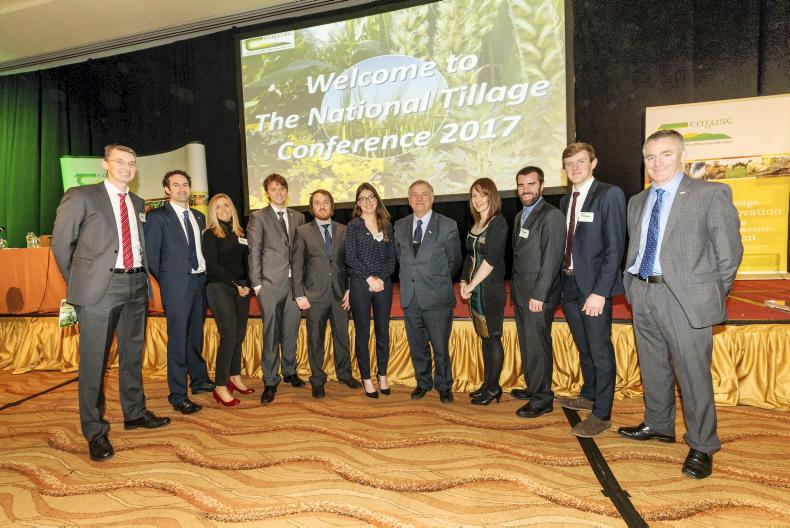
At the conference, Steven Kildea gave a summary of the resistance issues in the different diseases.
In recent years septoria has posed the greatest challenge to fungicides. Triazoles have been weakening for some time and the strobilurins succumbed in the early 2000s. And now a small proportion of the septoria population has shown resistance to the SDHIs. However, this is still less than 1% of the population and it does not appear to have increased in the past year.
Microdochium nivale is now showing widespread resistance to the QoI fungicides – the strobilurins. There is also a level of resistance in rhyncho to the QoIs but this is not thought to be widespread. There are differences in the azole population with regard to their rhyncho control ability. Ramularia is resistant to azoles and SDHIs in Europe and it is also resistant to the QoIs in Ireland.
With regard to net blotch, Steven said that there is resistance to the strobilurins and the SDHIs in Ireland. However, the latter involves moderate SDHI resistance levels and the frequency is low.
While we still have control capability for all diseases, the continuing trend towards resistance is worrying. Steven reminded us that every time we use a fungicide we select for types that are less well controlled by that active or mixture – fungicide treatment equals selection. So, it it’s not necessary don’t use it.
Steven reported that recent research supports a view that higher rates of products increase selection pressure. So the objective should always be to use the lowest dose required to do the job and this can vary with variety.
Use different modes of action helps to slow resistance development by reducing selection pressure.
In summary, anything a grower can do to reduce reliance on fungicides also helps to reduce resistance selection.
Barley fungicide rates
Two of the major findings from the recent fungicide work on barley related to rate and timing. With regard to rates, Liz Glynn concluded that the optimum rate for a combination of actives on barley, winter or spring, is between one-quarter and one-third the dose of each active in a mix. This research had similar rate findings for both winter and spring barley.
A series of trials also looked at optimum timing for fungicide application on winter and spring barley. On winter barley the two most effective timings were GS31/32, followed by GS39/45. Later applications were negative for yield. However, in some situations a spray before GS30 proved worthwhile where early disease was present.
Where a third spray is needed, Liz recommended the same total spend of fungicide but spread over three rather than two applications.
The optimum timings on spring barley were mid-late tillering and GS39/49. Waiting for the ears to emerge fully (GS59) could be too late. Another trial that looked at application rate across a number of winter barely varieties showed that half rates of a Proline plus Jenton mix proved to be optimum, or above optimum, across a number of different varieties. Liz stated that this optimum rate might be higher if disease pressure was higher.
Another set of spring barley trials examined fungicide spend between €40 and €100/ha. While all treatments yielded significantly better than the untreated, there was generally no significant yield benefit from spends above €40/ha.
A trial on winter barley examined the effect of a particular blotch on yield. This blotch sits on the centre vein of the leaf, is broadly oval in shape and is surrounded by a yellow margin. Different fungicides were examined and Modem was found to give the most effective control. In general, yield was higher where the level of blotching was lower. The cause of this blotch has not yet been confirmed but septoria nodorum is suspected.
Assessing variety characteristics
The plant is the engine for grain production and variety characteristics, as per the recommended lists, are supposed to inform the grower. Joe Lynch of Teagasc spoke at the conference about research that asked if characteristics on the recommended list:
Consistently differ across sites and seasons?Have different optimum rates of a corresponding input? Differ in their risk of margin loss in challenging years? The trials found that septoria rating reflected the variety performance in untreated plots and so the rating had a value. However, the trials showed that a variety with good resistance needed a higher fungicide application rate than a variety with only moderate resistance.
These experiments posed a question as to the difference between resistance and tolerance. This work found that better resistance can also mean a lower tolerance to disease when it occurs, resulting in higher optimum rates for its control. Only in the case of very high variety resistance level for septoria could fungicide input be reduced.
Joe concluded that variety septoria resistance rating proved useful from site to site and year to year but that it was not a good indicator of the required fungicide dosage.
With regard to rhyncho resistance ratings, this research concluded that the rated values were of little or no benefit to growers. This is thought to be mainly because all recommended varieties have a good level of resistance to begin with.
Other traits were also examined across sites and years and these too varied in their dependability.
Joe concluded that untreated yields can be a very useful measure of the risk associated with a variety.
In a busy concluding session, a number of researchers presented short papers outlining current Teagasc research.
Resistant grass weeds
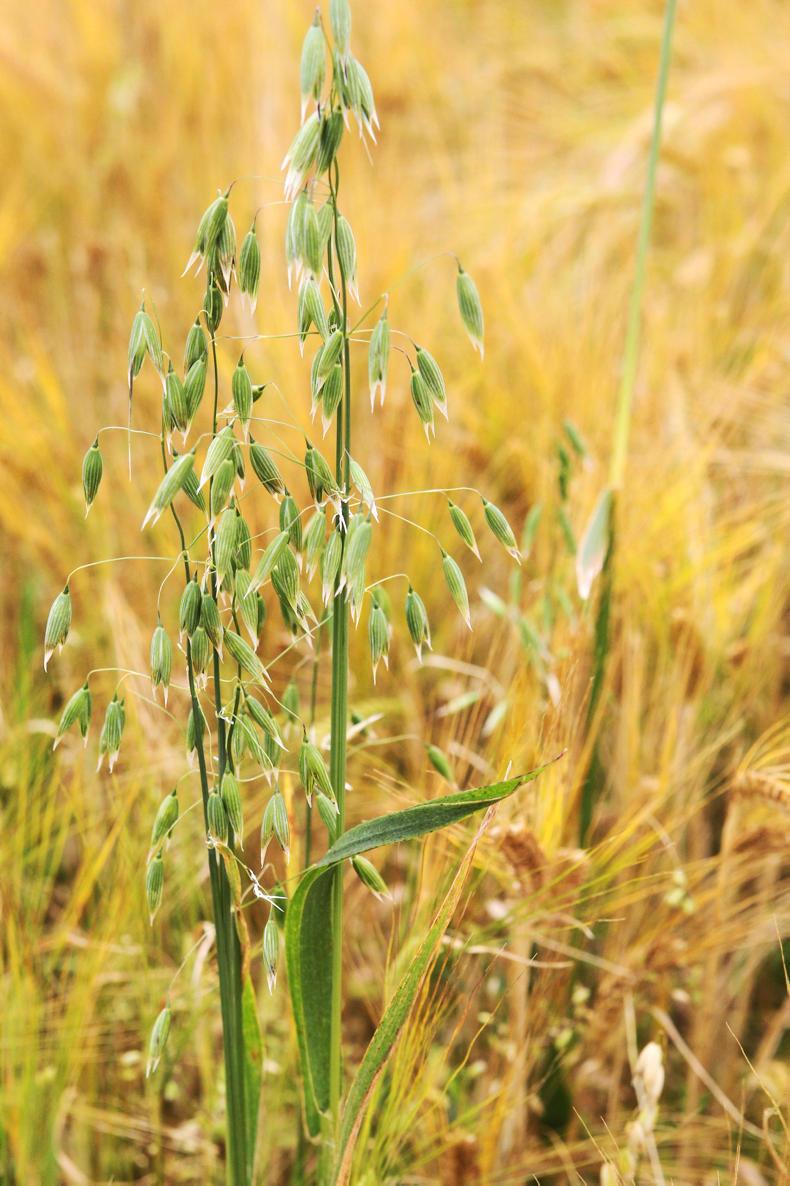
Ronan Byrne, working on herbicide resistance in grassweeds, confirmed that we do have herbicide resistance in wild oats and blackgrass. He has tested samples using a member of the DEN, DIM, FOP and SU families. Some but not all samples showed resistance to one or more families.
He asked that growers with concerns over grassweed herbicide resistance to send him a seed sample from a single head to be evaluated at Oak Park.
Aphid research
Given the increasing problems with aphid control and BYDV infection, the addition of entomologist Louise McNamara to Teagasc staff is very welcome. Louise gave a quick review of past and recent aphid research and reminded us of the presence of the kdr pyrethroid resistance gene.
While resistance is bad news, Louise said that aphids carrying this gene tend to be compromised in other ways. The suggestion is that these aphids may have lost their natural alarm system for predators, making them much easier prey for natural control agents.
General control recommendations suggest no benefit from aphicides on March-sown crops and a single insecticide at GS14 for April-sown, or later. Louise warned that these guidelines may not fit high-pressure situations.
Row width and seed rate for rape
Roisin Byrne is working on planting systems for oilseed rape. Trials to date have found little yield difference with row spacings from 125mm to 750mm (5-30in). Establishment systems, such as ploughing, min-till and strip-till are also being examined.
Understanding variety resistance
Ger Hehir talked about the challenge of understanding the genetic basis of variety septoria resistance. Actual disease level is very much related to growing conditions, so the same varieties grown in different locations can have different disease levels.
Detailed examination of the development pattern of septoria in different varieties showed that genetic resistance appeares to prolong the latent phase and thus slow disease development. This was most obvious in the case of Stigg (high resistance) which had a latent period of 58 days while this was only 41 days for the more susceptible variety, Gallant.
Genome editing
New biotechnology tools continue to be developed which provide a means of altering the expression, or not, of a single gene.
Ewen Mullins explained that conventional breeding combines the individual genes and traits of two parents to give random offspring that may or may not contain the desired traits. Modern biotech tools can now target a specific gene – either desirable or undesirable – to alter it.
This is called gene editing and is done using proteins (termed CRISPR/Cas) to alter a specific target site. Ewen said that this acts as a type of molecular scissors to snip the genetic code at a predefined location to bring about a specific effect.
Factors affecting eyespot
Eyespot remains a potentially serious disease of cereals in our climate. This stem base disease is caused by two different fungi to produce either the W or R types. Henry Creissen reminded us that risk assessment is used to guide treatment at GS31 and that this assesses factors like cultivation technique, previous crop, sowing date, soil type, rainfall level etc.
Asking if these criteria are reliable for our climate, Henry sampled many Irish crops. His survey work concluded that rotation or previous crop was the only factor that affected eyespot level. Variety could also have an impact but only ones with high resistance levels, eg Revelation.
Read more
Two- and three-crop rule must be reviewed for new CAP - grain growers
Preventing bean problems using seed and rotation
Pesticide resistance is a very serious issue for farmers and the pace of occurrence appears to be accelerating. The decline in new actives coming to market, coupled with the loss of old ones, add to this challenge. Now there is little to protect the few remaining actives, especially for septoria.
At the conference, Steven Kildea gave a summary of the resistance issues in the different diseases.
In recent years septoria has posed the greatest challenge to fungicides. Triazoles have been weakening for some time and the strobilurins succumbed in the early 2000s. And now a small proportion of the septoria population has shown resistance to the SDHIs. However, this is still less than 1% of the population and it does not appear to have increased in the past year.
Microdochium nivale is now showing widespread resistance to the QoI fungicides – the strobilurins. There is also a level of resistance in rhyncho to the QoIs but this is not thought to be widespread. There are differences in the azole population with regard to their rhyncho control ability. Ramularia is resistant to azoles and SDHIs in Europe and it is also resistant to the QoIs in Ireland.
With regard to net blotch, Steven said that there is resistance to the strobilurins and the SDHIs in Ireland. However, the latter involves moderate SDHI resistance levels and the frequency is low.
While we still have control capability for all diseases, the continuing trend towards resistance is worrying. Steven reminded us that every time we use a fungicide we select for types that are less well controlled by that active or mixture – fungicide treatment equals selection. So, it it’s not necessary don’t use it.
Steven reported that recent research supports a view that higher rates of products increase selection pressure. So the objective should always be to use the lowest dose required to do the job and this can vary with variety.
Use different modes of action helps to slow resistance development by reducing selection pressure.
In summary, anything a grower can do to reduce reliance on fungicides also helps to reduce resistance selection.
Barley fungicide rates
Two of the major findings from the recent fungicide work on barley related to rate and timing. With regard to rates, Liz Glynn concluded that the optimum rate for a combination of actives on barley, winter or spring, is between one-quarter and one-third the dose of each active in a mix. This research had similar rate findings for both winter and spring barley.
A series of trials also looked at optimum timing for fungicide application on winter and spring barley. On winter barley the two most effective timings were GS31/32, followed by GS39/45. Later applications were negative for yield. However, in some situations a spray before GS30 proved worthwhile where early disease was present.
Where a third spray is needed, Liz recommended the same total spend of fungicide but spread over three rather than two applications.
The optimum timings on spring barley were mid-late tillering and GS39/49. Waiting for the ears to emerge fully (GS59) could be too late. Another trial that looked at application rate across a number of winter barely varieties showed that half rates of a Proline plus Jenton mix proved to be optimum, or above optimum, across a number of different varieties. Liz stated that this optimum rate might be higher if disease pressure was higher.
Another set of spring barley trials examined fungicide spend between €40 and €100/ha. While all treatments yielded significantly better than the untreated, there was generally no significant yield benefit from spends above €40/ha.
A trial on winter barley examined the effect of a particular blotch on yield. This blotch sits on the centre vein of the leaf, is broadly oval in shape and is surrounded by a yellow margin. Different fungicides were examined and Modem was found to give the most effective control. In general, yield was higher where the level of blotching was lower. The cause of this blotch has not yet been confirmed but septoria nodorum is suspected.
Assessing variety characteristics
The plant is the engine for grain production and variety characteristics, as per the recommended lists, are supposed to inform the grower. Joe Lynch of Teagasc spoke at the conference about research that asked if characteristics on the recommended list:
Consistently differ across sites and seasons?Have different optimum rates of a corresponding input? Differ in their risk of margin loss in challenging years? The trials found that septoria rating reflected the variety performance in untreated plots and so the rating had a value. However, the trials showed that a variety with good resistance needed a higher fungicide application rate than a variety with only moderate resistance.
These experiments posed a question as to the difference between resistance and tolerance. This work found that better resistance can also mean a lower tolerance to disease when it occurs, resulting in higher optimum rates for its control. Only in the case of very high variety resistance level for septoria could fungicide input be reduced.
Joe concluded that variety septoria resistance rating proved useful from site to site and year to year but that it was not a good indicator of the required fungicide dosage.
With regard to rhyncho resistance ratings, this research concluded that the rated values were of little or no benefit to growers. This is thought to be mainly because all recommended varieties have a good level of resistance to begin with.
Other traits were also examined across sites and years and these too varied in their dependability.
Joe concluded that untreated yields can be a very useful measure of the risk associated with a variety.
In a busy concluding session, a number of researchers presented short papers outlining current Teagasc research.
Resistant grass weeds
Ronan Byrne, working on herbicide resistance in grassweeds, confirmed that we do have herbicide resistance in wild oats and blackgrass. He has tested samples using a member of the DEN, DIM, FOP and SU families. Some but not all samples showed resistance to one or more families.
He asked that growers with concerns over grassweed herbicide resistance to send him a seed sample from a single head to be evaluated at Oak Park.
Aphid research
Given the increasing problems with aphid control and BYDV infection, the addition of entomologist Louise McNamara to Teagasc staff is very welcome. Louise gave a quick review of past and recent aphid research and reminded us of the presence of the kdr pyrethroid resistance gene.
While resistance is bad news, Louise said that aphids carrying this gene tend to be compromised in other ways. The suggestion is that these aphids may have lost their natural alarm system for predators, making them much easier prey for natural control agents.
General control recommendations suggest no benefit from aphicides on March-sown crops and a single insecticide at GS14 for April-sown, or later. Louise warned that these guidelines may not fit high-pressure situations.
Row width and seed rate for rape
Roisin Byrne is working on planting systems for oilseed rape. Trials to date have found little yield difference with row spacings from 125mm to 750mm (5-30in). Establishment systems, such as ploughing, min-till and strip-till are also being examined.
Understanding variety resistance
Ger Hehir talked about the challenge of understanding the genetic basis of variety septoria resistance. Actual disease level is very much related to growing conditions, so the same varieties grown in different locations can have different disease levels.
Detailed examination of the development pattern of septoria in different varieties showed that genetic resistance appeares to prolong the latent phase and thus slow disease development. This was most obvious in the case of Stigg (high resistance) which had a latent period of 58 days while this was only 41 days for the more susceptible variety, Gallant.
Genome editing
New biotechnology tools continue to be developed which provide a means of altering the expression, or not, of a single gene.
Ewen Mullins explained that conventional breeding combines the individual genes and traits of two parents to give random offspring that may or may not contain the desired traits. Modern biotech tools can now target a specific gene – either desirable or undesirable – to alter it.
This is called gene editing and is done using proteins (termed CRISPR/Cas) to alter a specific target site. Ewen said that this acts as a type of molecular scissors to snip the genetic code at a predefined location to bring about a specific effect.
Factors affecting eyespot
Eyespot remains a potentially serious disease of cereals in our climate. This stem base disease is caused by two different fungi to produce either the W or R types. Henry Creissen reminded us that risk assessment is used to guide treatment at GS31 and that this assesses factors like cultivation technique, previous crop, sowing date, soil type, rainfall level etc.
Asking if these criteria are reliable for our climate, Henry sampled many Irish crops. His survey work concluded that rotation or previous crop was the only factor that affected eyespot level. Variety could also have an impact but only ones with high resistance levels, eg Revelation.
Read more
Two- and three-crop rule must be reviewed for new CAP - grain growers
Preventing bean problems using seed and rotation





SHARING OPTIONS