


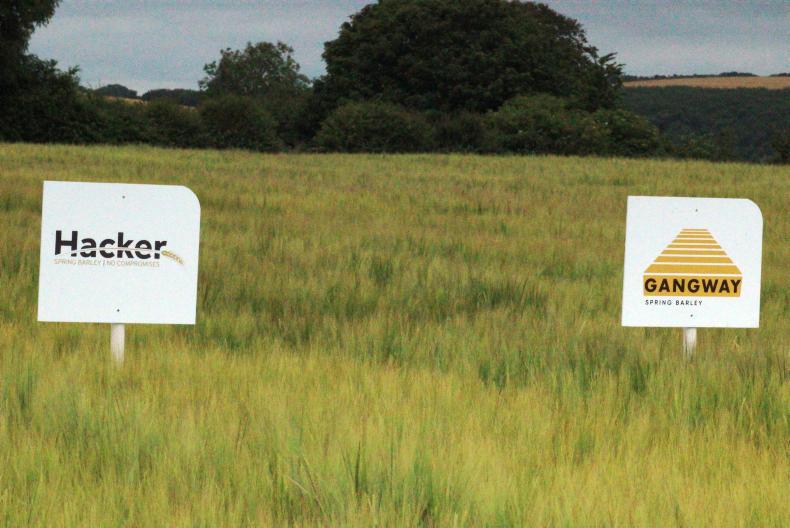


The spring cereal recommended lists for 2018 add on three new barley varieties and drop one barley and one wheat variety. The three new barleys are Gangway, Hacker and Limona.
RGT Planet has been given full recommendation and Sanette is no longer recommended.
The spring oat list has no changes, except that Keely is now fully recommended. And on the spring wheat list, Sparrow has been dropped to leave only two varieties recommended – Quintus and Doubleshot.
The new lists were published by the Department of Agriculture in early January. The recommended lists are important reference guides for growers in terms of variety choice and crop management guidelines.
There are two changes to the malting barley descriptive list where Irina and Overture have been dropped to leave only four varieties – Laureate, Olympus, Propino and RGT Planet.
While yield potential is a very important characteristic for growers, it is important to consider all of a variety’s characteristics. Standing power, brackling and disease resistance all have direct husbandry and cost implications. Maturity differences might also be used to good effect.
Relative variety ratings for the different agronomic characteristics are shown in Table 1. Gangway is now the variety which shows the highest yield potential, followed closely by RGT Planet.
The recommended and new provisionally recommended varieties are listed in Table 1.
The underlying yield of the control varieties is 8.24t/ha, down slightly on the previous list and it probably reflects the removal of the 2015 results from the three-year average.
Grain protein content is listed this year for the first time and it shows that some varieties such as Planet tend to be on the low side, while others such as Propino tend to be higher.
Variety specifics
KWS IRINA: Has big yield potential. Straw is moderately short, with good resistance to lodging and brackling (straw breakdown). Average maturity rating.
Has very good resistance to mildew and net blotch, with moderate resistance to rhyncho and brown rust. Seed size is average to small with highish screenings and low specific weight.
A Conchita x Quench cross from KWS Lochow in Germany. Agent: SeedTech.
MICKLE: Yield is down a point on last year. It has short straw, with good resistance to lodging and brackling. Early maturing, but it is moderately susceptible to mildew and brown rust. It has good resistance to rhyncho, but it is now regarded as being susceptible to net blotch (was rated 7 two years ago).
It has average to small grain size and screenings and good specific weight. A Propino x Snakebite cross from Syngenta Seeds in Britain. Agent: SeedTech.
PAUSTIAN: Good yield potential. Moderately tall straw with moderate resistance to lodging and brackling. Late maturing. Has very good resistance to mildew, good resistance to rhyncho and brown rust and moderate resistance to net blotch.
Average grain size and specific weight with highish screenings. It is a Zeppelin x Propino cross from Sejet in Denmark. Agent: Goldcrop Ltd.
PROPINO: Average yield and up a point on last year. It has quite tall straw and is described as moderately weak, with moderate susceptibility to straw breakdown. Average maturity. Disease ratings have slipped.
Still regarded as moderately resistant to rhyncho, but is moderately susceptible to brown rust and mildew (down a point) and susceptible to net blotch (down a point). It has big grain size, low screenings and average specific weight.
Progeny of a cross between Quench x NFC Tipple from Syngenta Seeds in Britain. Agent: SeedTech.
RGT PLANET: Very high yield potential with moderately tall straw that is moderately susceptible to lodging and straw breakdown. It is later maturing.
It has very good resistance to mildew, good resistance to rhyncho, moderate resistance to brown rust, but it is moderately susceptible to net blotch. Seed size is average, with highish screenings and average specific weight.
From a Tamtam x Concerto cross from RAGT UK. Agent: Goldcrop.
GANGWAY: Very high yield potential with tall straw, but it has good resistance to lodging and straw breakdown.
A later-maturing variety. It appears to have very good resistance to mildew and net blotch and good resistance to brown rust and rhyncho. Grain size is small, with excellent grain quality.
It is a progeny of a Zeppelin x (Natasia x Kathinka) cross from Sejet in Denmark and handled here by Goldcrop.
HACKER: High yield potential. Straw length is about average and it has good resistance to lodging with moderate resistance to brackling. Early maturing.
Has very good resistance to mildew and good resistance to rhyncho, net blotch and brown rust. Grain size is small, but grain quality is excellent. Bred by Secobra in France, it is a Quench x Belgravia cross. Agent: Goldcrop.
LIMONA: Another new variety with high yield potential, tallish straw and good resistance to lodging and brackling. Early maturing.
Very good resistance to mildew and net blotch and good resistance to rhyncho and moderate resistance to brown rust. A German-bred variety from a (Concerto x Milford) x Quench cross at Bruen. Agent: Germinal Ireland.
Details of the varieties deemed best for malting are shown in Table 2. The varieties listed are Laureate, Olympus, Propino and RGT Planet. The latter two are recommended while the first two are specifically for malting.
There were six varieties listed last year, but only four this year – KWS Irina and Overture are no longer listed. Descriptive notes for the two non-recommended varieties follow.
Variety specifics
LAUREATE: This British variety is up a point on yield potential and remains the highest-yielding non-GN variety for malting. It has moderately short straw, which is susceptible to lodging and brackling. Late maturing.
It has very good resistance to mildew and net blotch, with good resistance to rhyncho and brown rust. Seed size is average, but specific weight is on the low side. It is a cross between Sanette x Concerto from Syngenta Seeds. Agent: SeedTech.
OLYMPUS: Also up a point on yield and is also non-GN. It has average straw length which is moderately susceptible to lodging and very susceptible to brackling.
It has very good resistance to mildew and good resistance to net blotch, rhyncho and brown rust. Grain size is very small; it can have high screenings and lowish hectolitre weight. It was bred by Limagrain in Britain from a Genie x LAN 0848 cross. Agent: SeedTech.
The 2018 spring wheat list only contains two varieties – Quintus and RGT Doubleshot. Sparrow has been discontinued. Variety characteristics are shown in Table 3.
Both varieties are regarded as having good milling and baking quality. Relative yield ratings for both varieties are down by four points following the removal of Sparrow.
Variety specifics
QUINTUS: Has very high yield potential. It is from unnamed parents and bred at Wiersum in the Netherlands. It is moderately tall, with moderately weak straw. This is an early maturing awned wheat.
It has very good resistance to yellow rust, moderate resistance to septoria, but it seems to have collapsed against mildew – rated 3 now and 7 two years ago. It is susceptible to sprouting. It has quite big seed size and good specific weight. Agent: Goldcrop.
RGT DOUBLESHOT: A high-yielding French variety from a Josselin x Pasteur cross at RAGT. It has moderately short and moderately weak straw. Average on maturity.
It is moderately resistant to septoria and moderately susceptible to mildew and yellow rust (was a 7 two years ago). It has very small seed size, but very good specific weight. Agent: Goldcrop.
The 2018 spring oat recommended list looks remarkably the same as 2017, with really only two small changes.
Keely has been given full recommendation and its mildew rating has been reduced from a 6 to a 5. Keely and Binary remain the high yielders and Barra continues to look in a different league, at least in trials.
In general, specific weight values are higher this time, but all are good.
In the recent seed trade seminars, Clodagh Whelan from the Department indicated that new varieties such as Benny and Delfin appear to offer ongoing yield improvement, as does Isabel, which also appears to have higher specific weight than Barra.
Details and ratings for the individual varieties are shown in Table 4.
Variety details
BARRA: Still going strong after over 30 years on the recommended list. A Swedish variety from unnamed parents bred by Svalöf Weibull AB.
Uniquely Irish. Straw is moderately short, but susceptible to lodging and straw breakdown. It is very susceptible to mildew and susceptible to crown rust. Seed size is small, but specific weight is very high. Agent: Goldcrop.
BINARY: Very high yield potential and bred from unnamed parents at Weirsum in the Netherlands. Straw is short, but it is moderately susceptible to lodging while being moderately resistant to straw breakdown.
It has good resistance to mildew, but is moderately susceptible to crown rust. It has big seed and good kernel content, but is only moderate on specific weight. Agent: Goldcrop.
HUSKY: High yield potential from a CPBT SO1 x Freddy cross at Nordsaat in Germany. Straw is short and it has good resistance to lodging, but is moderately susceptible to breakdown. It is earlier maturing than the other varieties.
It is moderately resistant to mildew, but is susceptible to crown rust. Seed size is relatively small, but it has good specific weight. Agent: SeedTech.
KEELY: A high-yielding variety with early maturity. This is also German-bred from a (06/114 x Scorpion) cross at Nordsaat.
It has moderately short straw, but with moderate susceptibility to lodging and it is susceptible to straw breakdown. It is moderately resistant to mildew and moderately susceptible to crown rust. It has small seed and very good specific weight. Agent: Goldcrop.



SHARING OPTIONS