Last week the Irish Farmers Journal took part in the Pro Farmer Crop Tour in the US, travelling across the states of South Dakota, Nebraska, Iowa and Minnesota and putting up about 300-350 miles per day, looking at 13 or 14 crops of both corn and soybeans.
The record yields predicted by the US Department of Agriculture (USDA) made sense on inspection in the fields. The USDA has projected a corn yield of 188.8 bushel (bu) per acre (5.14t/ac). Even to the untrained eye on US corn, the big yield potential was obvious.
After a day of sampling, you get to know what crops look like when they are over 200 bu/ac and there were plenty of them. On day four in Minnesota, the average corn yield on the route was 194.08bu/ac (5.28t/ac). Seven of 13 corn samples were over 200bu/ac and it was samples that looked likely to be maize for silage on dairy farms (as opposed to corn for grain) pulling the average down.
At present, the USDA’s yield estimate is based on modelling, while Pro Farmer is based on field data. It should be noted that five of the seven states in the Pro Farmer Crop Tour came in under the USDA estimate, while Minnesota’s yield was on a par with the USDA’s estimate and South Dakota was over the USDA’s estimate. The USDA also attended the tour.

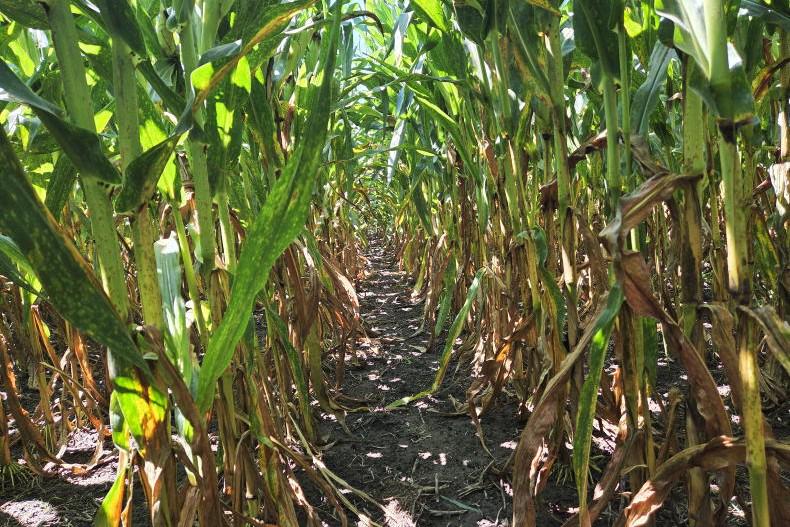
Measuring corn on the Pro Farmer Crop Tour last week.
What do the scouts
measure?
The scouts are farmers, industry and journalists and are given a designated route each day. There might be 12 routes with three scouts in each car. They stop at fields about every 12 miles. At each stop they aim to have a corn and a soybean field side by side.
Scouts go past the headlands, or the end rows as the US farmers call them, and then travel about 30 yards into the crop.
In corn, a 30’ rope is tied along the row of corn and the number of ears are counted along the rope on the rows either side of the rope. On one row, the scouts pull ears number 5, 8 and 11.
The number of rows of corn on each of the three ears are counted and the ears (what are eventually cobs) are measured. The growth stage is also examined, row spacing is recorded and while in the field, scouts look for pests and disease. The estimated yield is then calculated out.
In the soybean field, a 1m stick is placed along a soybean row and the number of plants are counted.
Three random plants are pulled and the number of pods on each plant are counted. The yield is then calculated according to row spacing.
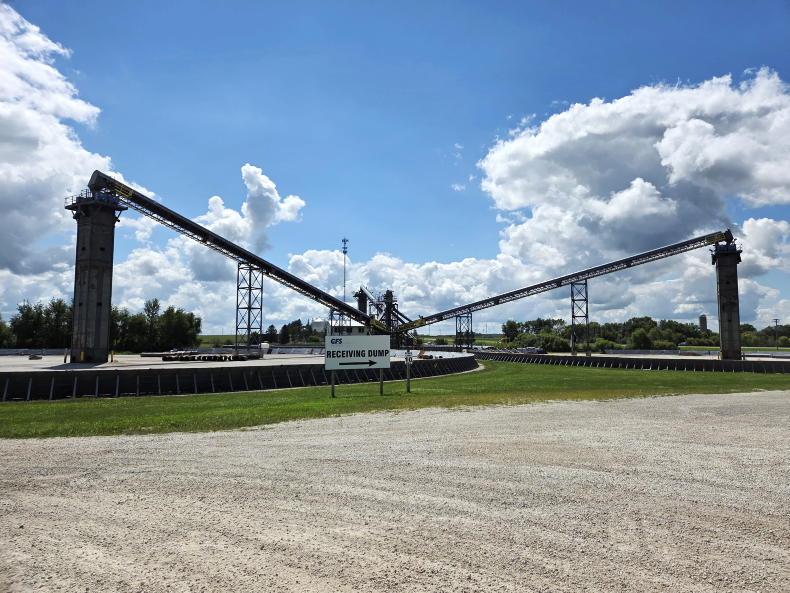
Storage will be short this year in the US due to the big crop. This storage facility allows grain to be tipped into a hopper and then it builds three piles which are covered in plastic for outside storage. (Big enough pic).
What is the Pro Farmer Crop Tour?
This year was the 33rd year of the Pro Farmer Crop Tour where scouts travel across the US mid-west examining corn (maize) and soybeans. Scouts take measurements in the field and at the end of each day calculate an estimated yield for the state they have travelled through that day.
Each year scouts travel different routes across states and examine crops on what are known as the western and eastern legs of the tour. This year the eastern leg visited Illinois, Indiana, Ohio and Iowa, while the western leg visited South Dakota, Nebraska, Iowa and Minnesota. The Irish Farmers Journal attended the western leg of the tour.
Each evening, the results of the tour are presented at farmer meetings and a live broadcast goes out on the Pro Farmer website. Approximately 2,000 people attend these nightly meetings each year. The average grower that attends those meetings has 1,075ac of corn, 835ac of soybeans, an average farm size of 1,930ac and an average gross income of €4,363,623.
At the end of the four-day tour, the results are compiled and adjusted for yields in other states and combined with other predictions to give an average yield estimate for the US corn and soybean crops. The crop tour reaches over 300,000 people online through the Pro Farmer website, videos and social media.

The final night of the Pro Farmer Crop Tour saw about 500 farmers attend a live broadcast in Minnesota on Thursday, 21 August.
Why does the Pro Farmer Crop Tour matter to Ireland?
Irish grain prices are based on what happens around the world. The trade here decides its own prices, but the fluctuations up and down and trends in prices are ultimately decided by world grain markets and what is happening in big producing countries. While we don’t import a lot of corn or soybeans from the US what happens there affects global prices and, in turn, the Irish price.
This year, the USDA predicted a record corn yield in the US of 188.8bu/ac. If this comes to pass, it will break the 2024 record of 179.3bu/ac. The yield, if met, would bring US corn production to 16.7 billion bushels.
At present this looks like it would leave plenty of stocks of corn in the US and at present, as prices are below the cost of production, US farmers are not keen to sell.
They will need to store grain, but won’t have space to store all of their grain, while some still have last year’s crop in storage.
This means that there is a huge amount of corn in the market which can depress prices.
However, as the tour went on last week and reports of southern rust in corn and white mould in soybeans emerged, prices actually went up as this put concern in the market that the record grain yields would not be met and so the market would not be as well supplied.

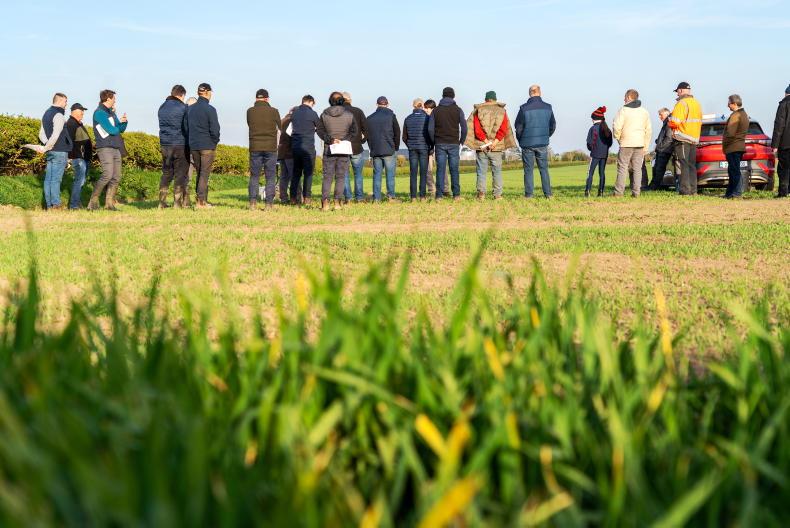
Pro Farmer Crop Tour Iowa.
Similarities to Ireland
The US is a very different farming setup to Ireland. The scale is much bigger. There is less regulation. They can grow genetically modified (GM) crops which help produce bigger yields and use less pesticides, albeit at a higher cost for seeds. The scale is big and the country is vast.
The farmers are friendly and genuine and while their businesses are very different to ours, they face the same problems. The grain price is currently below the cost of production. They are facing into a harvest where the crop has huge potential, but many different things can stop it from reaching that potential. That is similar to our harvest here at home this year. The crop was planted in good conditions, everything was done right, but the dry weather likely took away some yield at the end of the growing season.
However, one thing you notice is that as you drive around the mid-west it is clear that agriculture is at the centre of these communities. The road sides are speckled with machinery dealerships, seed houses, fertiliser depots, grain storage and elevators. Agriculture is held in high regard and while consumers are getting further away from farms, there still seems to be a respect there for US farmers.
Conversions
1 bu/ac = 0.03t/ac.36.74bu/ac = 1t/ac.188.8bu/ac = 5.14t/ac (predicted USDA average corn yield).
Last week the Irish Farmers Journal took part in the Pro Farmer Crop Tour in the US, travelling across the states of South Dakota, Nebraska, Iowa and Minnesota and putting up about 300-350 miles per day, looking at 13 or 14 crops of both corn and soybeans.
The record yields predicted by the US Department of Agriculture (USDA) made sense on inspection in the fields. The USDA has projected a corn yield of 188.8 bushel (bu) per acre (5.14t/ac). Even to the untrained eye on US corn, the big yield potential was obvious.
After a day of sampling, you get to know what crops look like when they are over 200 bu/ac and there were plenty of them. On day four in Minnesota, the average corn yield on the route was 194.08bu/ac (5.28t/ac). Seven of 13 corn samples were over 200bu/ac and it was samples that looked likely to be maize for silage on dairy farms (as opposed to corn for grain) pulling the average down.
At present, the USDA’s yield estimate is based on modelling, while Pro Farmer is based on field data. It should be noted that five of the seven states in the Pro Farmer Crop Tour came in under the USDA estimate, while Minnesota’s yield was on a par with the USDA’s estimate and South Dakota was over the USDA’s estimate. The USDA also attended the tour.
Measuring corn on the Pro Farmer Crop Tour last week.
What do the scouts
measure?
The scouts are farmers, industry and journalists and are given a designated route each day. There might be 12 routes with three scouts in each car. They stop at fields about every 12 miles. At each stop they aim to have a corn and a soybean field side by side.
Scouts go past the headlands, or the end rows as the US farmers call them, and then travel about 30 yards into the crop.
In corn, a 30’ rope is tied along the row of corn and the number of ears are counted along the rope on the rows either side of the rope. On one row, the scouts pull ears number 5, 8 and 11.
The number of rows of corn on each of the three ears are counted and the ears (what are eventually cobs) are measured. The growth stage is also examined, row spacing is recorded and while in the field, scouts look for pests and disease. The estimated yield is then calculated out.
In the soybean field, a 1m stick is placed along a soybean row and the number of plants are counted.
Three random plants are pulled and the number of pods on each plant are counted. The yield is then calculated according to row spacing.
Storage will be short this year in the US due to the big crop. This storage facility allows grain to be tipped into a hopper and then it builds three piles which are covered in plastic for outside storage. (Big enough pic).
What is the Pro Farmer Crop Tour?
This year was the 33rd year of the Pro Farmer Crop Tour where scouts travel across the US mid-west examining corn (maize) and soybeans. Scouts take measurements in the field and at the end of each day calculate an estimated yield for the state they have travelled through that day.
Each year scouts travel different routes across states and examine crops on what are known as the western and eastern legs of the tour. This year the eastern leg visited Illinois, Indiana, Ohio and Iowa, while the western leg visited South Dakota, Nebraska, Iowa and Minnesota. The Irish Farmers Journal attended the western leg of the tour.
Each evening, the results of the tour are presented at farmer meetings and a live broadcast goes out on the Pro Farmer website. Approximately 2,000 people attend these nightly meetings each year. The average grower that attends those meetings has 1,075ac of corn, 835ac of soybeans, an average farm size of 1,930ac and an average gross income of €4,363,623.
At the end of the four-day tour, the results are compiled and adjusted for yields in other states and combined with other predictions to give an average yield estimate for the US corn and soybean crops. The crop tour reaches over 300,000 people online through the Pro Farmer website, videos and social media.
The final night of the Pro Farmer Crop Tour saw about 500 farmers attend a live broadcast in Minnesota on Thursday, 21 August.
Why does the Pro Farmer Crop Tour matter to Ireland?
Irish grain prices are based on what happens around the world. The trade here decides its own prices, but the fluctuations up and down and trends in prices are ultimately decided by world grain markets and what is happening in big producing countries. While we don’t import a lot of corn or soybeans from the US what happens there affects global prices and, in turn, the Irish price.
This year, the USDA predicted a record corn yield in the US of 188.8bu/ac. If this comes to pass, it will break the 2024 record of 179.3bu/ac. The yield, if met, would bring US corn production to 16.7 billion bushels.
At present this looks like it would leave plenty of stocks of corn in the US and at present, as prices are below the cost of production, US farmers are not keen to sell.
They will need to store grain, but won’t have space to store all of their grain, while some still have last year’s crop in storage.
This means that there is a huge amount of corn in the market which can depress prices.
However, as the tour went on last week and reports of southern rust in corn and white mould in soybeans emerged, prices actually went up as this put concern in the market that the record grain yields would not be met and so the market would not be as well supplied.
Pro Farmer Crop Tour Iowa.
Similarities to Ireland
The US is a very different farming setup to Ireland. The scale is much bigger. There is less regulation. They can grow genetically modified (GM) crops which help produce bigger yields and use less pesticides, albeit at a higher cost for seeds. The scale is big and the country is vast.
The farmers are friendly and genuine and while their businesses are very different to ours, they face the same problems. The grain price is currently below the cost of production. They are facing into a harvest where the crop has huge potential, but many different things can stop it from reaching that potential. That is similar to our harvest here at home this year. The crop was planted in good conditions, everything was done right, but the dry weather likely took away some yield at the end of the growing season.
However, one thing you notice is that as you drive around the mid-west it is clear that agriculture is at the centre of these communities. The road sides are speckled with machinery dealerships, seed houses, fertiliser depots, grain storage and elevators. Agriculture is held in high regard and while consumers are getting further away from farms, there still seems to be a respect there for US farmers.
Conversions
1 bu/ac = 0.03t/ac.36.74bu/ac = 1t/ac.188.8bu/ac = 5.14t/ac (predicted USDA average corn yield). 







SHARING OPTIONS