


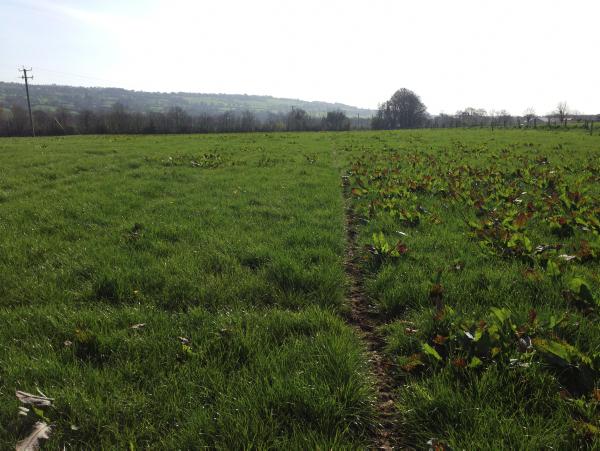
Soil temperatures have been above average, and where moisture was not limiting, new leys have established rapidly and evenly. However, these same conditions are also favourable for weed seeds to germinate.
A good burn-off with glyphosate (Roundup, etc) only takes care of the old sward, perennial weeds and whatever weeds were present above ground. But it is important to remember that there are thousands of weed seeds in the top few inches of your field which have been waiting for this chance to grow following soil disturbance.
These weed seedlings may seem small and inconsequential now but they can take the good out of all your effort in ploughing, levelling, picking stones, etc. Luckily, there are sprays available that will successfully remove these weeds from your reseed and they will have a long lasting effect.
Spray or not?
Considering that a reseed costs about €250/ac to establish, and that the sward will be there for 10 years or more, the decision whether or not to apply a herbicide is critical.
In the vast majority of cases the application of a weed spray a few months after reseeding is the cheapest and most effective spray you can apply to that grass field. This is especially the case where you had docks, creeping thistles, etc, growing in the old grass or if you have clover in your grass mix.
Perennial weeds (docks, creeping thistles, buttercups, dandelions, etc) are programmed by nature to recover from cutting, grazing, hard winters and dry summers. They all develop a big root system to store food until it is needed. This is how they emerge with vigour each spring and outcompete grass, no matter how well it is managed.
So what can you do to tip the scales in your favour? Perennial weeds have an ‘Achilles’ heel’; they are not strong establishers from seed. If the first month after reseeding was a 100m sprint, a charlock or fathen would be over the end line before the dock and creeping thistle had their shoes laced!
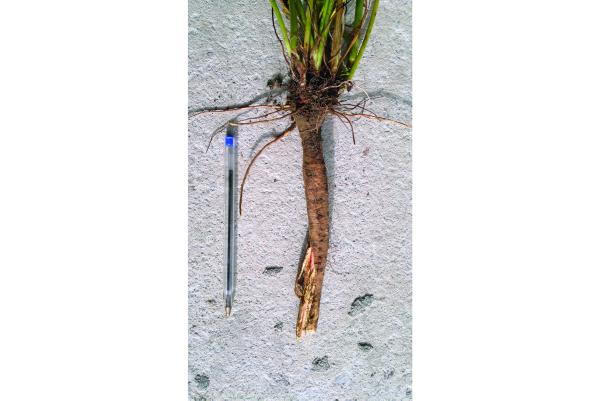
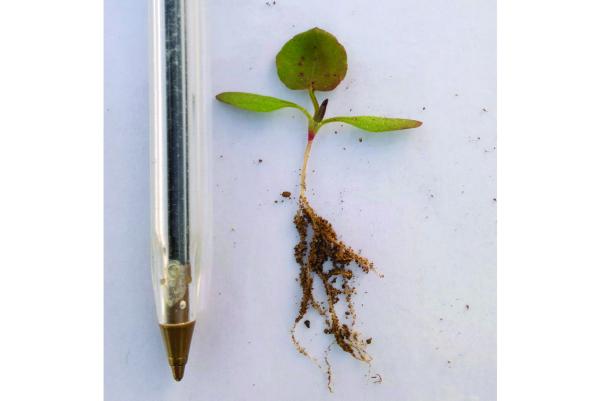
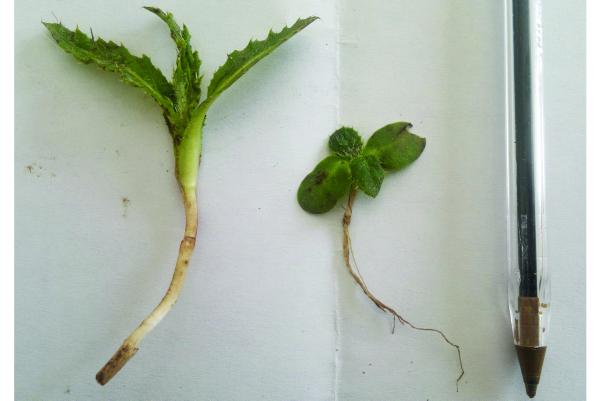
Comsider the root on a seedling creeping thistle with the root system on the mature plant. It is not rocket science to see that you will need a whole lot more chemical to control a mature weed compared with its seedling.
Recent Teagasc dock trials have shown that the effectiveness of a post reseeding spray has lasted four years. The key finding from these trials was that once the docks were successfully removed at seedling stage, the grass took over, dominated the sward and prevented new dock seedlings from establishing for the following four years.
What weeds can I tolerate?
Annual Weeds – charlock, chickweed, fathen, redshank, etc
Low populations of annual weeds will not affect the establishment of the new sward. Where they survive the first grazing, topping or cutting can eliminate them.
High populations of annual weeds (especially charlock and chickweed) can compete with the establishing grass. Chemical control is a good option in this situation as the gaps left after these annual weeds die off in the autumn are ideal places for docks to germinate and grow over the winter. Chickweed is especially problematic and should be controlled in most situations.
Perennial Weeds – docks, dandelions, creeping buttercup, creeping thistle, etc
§Low populations can be tolerated especially in an intensive grazing situation. It is rare for any weed to become problematic in a well managed grazing field. Soil drainage, fertility and grazing management will influence whether a problem occurs in the future. For example, poaching favours the establishment of dandelions and buttercups while high levels of potassium favour docks.
In a silage field or under an extensive grazing system where clover is sown or where these weeds are numerous, my advice is to apply a herbicide to the new ley.
The first point of weed control in a new ley is to have an even, vigorously growing sward. Seedbed preparation, soil fertility and seeding rate are key points to get right.
There has been much research carried out on the competitive effects of grass (and clover) on weeds. A competitive sward will enhance the effect of any herbicide applied and fill in the gaps when the weeds die back. Remember, there are many more weed seeds waiting for the opportunity to grow so it is essential to have your grass and clover covering all the ground.
When to apply herbicides in a new ley
Weeds in new leys are best controlled when they are small (six to eight weeks after reseeding) and actively growing. The herbicide is better absorbed by the weed leaf and works better and faster when the weed is growing strongly.
You can expect very good results from applying any of the herbicides in Table 1 when they are sprayed onto small, actively growing weeds.
Also, follow the product label instructions when applying all plant protection products and remember to keep the appropriate cross compliance records. Use good water rates (200 to 300 l/ha) and ensure your sprayer is working correctly. Worn nozzles can seriously affect the spray pattern and leave weeds unsprayed. Spray when the clover has at least one trifoliate leaf and the grasses have at least two to three leaves.
product choice
A list of the main herbicides is shown in Table 1. The main choice will be governed by whether or not you have clover in your sward. Having clover should not hinder the level of weed control expected as a well-timed clover-safe spray can be very effective.
If there is no clover in the sward the options available are more comprehensive, especially if you have a heavy weed burden. If you have weeds emerging from old roots (e.g. creeping thistle, docks, etc) it will be difficult to achieve good control with a clover-safe spray and you may have to switch to other options.
For more information see www.teagasc.ie/crops/fodder_crops




SHARING OPTIONS