


The purpose of this article is by no means to bash third-level education or deter people from it. Undoubtedly, going to college affords people unique opportunities and some careers simply cannot be pursued without it.
However, with 12%t of first-year students not reaching their second year in Irish universities, it might be time to highlight that a “one size fits all” model of education does not work and start looking at promoting other learning options, such as apprenticeships.
An apprenticeship is effectively a method of learning that incorporates on- and off-the-job training. The process starts with getting a job. The employer then registers the apprentice with their local Education and Training Board (ETB) which, in turn, registers them with Solas. While qualifying, the apprentice goes through alternating blocks of work-based training and classroom learning.
Snob Value
One man who does not mince his words on the topic of apprenticeships is Michael Moriarty, general secretary of Education and Training Boards Ireland (ETBI), the representative body for Ireland’s 16 ETBs. He believes, plain and simple, that we need to get over the “snob value” associated with going to college.
“I have been constantly saying that we will have to get over the snobbery of everyone wanting to go to third-level, where there are huge attrition rates of nearly 15% in some institutions. We have to get over the snob value of seeing entry to third-level as a badge of honour. We want to promote apprenticeships as a comparable learning pathway for young people.”
At present there are 27 apprenticeships available in Ireland, ranging from QQI Level 6 to QQI Level 8. These include traditional apprenticeships such as an electrician, plumber and mechanic, along with new introductions in the area of financial services and also a commis chef.
In recent years, an apprenticeship in international financial services has come on stream and, once completed, a Level 8 higher diploma in financial services analytics is awarded. The lead industry partner for this apprenticeship is Financial Services Ireland, which is a sectoral association within IBEC.
Director of communications at Solas, Nikki Gallagher, says that a huge focus is being put on expanding the number of apprenticeships offered in Ireland. She highlights that the current 27 apprenticeships are of a very good standard, but the scope needs to be broadened, as we fall significantly behind countries like Germany, who offer 100s of apprenticeships.
“We are already expanding apprenticeships into new areas. This year, a number of new apprenticeships have gone live. We have gone out to employers and said: ‘If you would like an apprenticeship to be developed in your particular industry, then team up with an education provider, put in an application and we will support you to develop that application if it is picked.’”
Nikki advises that when choosing a career route people should focus on their strengths: “Look at what you are interested in, look at what you are good at and then pick your particular education route. If that is an apprenticeship, then fantastic, or if that is a degree in Trinity, then that is also fantastic.”
Learning and earning
Cavan/Monaghan ETB apprenticeship manager Sinéad McKenna highlights one of the main benefits of undertaking an apprenticeship as being able to learn and earn at the same time. The combination of on- and off-the-job training is an effective method of learning, she believes and says that people need to be more open to the idea of apprenticeships.
“It is trying to change the mindset of parents and also maybe educators. On the apprenticeship route, a young person can be trained, learn and earn at the same time. Really you are reducing the expenditure associated with going to college.”
Martin Lynch tutors electrical apprentices at Cavan/Monaghan ETB. Like Sinéad, he feels that apprenticeships need to be promoted as a career option. The tutor says undertaking an apprenticeship is not an easy thing to do, as you still have to train for four years, the same as you would if you were doing a degree at third-level.
From Martin’s experience, apprenticeships are becoming more popular, partly due to the upturn in the economy, but also because a wider range of apprenticeships is now available. The tutor states that he would like to see apprenticeships being promoted more by career-guidance teachers in secondary schools.
“I always tell the guys here: ‘I did honours physics and honours maths for my leaving certificate and I still did an apprenticeship. At the time there was that stigma that you had to go to college, you had to get your degree. I’m sure there is still that stigma attached to it.
“The problem with the school league tables is that they reflect how many students have gone on to college. They don’t reflect how many have gone on to do an apprenticeship and start a career. Success should be measured by end employment.” CL
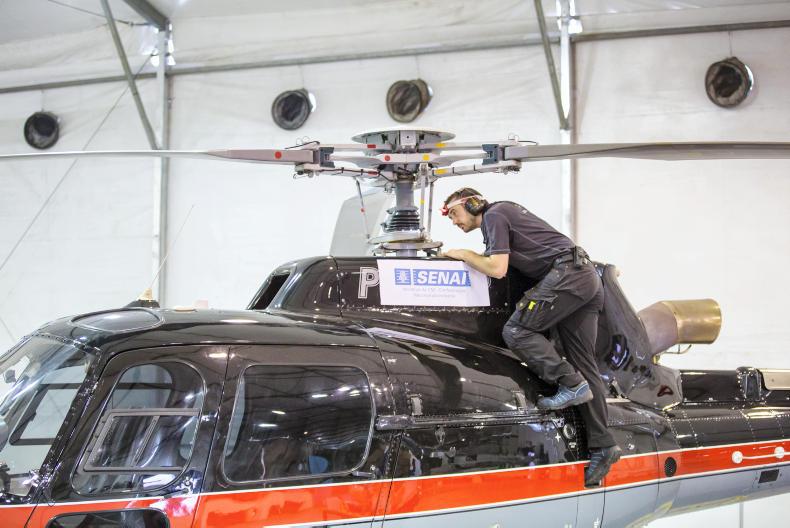
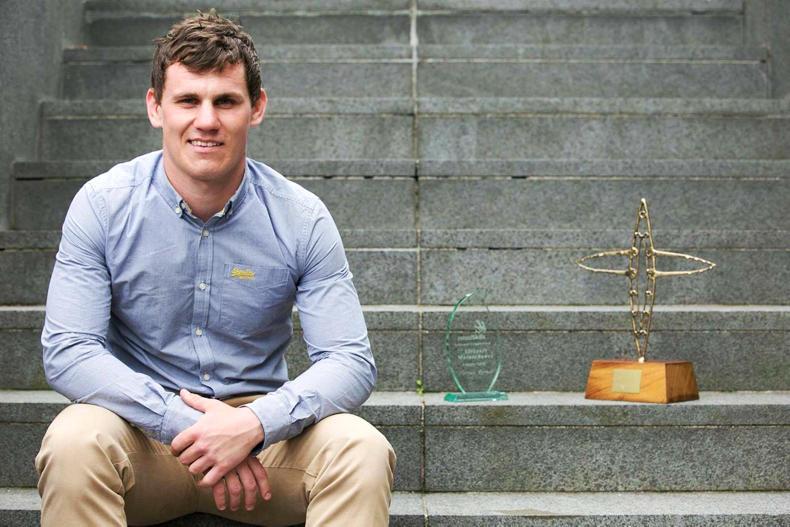
Last year, Florian Byrnes from Barrigone in Co Limerick completed an apprenticeship in aircraft maintenance with Atlantic Aviation Group, based in Shannon Airport, where he still works. He was awarded a QQI level 6 and also passed all of his European modules, allowing him to be granted his aircraft maintenance licence and become a certifying engineer.
Florian won the NationalSkills competition in aircraft maintenance in 2016 and was offered the chance to go to the WorldSkills competition (the Olympics for apprentices) in Abu Dhabi, which he decided not to take up. From a young age he wanted to work in aviation and had his heart set on becoming a pilot around the time of doing his Leaving Cert in 2012.
“Financially, it wasn’t viable to be forking out €120,000 at 18 years of age for pilot training. The only other way of doing it would have been a cadetship with Air Lingus, and they had stopped them at the time.
“I put that on hold to go into this. The engineering side of it was definitely a good way of getting my foot in the door, especially for developing an understanding of aircraft and how they work.”
Always academic in school, Florian was offered a BSc in physics and astrophysics in University College Cork (UCC). He researched his options and realised that a hands-on apprenticeship would be more beneficial to him in terms of the career he wanted. The 23-year-old says he made the right choice in doing the apprenticeship and would advise others to make whatever decision is best for the career they want to pursue.
“If you get 600 points in your Leaving Cert, that doesn’t mean you have to be shoehorned into doing medicine if what you really want to do in life is, for argument’s sake, turn tools as a plumber. Obviously you should try and reach your potential and get the most out of your secondary education, but you should follow what it is that you want to do in life.
“The flip side is that if you come out with a bad Leaving Cert, you [don’t necessarily have to do] an apprenticeship. It doesn’t mean you can’t go on to third-level education. There are always options.”
WorldSkills competition
The WorldSkills competition 2017 takes place in Abu Dhabi from 14 October to 18 October. Known as the skills Olympics for apprentices, it is held every two years and at the last competition Ireland finished with a world ranking of 11, winning two gold medals and eight medals of excellence. This year Ireland will be represented by 14 apprentices.
Ros Wynne from Dublin was the 2015 WorldSkills champion in aircraft maintenance. The competition took place in Sao Paulo, and Ros says it was an amazing opportunity to have gotten. He completed an apprenticeship in aircraft maintenance with Atlantic Aviation Group in Shannon Airport and now works as an aircraft engineer with Ryanair in Dublin Airport.




SHARING OPTIONS