


The winter of 2016/17 has failed to quell ordinary Russians’ traditional stubborn resilience. In contrast, a short cold snap in Spain cut off supplies of basic fruits and vegetables to UK supermarkets. Wholesale markets were the first to run out of fresh vegetables and citrus fruits. Menus in restaurants had to be rewritten, without fresh vegetables.
Next up, UK supermarkets took a leaf out of the price lists of their Russian comrades. Their response was predictable.
At all costs, they preserved their margins and ringfenced their profits. UK food processors and supermarkets achieved their objectives in a simple but cunning way. Specifically, they reduced the pack and bottle sizes of their main food and drink products. This marketing strategy was first pioneered in Russia two years ago.
Shrinkflation became an effective new management tool for UK supermarkets and food processors. But for both UK farmers and consumers, shrinkflation is a dirty word. Finally, in short order, Tesco panicked and rationed lettuce down to three heads per customer per week. For the first time since the end of World War II, Britain was rationing food supplies.
Russian resurgence
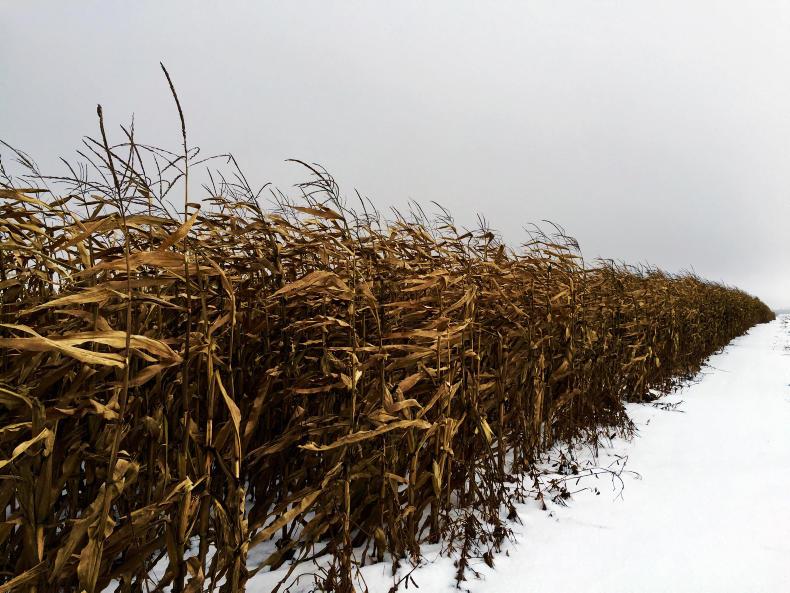
The past two months have been an enormous test for Russia’s capacity to feed itself from its own resources. Winter 2017 has been the coldest in Russia in over 70 years.
In parts of Russia, temperatures dipped below -40oC for long periods. A deep blanket of frozen snow covered the Russian landscape. But despite these extreme weather conditions, there were no empty shelves in Russian supermarkets this year. Furthermore, European and American trade sanctions have only spurred Russians’ innate capacity for survival, to fill Russian food markets exclusively with Russian food.
Current reports from the massive Russian grain belt also confirm further good news for Russian farmers and consumers. Specifically, forecasters are betting heavily that Russia and Ukraine are now on target for a four-in-a-row record wheat harvest later this year. This is because a big wheat crop has come through this winter so far, in good condition.
The heavy blanket of snow serves two purposes for Russian and Ukrainian winter wheat growers. During the worst of the winter, it insulates the crop from the severest frosts. When they thaw in April or May, the winter snows provide a large reservoir of ground water for the fast growing winter wheat crops. These are the cereal crops which predominate in Russia and Ukraine.
Export potential
For these reasons, some very large Russian food and agribusiness conglomerates have sprung up in Russia in the last two years. Some of these have suddenly got so big and efficient that they now have surpluses for export. For example, some are now poised to even start exporting Russian pork and poultry products to the EU and the UK.
But Russians are not totally dependent on behemoths such as Russian meat processor, Miratorg. Small Russian private family farms and individual plots of approximately 200 square metres are remarkably efficient and productive. Although they hold less than 20% of Russian agricultural land area, they produce more than 60% of the country’s agricultural output. Specifically, small private farms and individual plots produce 75% of all Russian fruits and vegetables, 55% of all meat, 67% of all milk and over 90% of all the country’s potatoes.
Furthermore, they achieve this extraordinary high level of agricultural productivity with a minimum of resources. Russian family farmers have only the most basic, and most obsolete, of tools and equipment. Many cannot afford fertilisers, agrochemicals, or agricultural seeds. Their farm management expertise is almost nil. They have no co-ops, no farm organisations; no agricultural produce or food processing or marketing services, no cold stores or no food transport systems.
In summary, all Russian farmers perform and survive under conditions that are at least 60 to 70 years behind what Irish and UK farmers now enjoy. Yet they can feed themselves. The question is “are UK farmers and consumers as resilient, innovative, and patient, as their Russian comrades and can the UK, in the context of Brexit, ever be able to hope to feed itself?
Brendan Dunleavy has over 20 years’ agricultural project management experience in Russia and Ukraine.





SHARING OPTIONS