



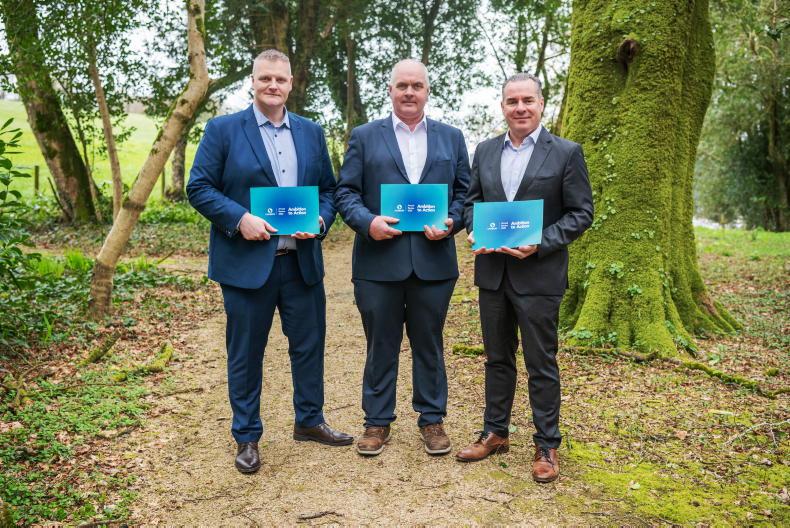
Carbery Group reported revenue of €723m and operating profit of €23.8m for 2025.
While sales were 8% higher in the year, the 4% decline in operating profit was driven by the downturn in global dairy markets in the second half of last year.
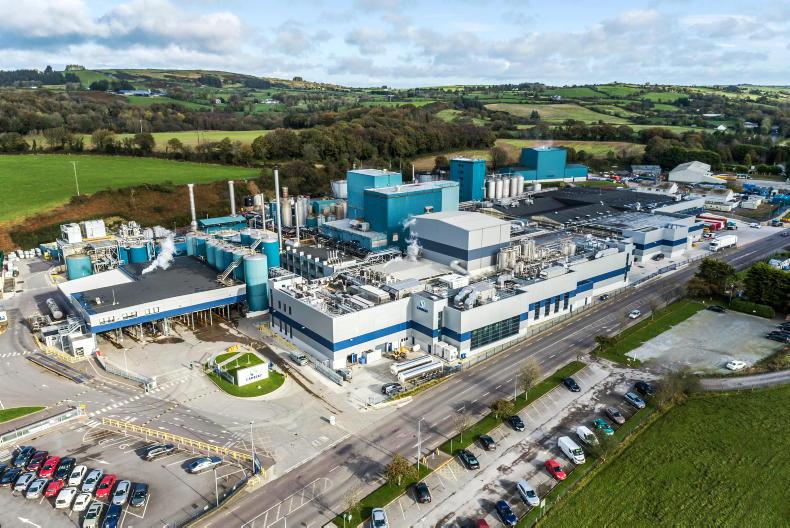
Profit-after-tax was more than €1m higher at €15.3m, with the processor making a significant saving on interest payments during the year. Carbery’s net debt at the end of 2025 was at €34.3m, the lowest level since 2018. The co-op processed 608.8m litres of milk at its facility in Ballineen, Co Cork during the year, the second highest level ever.
“The business performed well overall in the year, although it finished poorly,” Carbery CEO Jason Hawkins told the Irish Farmers Journal. “It was a decent year for farmers who got their second highest [milk] price ever and the weather was good.
“We invested in our business, we spent a bit of capital on an acquisition late in the year and we reduced debt. All in all, it was a strong year with the underlying global business performing well.”
He said that cheese markets proved difficult in the second half of the year, but that the co-op’s mozzarella business was a big help. “It’s a quicker moving market in mozzarella, you’re in and you’re out. A lot of our cheddar is aged and mature, you find yourself holding onto it.”
The annual report included a provision of €8.9m on its end of year stocks which arose as the carrying value of those stocks was higher than the estimated net realisable value of those stocks.
If the final selling price is above the estimate net realisable value, then that difference will be credited to the next annual report. End of year stock of finished goods was €54.3m, down from €70.7m at the end of 2024.
The co-op added €3m to its milk stability fund, pushing the balance there to €11.6m. There were no payments from the fund in 2025. While the stability fund has to be paid out to suppliers within three years, Hawkins said “a lot of it will go this year, unless something dramatic happens in markets. We’re not going to be sitting on it, a year like this is exactly what it’s put aside for”.
Outlook
When asked how global dairy markets are looking for the rest of the year, Hawkins said that it’s not great, adding that “we all look at the data on a weekly basis and that wall of milk that’s there is not going away. Nothing will change on prices until you start seeing a shift in the [milk production] numbers.
“Europe has probably been a surprise with production so strong for the start of the year. But in the US too, people have driven on. Cattle prices in there have provided big cover for dairy farmers who might not otherwise be making any money. So I don’t see that wall of milk going anywhere. We see forecasts for 1.5% growth in global supply this year, I think if anything, it will be a little bit stronger.
“I think we need to see the signals from the market saying supply is definitely easing before demand turns higher. New Zealand were out last week with [production] numbers pointing to a record year.
“It’ll be a tough year. I think it’ll be 2027 before we see supply go into reverse.”
He wasn’t all doom and gloom however: “Whey prices are still quite good, and mozzarella is, relatively speaking, holding up. If you look at spot prices, and across all the categories, mozzarella valorisations are still decent.”
Hawkins also noted that the cost of production at farm level was increasing due to energy and fertiliser costs. He did say that Carbery itself has its gas costs well hedged for the year, having bought futures at the end of 2025 and more at the start of 2026 when prices were low.
Business performance
Away from the main dairy business, the co-op said its nutritional ingredients maintained strong momentum during the year as whey protein demand increased significantly driven by growth in performance and active nutrition markets and the expanding GLP-1 weight loss segment.
The majority of the whey comes from Carbery’s own cheese manufacturing, but the company does buy some in from the UK for processing.
The co-op said that global Taste business continued to outperform across all geographies. The flavour business was further developed with the acquisition of SoluTaste Aromas in Brazil in October 2025 and will open a significantly expanded production facility there this year. The board of the co-op is visiting the Brazil site this week.
North Cork
“The arrangement with North Cork is a purely commercial arrangement,” Hawkins said. “We’ve been doing business with North Cork for years, we’re doing a bit more business now,
“We wouldn’t do it if we didn’t feel it was adding value for our farmers. We do believe in the co-op model. If we can help North Cork – and it’s very public that they have had some challenges – get through their challenges and their farmers can do OK from it, then we’ll co-operate all day long.
“We’re not necessarily in the consolidation game, but we’re definitely in the co-operation game.”
Comment
In common with several other co-ops, Carbery ended 2025 in a fairly strong financial position. The low debt levels leave room for further investment, and critically for suppliers the stability fund of €11.6m means there is some money in place to help support the milk price through the year.
From talking to Carbery CEO Jason Hawkins, it seems very likely that those payments will be necessary. Perhaps Hawkins was, of all the CEOs spoken to by the Irish Farmers Journal over the current earnings season, the most clearly pessimistic about the outlook for dairy markets.
This candour may be because he is running the business which is possibly best positioned to ride out the dairy market downturn. The earnings diversification Carbery has in its Taste and Nutrition businesses will likely be a valuable asset in 2026.
The problem for the industry as a whole is that processors and dairy farmers both in Ireland and internationally find themselves in a waiting game. Barring an unexpected surge in demand, what everyone is waiting for is for other producers to either give up or fail before they find themselves forced to either give up or fail.
Ireland’s grass-based system is a major asset in this as the fundamental input cost is low. However, as any Irish dairy farmer will tell you, the all-in costs of producing milk have risen significantly over the last few years.
This means that the waiting game will be difficult for everyone, and Irish dairy farmers will likely need all the support their co-ops can give them over the coming months.




SHARING OPTIONS