The food and drink industry in Northern Ireland (NI) is worth £7.3bn (€8.4bn) to the local economy.
This is the main finding of an EY report, commissioned by the Northern Ireland Food and Drink Association (NIFDA) and released on Thursday this week.
In addition, the report identifies that the sector supports almost 109,000 jobs and contributes to food security in the UK and the island of Ireland.
This employment isn’t confined to farming and direct manufacture, but it also underpins economic activity in logistics, engineering, utilities and professional services, while also anchoring jobs in rural and semi-rural communities.
The report identified that NI supplies around one-fifth of UK egg production and approximately one-sixth of UK dairy, beef and poultry output.
This is described by NIFDA CEO Michael Bell OBE as “precisely the areas where strong domestic production is most critical to reducing import reliance, moderating exposure to global supply shocks and safeguarding affordability for consumers”.
Sustainability
The report acknowledges that while agriculture “accounts for a significant share of emissions in Northern Ireland, productivity-led, sustainability-linked investment can deliver economic growth and emissions reductions together”.
Michael explained that “our industry is committed to sustainability and innovation, but businesses need confidence to invest. That means stable policy signals, joined up decision making and planning processes that recognise the system wide benefits of investment. If we want to secure food supply, protect jobs and improve environmental performance, we have to enable economic growth.”
NIFDA challenged the government to work in partnership with industry and have a series of specific asks arising from the report.
It wants government to enable investment, improve planning predictability and ensure policy frameworks support economic growth alongside environmental outcomes.
Comment – agri-food development and climate objectives
The climate change act (Northern Ireland) 2022 legally mandates a net-zero greenhouse gas emissions target by 2050, with an interim target of at least a 48% reduction by 2030.
Given that agriculture accounts for 30% of NI emissions, just slightly less than south of the border, it will require a huge technological breakthrough to maintain never mind expand the sector and comply with the 2025 emissions requirement.
There is also an issue with nutrient enrichment of waterways, specifically phosphorus and nitrogen.
This is commonly recognised through the growth of a green algae, with images of Lough Neagh in a green colour widely circulated over the past couple of years.
While agricultural production isn’t responsible for all of this, it is a part contributor and addressing the issue is a challenge for the sector.
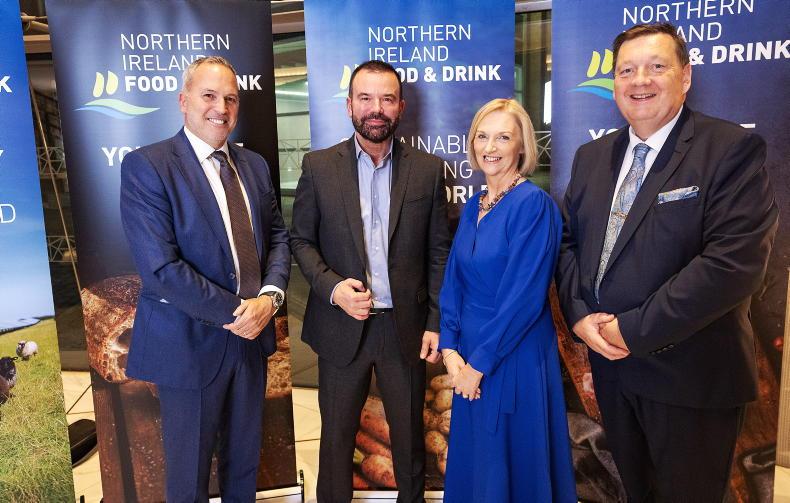
The food and drink industry in Northern Ireland (NI) is worth £7.3bn (€8.4bn) to the local economy.
This is the main finding of an EY report, commissioned by the Northern Ireland Food and Drink Association (NIFDA) and released on Thursday this week.
In addition, the report identifies that the sector supports almost 109,000 jobs and contributes to food security in the UK and the island of Ireland.
This employment isn’t confined to farming and direct manufacture, but it also underpins economic activity in logistics, engineering, utilities and professional services, while also anchoring jobs in rural and semi-rural communities.
The report identified that NI supplies around one-fifth of UK egg production and approximately one-sixth of UK dairy, beef and poultry output.
This is described by NIFDA CEO Michael Bell OBE as “precisely the areas where strong domestic production is most critical to reducing import reliance, moderating exposure to global supply shocks and safeguarding affordability for consumers”.
Sustainability
The report acknowledges that while agriculture “accounts for a significant share of emissions in Northern Ireland, productivity-led, sustainability-linked investment can deliver economic growth and emissions reductions together”.
Michael explained that “our industry is committed to sustainability and innovation, but businesses need confidence to invest. That means stable policy signals, joined up decision making and planning processes that recognise the system wide benefits of investment. If we want to secure food supply, protect jobs and improve environmental performance, we have to enable economic growth.”
NIFDA challenged the government to work in partnership with industry and have a series of specific asks arising from the report.
It wants government to enable investment, improve planning predictability and ensure policy frameworks support economic growth alongside environmental outcomes.
Comment – agri-food development and climate objectives
The climate change act (Northern Ireland) 2022 legally mandates a net-zero greenhouse gas emissions target by 2050, with an interim target of at least a 48% reduction by 2030.
Given that agriculture accounts for 30% of NI emissions, just slightly less than south of the border, it will require a huge technological breakthrough to maintain never mind expand the sector and comply with the 2025 emissions requirement.
There is also an issue with nutrient enrichment of waterways, specifically phosphorus and nitrogen.
This is commonly recognised through the growth of a green algae, with images of Lough Neagh in a green colour widely circulated over the past couple of years.
While agricultural production isn’t responsible for all of this, it is a part contributor and addressing the issue is a challenge for the sector.
SHARING OPTIONS